

CNC Bending Solutions for Electrical Cabinets
CAMT delivers specialized press brake tooling designed for control cabinets, power distribution enclosures, and industrial switchgear. Achieve high angle repeatability, clean burr-free bends, and seamless assembly alignment across high-volume production.
Capability
OEM & ODM Tooling
Fulfillment
Fast Turnaround
Supply Chain
Global Shipping
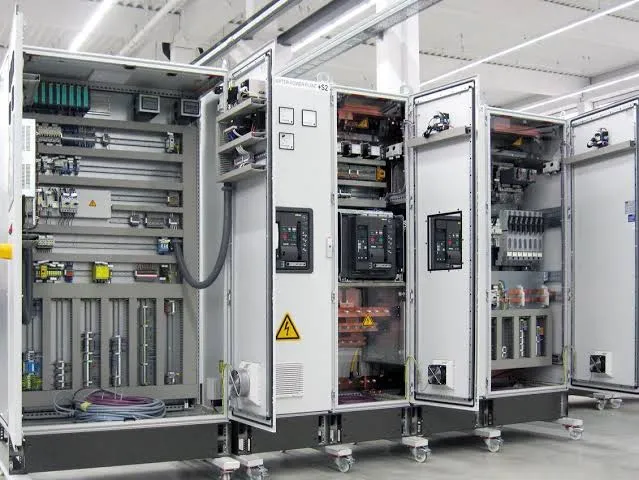
Precision Control Cabinet Tooling
High-accuracy bending for sheet metal doors, frames, and enclosure bodies.
Bending Challenges and Quality Requirements in Electrical Cabinet Production
Electrical cabinet sheet metal demands a higher standard than general fabrication. CAMT engineers press brake tooling solutions directly from your drawing targets.
Common Electrical Cabinet Quality Requirements
- Consistent dimensions across every panel, door, and enclosure frame in a production batch
- Stable bend angles that maintain tight tolerances from the first part to the last
- Clean surface appearance without die marks, severe scratches, or tool impressions
- Smooth assembly fit between door panels, side walls, and cabinet housing bodies
Typical Pain Points in Cabinet Sheet Metal Bending
Angle Variation
Uncontrolled material springback leads to angle drift, compromising high-volume repeatability.
Uneven Bends
Worn or inaccurate press brake punches cause bowing along long cabinet panel edges.
Surface Scratches
Harsh tooling contact damages pre-painted, stainless, or powder-coated enclosure sheets.
Door-to-Body Fit Errors
Flange width variations create visible gaps or door binding at cabinet seams.
Why These Issues Drive Up Rework Costs
A single degree of angle deviation across a batch of 50 units means every cabinet door must be manually adjusted or re-bent. Assembly line operators lose valuable hours forcing mismatched panels into place, spiking rework labor costs and delaying shipment schedules.
How Electrical Cabinets Differ From General Sheet Metal
General job shop fabrication often tolerates minor dimensional shifts. Industrial control cabinets do not. Flawless exterior appearance, long-term repeatability, and precise batch assembly accuracy are essential for maintaining IP/NEMA ratings and professional aesthetic standards.
CAMT understands these strict requirements and can reverse-engineer a customized tooling combination tailored to your target part drawings, including specialized gooseneck punches for challenging return bends.
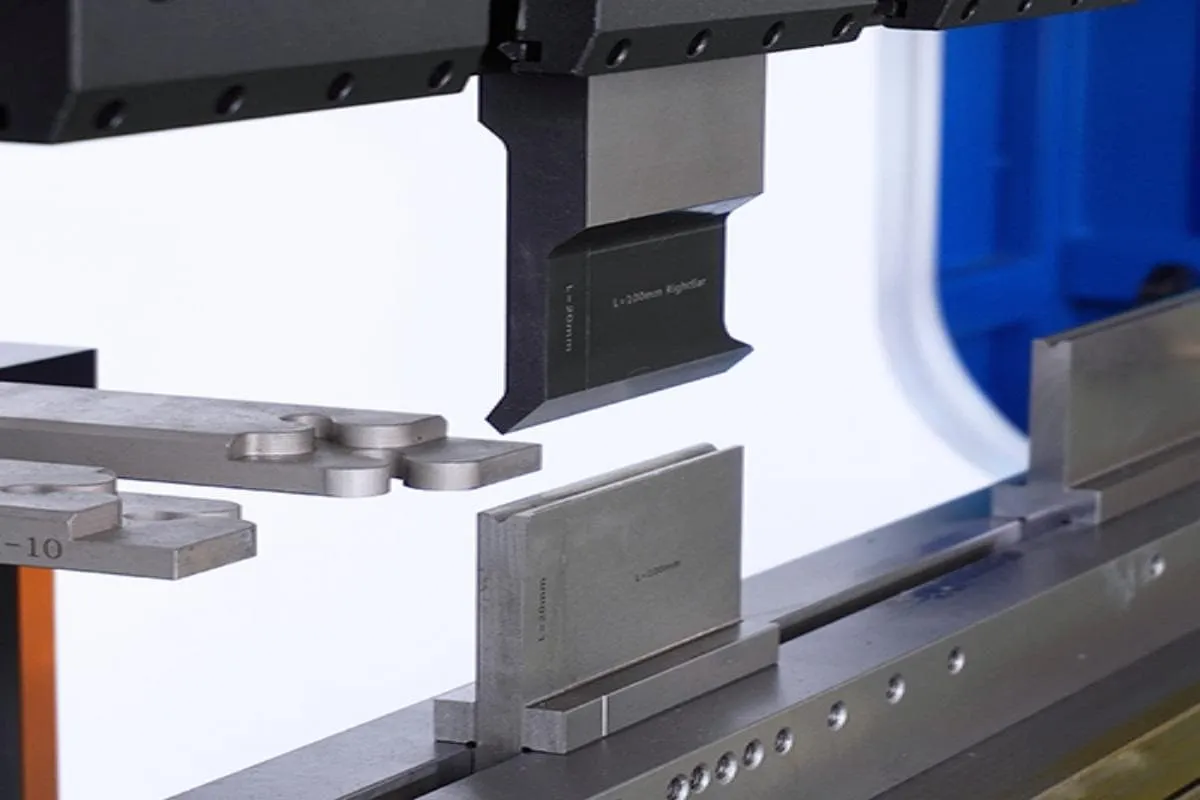
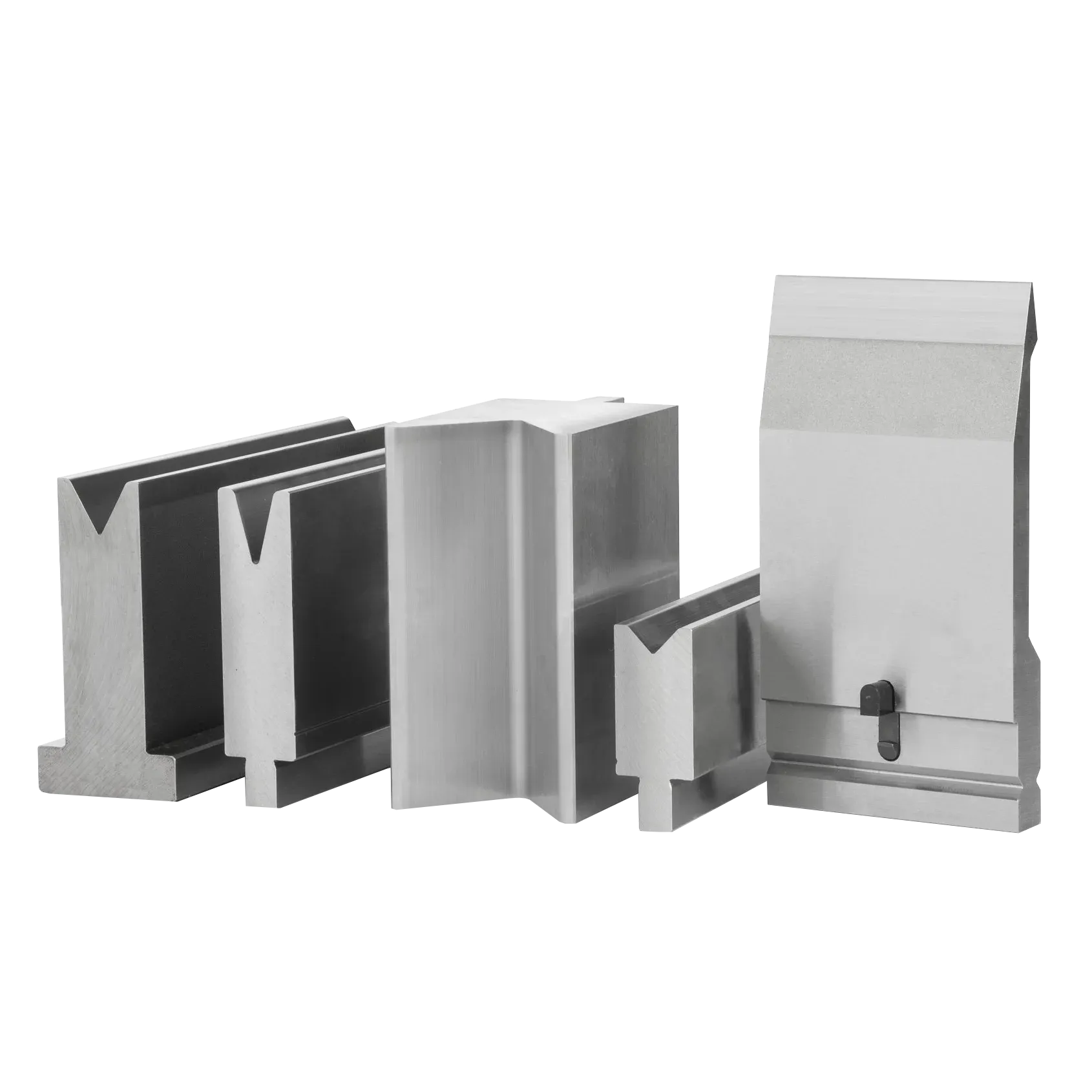
Recommended Bending Tooling and Suitable Components
Match specialized press brake tooling directly to electrical cabinet components to streamline purchasing across our products and optimize process engineering workflows.
Press Brake Punches
Application: Standard precision bending on electrical cabinet panels, enclosure doors, and side plates.
Value Delivered: Delivers precise bend angles and straight bend lines for flawless alignment across high-volume production.
Press Brake Dies / V Dies
Application: Forming box flanges, edge return folds, and precise springback angle control.
Value Delivered: Reduces surface marking, extends tool life, and maintains tight tolerances across variable sheet thicknesses.
Gooseneck Punches
Application: Forming deep box profiles, return channels, and clearance-restricted bends.
Value Delivered: Prevents tool-to-workpiece collision during secondary bends, eliminating manual rework.
Radius Punches
Application: Smooth, rounded corner bends requiring superior cosmetic appearance and stress distribution.
Value Delivered: Prevents micro-cracking along outer bends and delivers a clean aesthetic for premium enclosure exteriors.
Offset Punches
Application: Forming offset steps, mounting reliefs, and complex cabinet contours in a single stroke.
Value Delivered: Cuts handling time in half by combining operations and speeding up cycle times on complex profiles.
Hemming Tools
Application: Safety edge hemming and reinforced folds on exposed doors and panel rims.
Value Delivered: Eliminates sharp raw sheet edges to improve handling safety and increase edge stiffness.
Custom Tooling Solutions
Application: Dedicated tooling for non-standard enclosure geometry, complex door frames, internal stiffeners, and custom mounting brackets.
Value Delivered: Engineered to clear difficult bend sequences, lower scrap rates, and maintain consistency in complex assemblies.
CAMT Integration: CAMT configures optimized bending tool combinations for electrical cabinets based on part geometry, material gauge, and assembly specifications. Explore our press brake tooling options for more demanding applications.
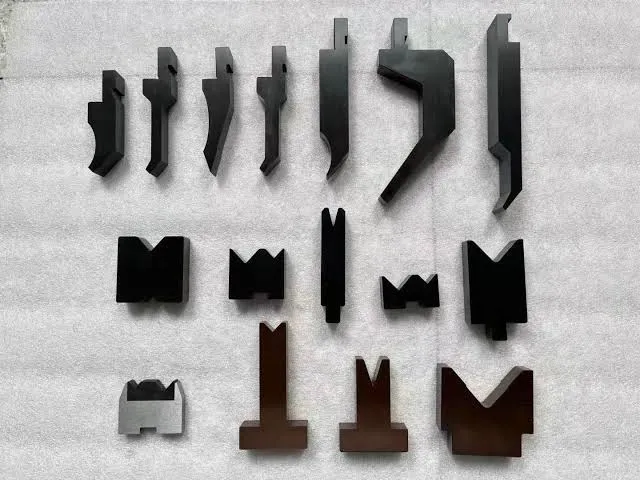
Typical Electrical Cabinet Applications & Component Examples
CAMT press brake tooling delivers extreme repeatability and flawless surface finishes across every phase of electrical enclosure fabrication, from single-piece prototyping to high-volume manufacturing.
Optimized Tooling for Enclosure Fabrication
Electrical cabinets demand rigorous angular tolerances, tight corner returns, and mark-free exterior surfaces. CAMT precision-ground tooling eliminates fitment errors, speeds up assembly, and ensures uniform quality across large production runs.
Seamless Assembly Alignment
Eliminate door gap misalignments and structural frame binding during final installation.
Surface Finish Protection
Prevent die marring and scratches on pre-painted, stainless steel, or aluminum panels.
High-Volume Repeatability
Maintain tight tolerances across thousands of bend cycles with hardened CNC tooling.
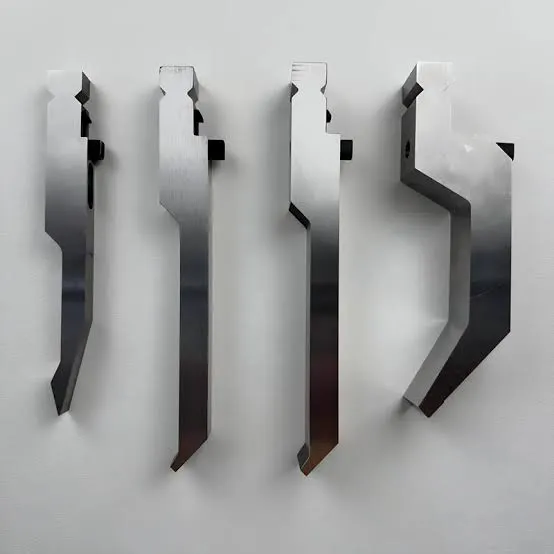
Production Application
High-Precision Tooling Engineered for Industrial Control Enclosures
Control Cabinet Shells
Core Requirement
Clean edge folds, uniform 90° angles, and consistent corner sealing for enclosure integrity.
Recommended Tooling
CAMT Precision Gooseneck Punches & Single-V Dies
Power Distribution Cabinet Door Panels
Core Requirement
High surface flatness, distortion-free return flanges, and zero die-mark scratching.
Recommended Tooling
Non-Marring Urethane Dies & Radius Forming Punches
Cabinet Side & Top Panels
Core Requirement
Batch dimensional consistency, fast cycle times, and repeatable long-length bending.
Recommended Tooling
Segmented Heavy-Duty Punches & Multi-V Quick-Change Dies
Mounting Frames & Support Channels
Core Requirement
Accurate pitch alignment for mounting holes, high structural strength, and offset forming.
Recommended Tooling
CAMT Offset Punches & High-Tonnage Sectional Dies
Small Junction Boxes & Operator Interfaces
Core Requirement
Tight bend radii, clearance around complex internal tabs, and precise box closing.
Recommended Tooling
Acute Angle Punches & Custom Relief Clearance Tooling
Tool Selection Logic for Electrical Cabinet Die Sets
Streamline press brake tooling die selection for precision enclosure manufacturing. Evaluate key parameters to ensure exact tolerances, surface integrity, and high-efficiency production.
V Opening & Lower Die Selection
Match V die selection directly to sheet material thickness and tensile strength. Proper V-width sizing prevents premature cracking, preserves radius precision, and maintains minimal tonnage requirements across aluminum, mild steel, and stainless cabinets.
Appearance & Surface Integrity
Determine whether special radius punches, acute hemming dies, or mark-free polyurethane inserts are necessary based on external cosmetic standards for visible door panels and control boxes.
Box Depth & Interference Clearance
Select gooseneck punches, windowed tooling segments, or offset punch profiles based on return flange heights, channel dimensions, and critical clearance needs inside deep electrical enclosures.
Tool Life & Changeover Efficiency
Balance laser-hardened tooling steel against annual batch volumes. Standardized quick-change clamping systems reduce setup times during high-mix production runs.
Drawing Optimization & Bend Validation
Evaluate enclosure tolerances against springback behavior. Drawing optimization and sample bend validation ensure accurate fitment, consistent sealing performance, and reliable tooling deployment.
Cabinet Bending Tooling Comparison Matrix
Compare key technical dimensions across standard and specialized press brake die configurations.
Shorten Electrical Cabinet Tooling Selection with CAMT
CAMT streamlines your decision-making by analyzing your technical CAD drawings, sheet metal parameters, and production volume requirements. Our experts identify potential bend interference early and validate die selections before manufacturing starts.
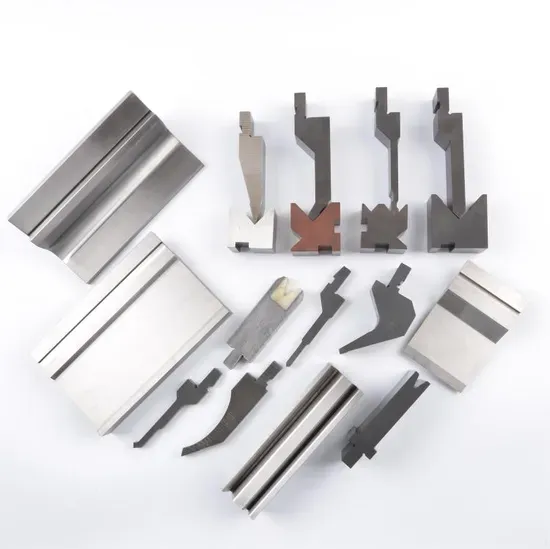
Manufacturing Capabilities and Quality Control for Repeatability and Surface Consistency
CAMT utilizes high-hardness tool steel and precision machining processes to improve bending consistency and operational stability for electrical cabinets with press brake tooling.
End-to-End Manufacturing Process
Strict process control guarantees tight tolerance execution across every production step.
CNC Machining
Advanced CNC machined press brake tooling techniques carve precise geometry directly into certified high-hardness tool steel blanks for reliable press brake punches.
Heat Treatment
Controlled thermal cycles optimize steel core toughness and surface structure, ensuring long-term wear resistance.
Precision Grinding
Ultra-precise surface grinding yields exact radius dimensions and mirror-like finishes to protect sheet metal surfaces.
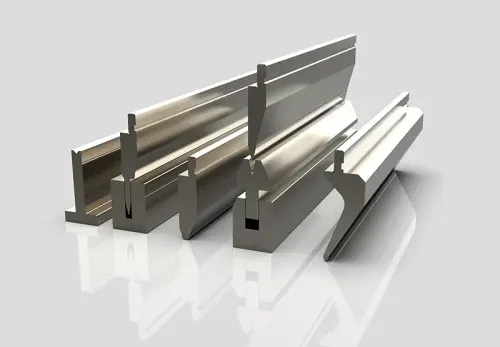
Rigorous Quality Control Checkpoints
Comprehensive quality control for bending tools verifies structural integrity before shipping. Our multi-stage inspection protocol preserves performance stability over extended production cycles.
Stable Hardness
Ensures uniform material response and eliminates localized tool wear under heavy tonnage.
Consistent Working Edges
Maintains uniform edge profiles across long tool segments for identical bend profiles.
Assembly Accuracy
Guarantees seamless modular alignment on press brake clamping systems.
Extended Service Life
Reduces tooling replacement frequency and minimizes costly press machine downtime.
Delivery Assurance
Complete OEM ODM tooling support with rapid prototyping and scheduled batch deliveries designed to fit flexible assembly lines.
- Custom OEM/ODM Development
- Fast-Track Prototype Samples
- Reliable Batch Logistics
Technical Support
Full-spectrum drawing optimization, process recommendations, and non-standard tool development, including gooseneck punches, to solve challenging bend profiles.
- Tooling Drawing Optimization
- Bending Process Analysis
- Non-Standard Tooling R&D
Electrical Cabinet Production
Precision tooling maintains clean folds and stable repeat angles, dramatically reducing rework rates for sheet metal enclosure assemblies.
Minimizes surface marking, reduces manual alignment fixes, and ensures tight seam sealing for IP-rated enclosures.
Why Electrical Cabinet Manufacturers Choose Custom Tooling
Move beyond standard tooling constraints with dedicated precision. CAMT press brake tooling for electrical cabinets resolves complex profile interference, speeds up cycle times, and eliminates time-consuming manual finishing.
Precise Matching for Non-Standard Enclosures
Custom cabinet geometries demand exact alignment with engineering drawings. Specialized punch and die profiles eliminate bend clearances issues and dimensional deviations right from the first stroke.
Specialized Tooling for Flanges, Offset Steps & Hems
Door frames, return flanges, and safe hemmed edges require custom tool geometry. Dedicated setups, including offset punches, execute tight radii and offset bends smoothly without cracking or distorting the sheet metal.
Reduced Secondary Processing & Manual Benchwork
Form parts accurately in single setups to skip extra grinding, manual straightening, and rework. Purpose-built tools deliver clean, burr-free edges that fit assembly lines seamlessly.
Consistent Angle Accuracy for High-Volume Runs
Maintain strict batch-to-batch consistency throughout long production runs. Precision-ground OEM tooling minimizes angle springback variation, ensuring dependable door-to-frame alignment.
Engineered to Match Tonnage, Sheet Specs & Machine Style
Every custom solution is engineered around your press brake tonnage, clamping system, and material thickness to maximize tool longevity and preserve press safety parameters.
End-to-End Custom Engineering Guidance
CAMT supports your team from part print analysis to prototype testing, helping electrical cabinet fabricators deploy dedicated bending solutions faster and with zero guesswork.
Ready to Optimize Your Enclosure Bending Process?
Send your cabinet drawings or bending profiles. CAMT application engineers will review your requirements and recommend the optimal press brake tooling configuration.
Frequently Asked Questions
Get quick answers regarding tool selection, surface protection, lead times, and custom solutions for electrical cabinet manufacturing.
What upper and lower dies work best for electrical cabinets?
Gooseneck punches and deep-pocket lower V dies are ideal for complex cabinet geometries, as they clear deep return flanges and interior box folds without interference. Precision-ground V dies ensure accurate angle repetition across different sheet thicknesses. The CAMT engineering team evaluates your bend sequences to identify the exact punch profile and die opening required.
How do I prevent surface scratches on cabinet doors and panels during bending?
Using markless bending films or polyurethane die inserts eliminates metal-to-metal contact on stainless steel, aluminum, or pre-painted enclosure sheets. Additionally, press brake tooling with polished, large-radius die shoulders minimizes contact friction during deformation. These solutions preserve aesthetic finish standards and eliminate costly secondary polishing.
Can CAMT engineer custom press brake tooling for non-standard cabinet structures?
Yes, CAMT designs specialized tooling for non-standard enclosure dimensions, custom door frame profiles, offset steps, and tight return hems. Segmented press brake punches, custom relief windows, and specialized die inserts allow operators to complete complex forming passes without part collision.
What technical information is required to receive a tooling recommendation?
To provide an accurate recommendation, please supply 2D or 3D part drawings (STEP or DXF formats), sheet material type, thickness, and estimated production volume. Including details about your press brake—such as machine tonnage, clamping style, open height, and stroke length—helps ensure seamless tool compatibility.
How does tooling selection differ between small-batch prototyping and mass production?
Prototyping relies on versatile, modular standard tooling segments that adapt quickly to varying designs with minimal upfront cost. High-volume production prioritizes deep-hardened alloy tooling, anti-wear surface coatings, and dedicated multi-bend configurations that maximize stroke efficiency, reduce setup times, and extend tool service life.
What key factors determine production and delivery lead times?
Standard catalog tooling profiles ship quickly from stock. Custom engineered tooling lead times depend on profile geometry complexity, special material sourcing, precision heat treatment cycles, and specialized surface coatings. Providing finalized drawings early helps streamline engineering design and trial validation.
Ready to Optimize Your Electrical Cabinet Production?
CAMT's technical team will review your drawings, material requirements, and production needs to recommend the right press brake tooling solution for your application.
Submit Your Cabinet Drawings for a Precision Bending Recommendation
CAMT provides production-ready press brake tooling proposals engineered for your enclosure profiles and tolerances. We back your manufacturing with full OEM/ODM customization, design optimization, and rapid global delivery. For complex cabinet geometry, we can also recommend the right press brake punches, including gooseneck punches, to improve clearance and bend access.
We'll review your drawings and get back to you with a precision bending recommendation.