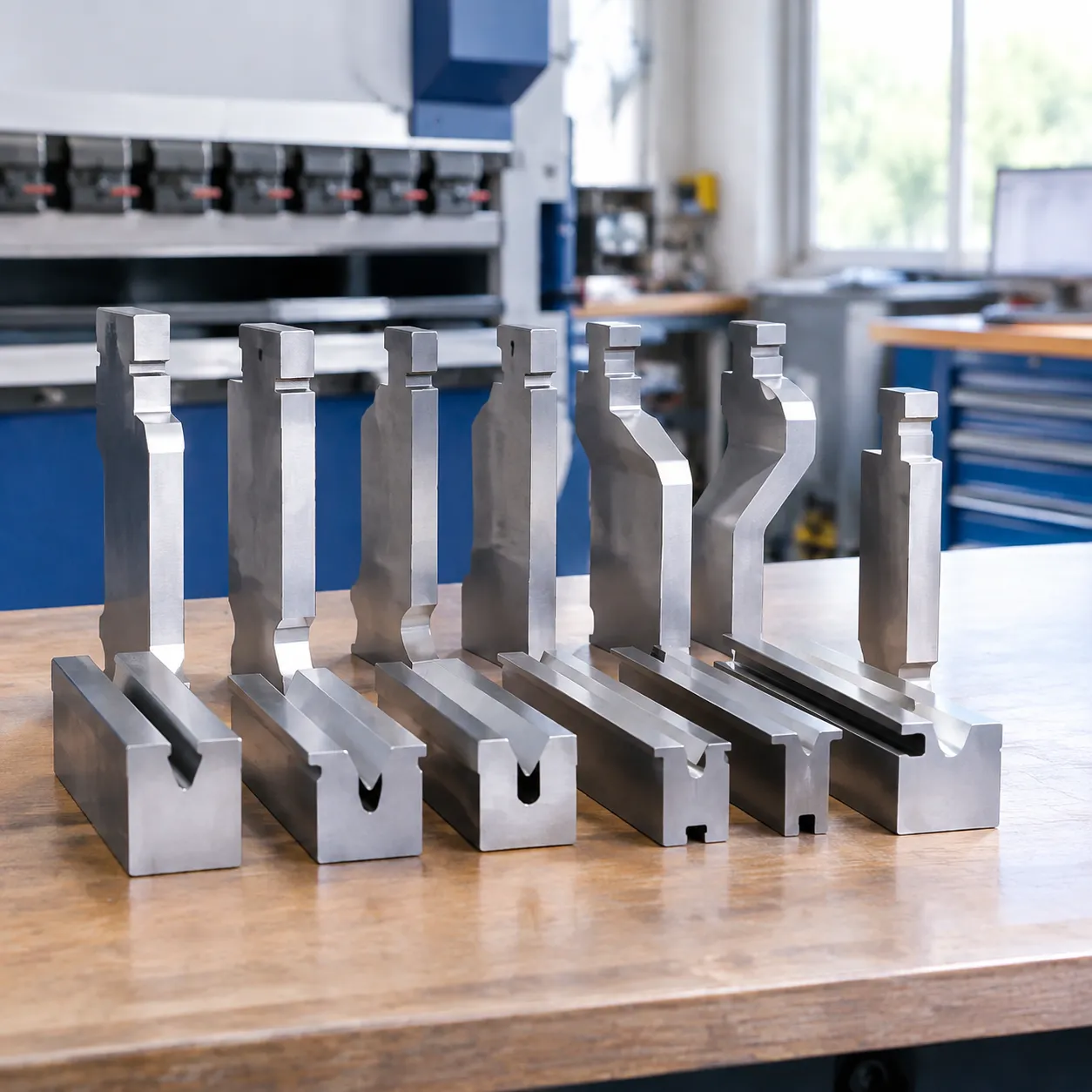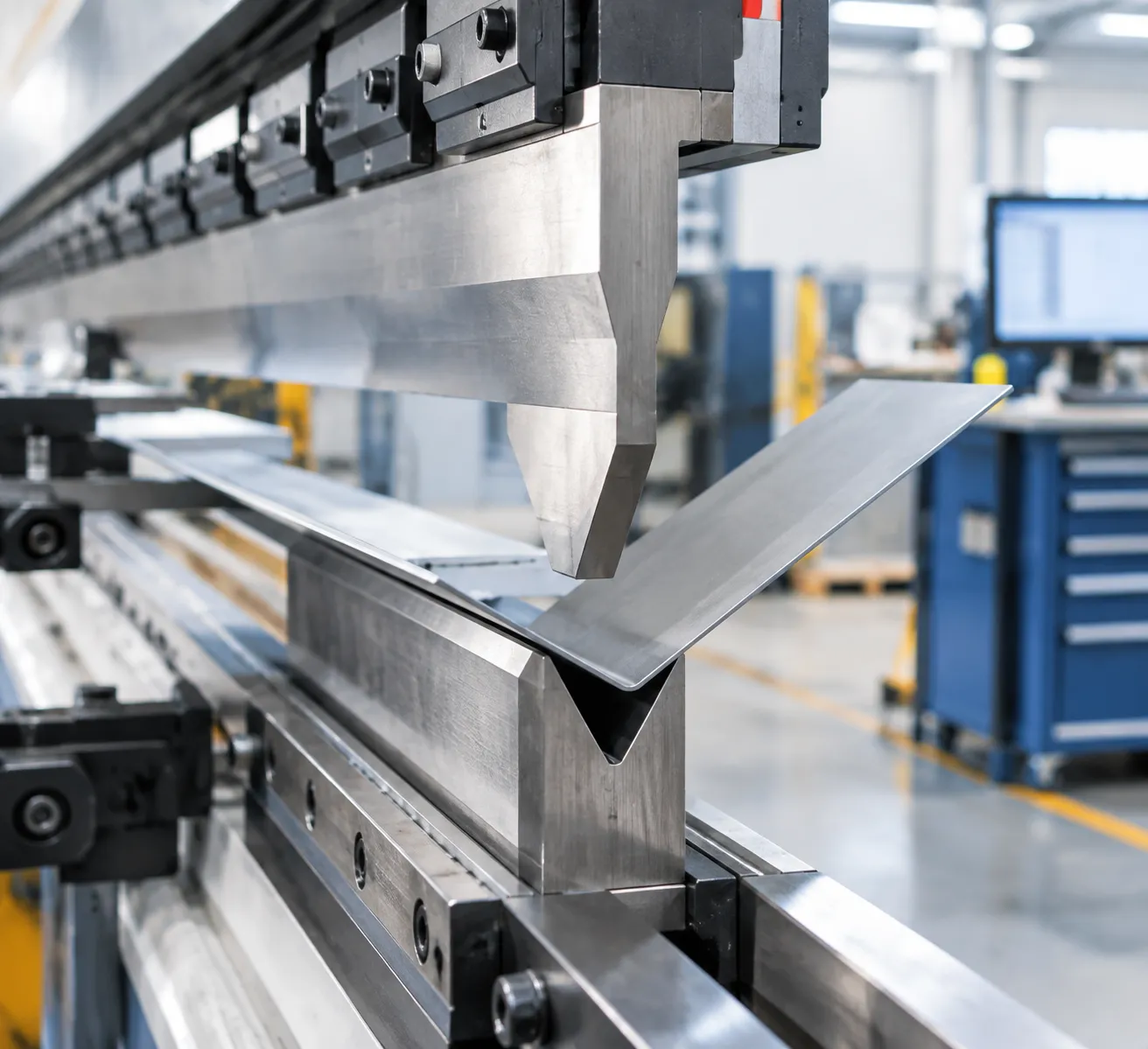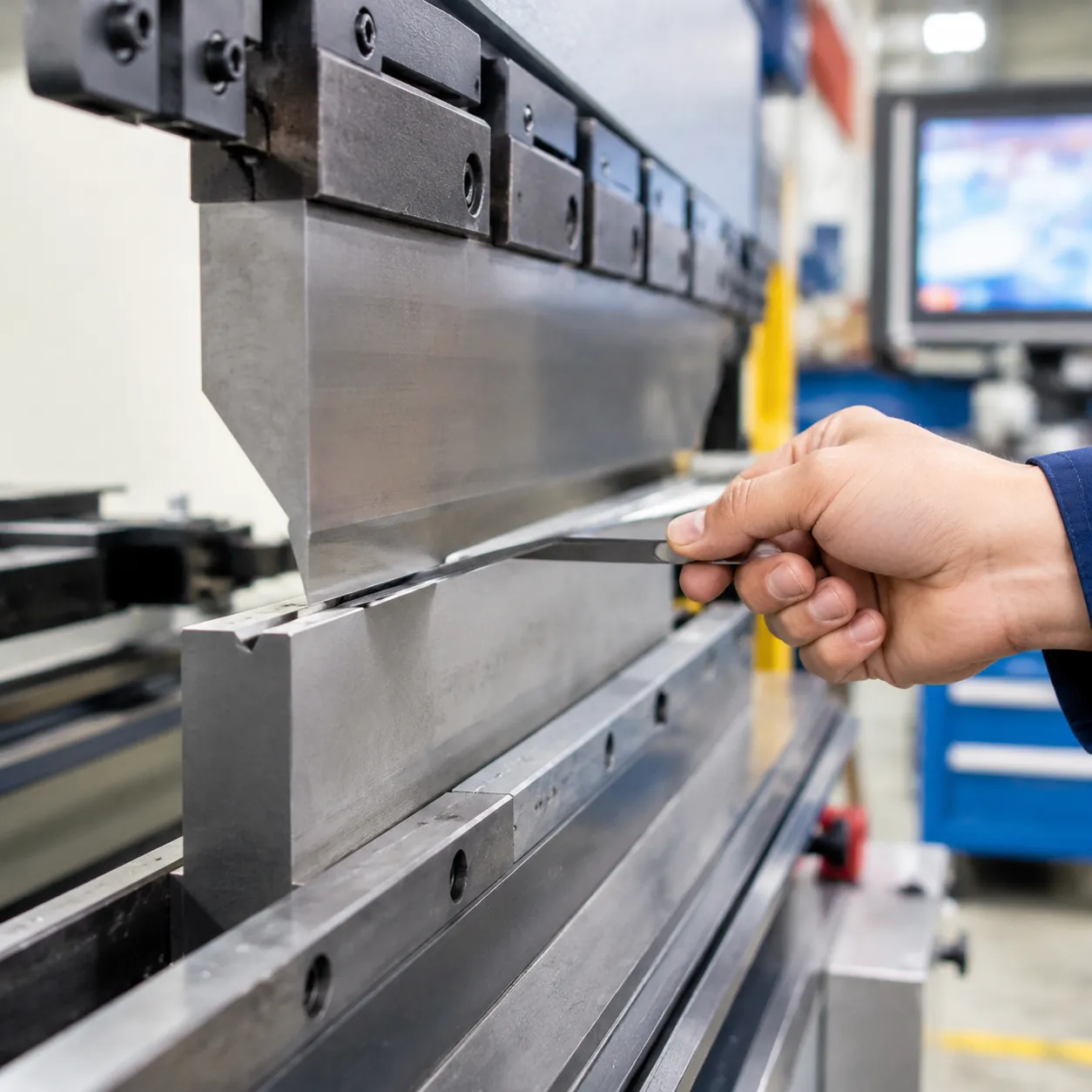

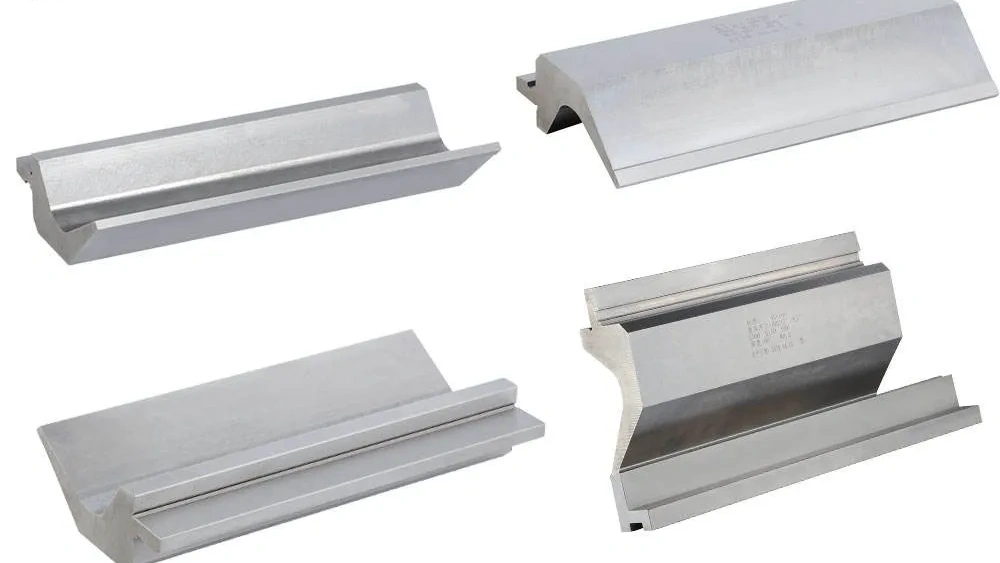
Common Materials for Press Brake Tooling
Selecting the right press brake die material directly impacts tool longevity, bend accuracy, and overall production costs. We offer various material grades tailored to specific sheet metal bending requirements and tonnage loads.
| Tooling Material | Primary Application | Core Advantage |
|---|---|---|
| 42CrMo / 4140 | Standard air bending & bottoming | High core toughness & shock resistance |
| D2 / Cr12MoV | Heavy-duty & high-tonnage runs | Superior wear resistance & extreme hardness |
| T10 / 1045 | Low-volume & budget tooling | Cost-effective for simple prototype bending |
| Urethane Inserts | Architectural & cosmetic alloys | 100% mark-free bending on polished metals |
| Carbide Inserts | Extreme volume & abrasive metals | Maximum hardness with zero deformation |
Chrome-Moly Steel: 42CrMo and 4140
42CrMo steel and 4140 alloy steel serve as the global industry workhorses for standard sheet metal bending dies.
High fatigue strength and excellent shock resistance.
Handles medium-to-high tonnage air bending without cracking.
Supports localized induction hardening up to 48–52 HRC.
Cold-Work Tool Steel: D2 and Cr12MoV
For long production cycles, D2 tool steel press brake dies and Cr12MoV deliver maximum service life.
High chromium content provides superior wear resistance.
Retains edge sharpness under high tonnage loading.
Ideal for heavy-duty stamping and thick-plate bending.
Carbon Tool Steel: T10 and 1045
Carbon steels like T10 and 1045 offer an economical press brake tooling material option for non-critical jobs.
Low upfront investment for specialized short runs.
Easy to machine, modify, and re-grind.
Recommended for light-duty bending of mild steel.
Polyurethane and Urethane Inserts
When surface aesthetics are critical, urethane press brake tooling protects sensitive workpiece surfaces.
Completely eliminates die marks on stainless steel, aluminum, and pre-painted metals.
Flexible pads fit directly into standard die holders.
Carbide Inserts
For high-speed, mass-production environments working with abrasive materials, solid carbide inserts offer unmatched performance.
Extreme abrasion resistance prevents premature die wear.
Maintains tight bending tolerances over millions of cycles.
Key Properties to Look for in Press Brake Die Material
Selecting the ideal press brake die material requires balancing surface resistance with structural strength.
- High Hardness and Surface Wear Resistance: The working surfaces must maintain elevated press brake tooling hardness (typically 42 to 60 HRC). High surface wear resistance prevents galling, scratching, and radius grooving caused by repeated friction. Checking a press brake V die lifespan guide helps illustrate how proper surface hardness translates directly to longer tool life.
- Toughness Against High Tonnage: Hardness without core toughness leads to brittle failures. High tonnage bending dies require high impact toughness to absorb heavy force without chipping or cracking along the V-opening shoulders.
- Yield Strength to Resist Deformation: Deep bending in thick plates demands high yield strength within your sheet metal bending die materials. High yield strength ensures the die flexes elastically and snaps back to its original dimensions rather than permanently deforming under peak loads. Always cross-reference a press brake V die tonnage guide to verify that your steel strength matches your press force output.
- Heat Treatment Response and Core Strength: Quality heat treated die steel must offer deep hardenability. Proper thermal processing creates a hard outer case backed by a ductile, strong core that supports heavy center loads without fracturing.
Press Brake Die Material Comparison: 42CrMo vs D2 vs 4140
| Material Grade | Yield Strength (MPa) | Typical Hardness | Tonnage Capacity | Best Suited For |
|---|---|---|---|---|
| 4140 Alloy Steel | ~655 - 850 MPa | 42 - 48 HRC | Moderate | Low-tonnage, short runs, standard sheet metal |
| 42CrMo Steel | ~900 - 1100 MPa | 48 - 52 HRC | High | Heavy-duty general production, thick plate bending |
| D2 Tool Steel | ~1500+ MPa | 58 - 62 HRC | Extreme | High-volume, abrasive sheet metal, high precision |
Cost vs Lifespan ROI Across Material Grades
- 4140 Alloy Steel: Lowest upfront purchase price. Ideal for prototyping or low-volume jobs where tooling wear is minimal.
- 42CrMo Steel: The premier industry standard. It provides exceptional return on investment by combining high toughness with great wear resistance. Review our comprehensive press brake tooling material guide to match specific tonnage limits to your material grade.
- D2 Tool Steel: Higher initial tooling investment, but delivers 3x to 5x longer operational life when working with abrasive materials like stainless steel.
Machinability and Ease of Re-Grinding
Periodic re-grinding is essential to keep press brake dies performing within tight tolerances.
- 4140 Steel: Highly machinable. Easy to modify, re-milled, or re-ground using standard shop grinding wheels.
- 42CrMo Steel: Offers good machinability in its core, allowing straightforward re-conditioning after surface induction hardening.
- D2 Tool Steel: Extremely tough and wear-resistant. Re-grinding requires diamond or CBN (cubic boron nitride) wheels due to its dense carbide structure.
Heat Treatment and Hardening Methods for Tooling
How we heat treat and surface-harden that steel determines how well it withstands tonnage, wear, and friction over millions of production cycles.
Full-Body Heat Treatment vs. Surface Induction Hardening
We balance structural toughness and surface wear resistance using two primary thermal methods for our tool steel for press brake dies:
- Full-Body Heat Treatment (Through-Hardening): Hardens the tool uniformly from core to surface (typically 42–48 HRC). It delivers consistent strength across the entire cross-section, making it ideal for deep, high-tonnage loads where maximum core resistance is required.
- Surface Induction Hardening: Concentrates intense heat strictly on high-wear contact zones—such as V-die radii and punch working edges—reaching 55–60 HRC, while keeping the core ductile (around 28–35 HRC). This treatment protects critical wear zones on precision press brake punches against premature indentation while preventing the tool body from cracking under shock loads.
Nitriding and PVD Coatings for Friction Reduction
To eliminate material pickup, galling, and sliding friction—especially when bending stainless steel or aluminum—we apply secondary surface treatments to the sheet metal bending die steel:
| Surface Treatment | Process Overview | Core Benefit | Best Used For |
|---|---|---|---|
| Nitriding (Gas / Plasma) | Diffuses nitrogen into the outer metal layer at moderate temperatures. | Boosts surface hardness to 65+ HRC without thermal distortion. | High-friction sheet metal bending dies and stainless steel applications. |
| PVD Coatings (TiN / CrN) | Applies an ultra-thin ceramic film layer via Physical Vapor Deposition. | Reduces coefficient of friction and stops soft material adhesion. | High-volume production lines and scratch-sensitive bending operations. |
Laser Hardening for Localized High-Wear Zones
For specialized press brake tooling material shapes, laser hardening offers maximum thermal control.
By directing focused laser beams strictly along the high-impact contact lines of the die shoulders, we achieve localized hardness up to 62 HRC. Because heat input is localized and minimal, there is virtually zero dimensional distortion across the rest of the tool body. This process preserves strict machining tolerances while dramatically extending life in high-wear zones.
Matching Press Brake Die Material to Your Sheet Metal Workpiece
Matching your press brake die material to the specific metal you are bending prevents premature tool wear, galling, and part distortion in your sheet metal fabrication workflow. We evaluate workpiece hardness, tensile strength, and surface friction to select the ideal tooling grade.
Bending Stainless Steel Bending Tooling
Stainless steel demands high tonnage and causes aggressive abrasive wear due to its rapid work-hardening nature. Using the wrong press brake die material leads to micro-cracking and rapid tool breakdown.
- Recommended Material: D2 tool steel or deep-hardened 42CrMo steel (55–60 HRC).
- Surface Enhancement: Nitriding or PVD coatings lower friction coefficient and prevent material pickup during severe stainless steel processing.
- Best Practice: Use larger V-die openings to distribute load forces and prevent localized die wall crushing.
Tooling for Aluminum to Prevent Material Pickup
Aluminum soft stock tends to gall and bond to standard sheet metal bending dies under heat and pressure, leaving severe scratches on consecutive parts.
- Recommended Material: Polished Cr12MoV or 42CrMo steel paired with urethane inserts or protective die film.
- Surface Enhancement: Mirror-polished die radii combined with surface nitriding eliminate metal transfer.
- Best Practice: Keep die V-grooves clean and lubricated to maintain smooth slip without aluminum buildup.
High-Tonnage Tooling for High-Strength Steel (HSLA)
Bending high-strength low-alloy (HSLA) steel creates extreme tonnage loads that can crack lower-grade carbon steel dies.
- Recommended Material: Heavy-duty 4140 alloy steel or 42CrMo chrome-moly steel.
- Heat Treatment Strategy: A core-toughened body (28–32 HRC) paired with induction-hardened working radii (55–58 HRC).
- Best Practice: Choose heavy-duty tooling with generous radius geometry to handle high springback and intense tonnage without fracturing the die shoulder.
How to Extend the Lifespan of Your Press Brake Dies
Proper Lubrication and Cleanliness Practices
- Daily Debris Removal: Dust, mill scale, and fine metal shavings act as abrasives inside the V-opening. Wipe down dies and punches at the end of every shift to prevent accelerated surface wear.
- Targeted Lubrication: Apply specialized bending lubricants when working with stainless steel or heavy plate to minimize friction and prevent metal pickup (galling). Keeping surfaces clean protects the heat-treated die steel and maintains consistent bend angles.
Avoiding Tonnage Overload and Offset Loading
- Respect Rated Limits: Never push tooling past its rated tons-per-foot limit. Overloading causes permanent deformation in the V-groove and can fracture hardened steel.
- Balance Bed Pressure: Concentrating heavy loads in the exact center of the bed or running off-center bends creates localized stress zones. Distribute workpiece loads across the bed or rotate modular tooling segments to ensure even wear across your high tonnage bending dies.
Regular Inspection for Micro-Cracks and Corner Wear
- Monitor Shoulder Radii: Check die shoulder wear regularly using precision radius gauges. Small variations in shoulder geometry directly degrade angle consistency across long parts.
- Spot Micro-Cracks Early: Inspect high-stress zones for fine surface cracks, particularly after processing high-strength sheet metal. Catching early wear allows for timely re-grinding before severe damage occurs.
Protecting your press brake die hardness and structural integrity requires daily shop discipline. Reviewing relevant technical articles and adhering to strict load limits ensures your press brake tooling continues delivering clean, accurate bends over millions of cycles.
Frequently Asked Questions About Press Brake Die Material
What is the best steel grade for general press brake dies?
For everyday sheet metal bending, 42CrMo steel (4140 chrome-moly equivalent) is the industry standard press brake die material. It delivers an ideal balance of core toughness, high yield strength, and surface wear resistance without breaking the bank. For specialized high-volume work or abrasive metals, upgrading to D2 or Cr12MoV cold-work tool steel offers enhanced durability.
How hard should a press brake die be?
A reliable material for press brake die manufacturing usually features a dual-hardness profile:
Core Hardness: Treated to 28–32 HRC to absorb extreme bending forces without cracking.
Working Surface Hardness: Deep induction hardened to 47–52 HRC (or up to 60 HRC for specialty dies) to resist grooving and abrasion.
Through our specialized tooling manufacturing processes, we ensure every die balances deep-core strength with a hard, wear-resistant working edge.
Can you repair damaged press brake dies by welding?
Yes, light chips and localized edge wear can be repaired using micro-TIG or laser welding with specialized tool steel filler rods. However, heat input must be tightly controlled to prevent annealing the surrounding metal. If the die suffers structural cracking or severe distortion, replacement is necessary to ensure bending accuracy and operator safety.
Why do press brake dies wear out prematurely?
Accelerated wear on press brake tooling material typically comes down to four common culprits:
Incorrect Material Selection: Bending high-strength steel or stainless steel with soft, unhardened dies.
Tonnage Overload: Exceeding recommended tonnage limits or running extreme offset loads.
Debris Build-Up: Failing to clean hard mill scale, rust, and metal dust off the V-groove.
Lack of Surface Coating: Skipping nitriding or specialized coatings on high-friction bending applications.
For additional answers to specific operational challenges, feel free to explore our press brake tooling FAQ page.