
Understanding Zinc Pickup in Press Brake Dies
Have you ever noticed your bend angles drifting out of tolerance halfway through a galvanized steel production run? In my years on the shop floor, I have seen zinc buildup ruin parts and wreck precision tooling faster than almost any other material issue. Understanding how press brake die galvanization happens is your first line of defense against costly downtime.
Mechanics of Friction Wear and Die Galling
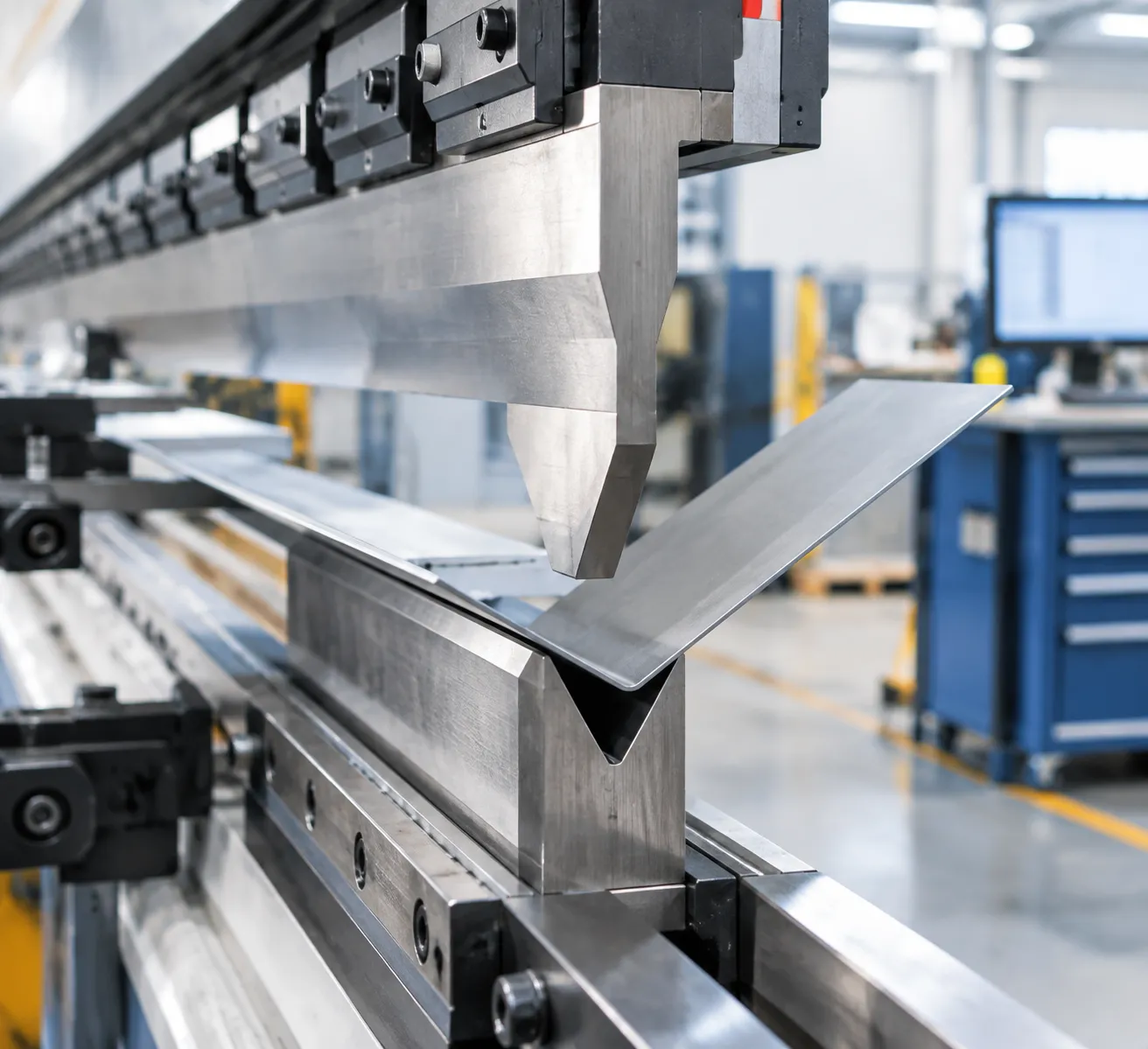
Bending galvanized sheet metal creates a high-friction environment under immense tonnage. As the sheet slides over the lower V-die, intense localized pressure generates sudden heat spikes.
- Adhesive Metal Transfer: Soft zinc coating reaches its deformation point long before the steel sheet bends.
- Micro-Welding: The friction-heated zinc peels off and welds itself directly to the cold die surface.
- Galling Accumulation: Repeated strokes layer this soft metal inside the V-die groove, leading to severe zinc pickup press brake issues.
How Zinc Flaking Ruins Fabrication Quality
Even a minor accumulation of zinc alters your tool geometry, triggering a chain reaction of quality control failures across your shop:
- Angle Inconsistency: Uneven zinc deposits change the workpiece penetration depth, leading to unpredictable springback and angle drift.
- Variable Bend Radii: As zinc builds up unevenly along the shoulder, the sheet no longer sits true, distorting your inside radius.
- Surface Scoring: Hardened flakes of zinc break off and drag across subsequent workpieces, leaving deep cosmetic scratches on raw sheets—a major defect for architectural and HVAC sheet metal bending dies.
The Hidden Danger of Improper Scraping Tools
When operators see zinc buildup, their first instinct is often to grab a steel chisel, screwdriver, or coarse grinder. This is a fatal mistake for precision tooling.
Using hardened steel tools to strip zinc will gouge and permanently scratch the V-die shoulder radius. Once you damage that ground surface, those microscopic scratches act like sharp teeth, grabbing twice as much zinc on the very next bend. Protecting your tooling investment requires proper die galling prevention techniques rather than brute-force scraping.
Safe Protocols for Press Brake Die Galvanize Removal
When zinc pickup coats V-die shoulders, taking a steel scraper or wire wheel to precision tooling permanently ruins shoulder radii and ruins machine tolerances. Safe press brake die galvanize remove procedures rely on non-destructive mechanical methods and safe chemical agents that strip soft zinc without scratching hardened tool steel.
Non-Destructive Mechanical Removal
For routine press brake tooling maintenance, mechanical cleaning must use materials softer than the die steel itself to prevent surface scoring:
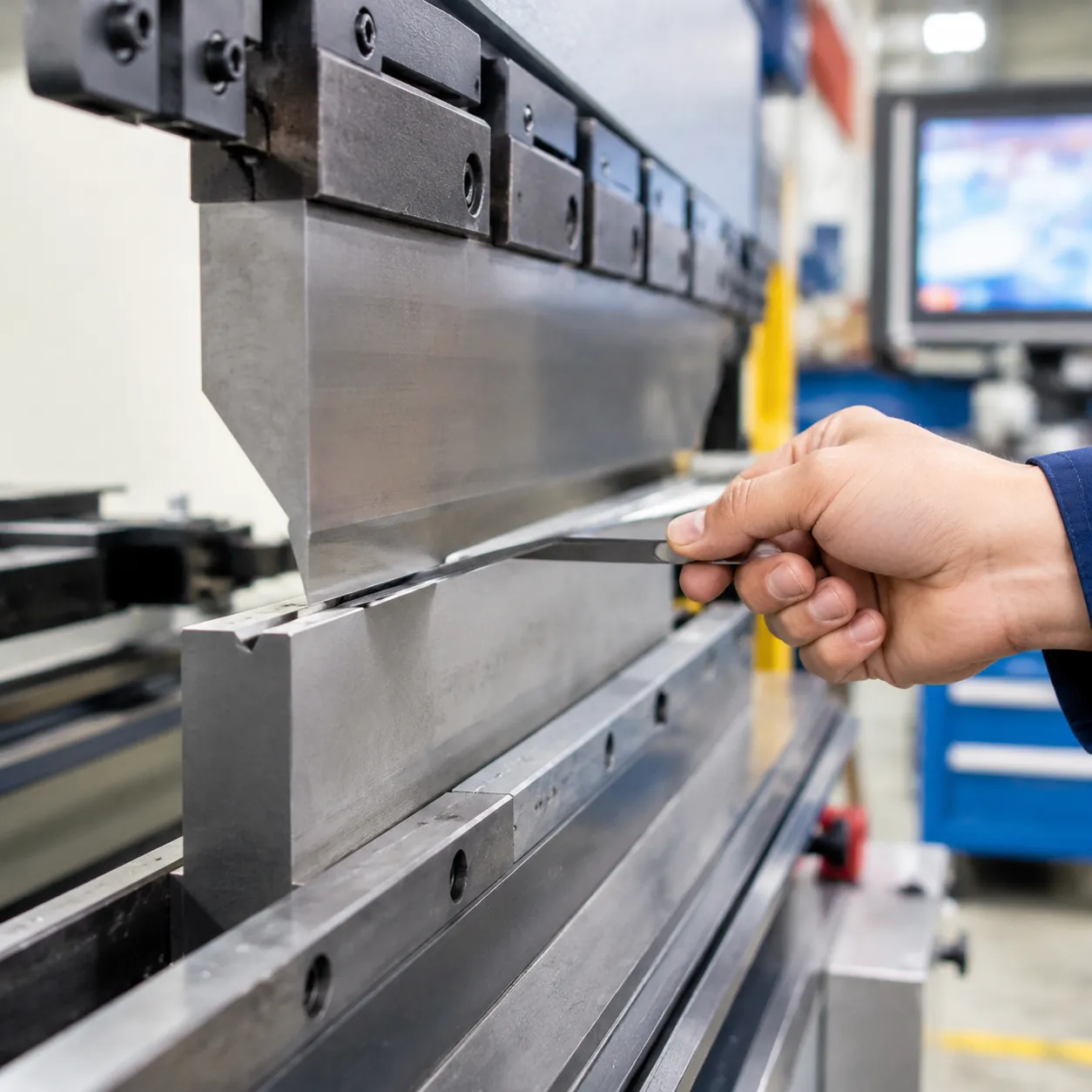
- Soft Brass Scrapers & Copper Pads: Manually push off heavy zinc flakes using a soft brass scraper or dense copper pad. Because brass and copper are softer than induction-hardened die steel (55–60 HRC), they shear off zinc deposits without scratching the shoulder.
- Arkansas Oilstones: For minor surface transfer and micro-galling, apply light machine oil to the V-opening and lightly dress the surface with a fine ceramic or Arkansas stone. Proper Arkansas oilstone tool care smooths high spots while preserving exact geometry outlined in a press brake die size chart and dimensions guide.
| Removal Method | Tools Required | Ideal Application | Die Surface Impact |
|---|---|---|---|
| Mechanical Shearing | Soft brass scraper, copper pad | Heavy, layered zinc flaking | Zero base-metal wear |
| Precision Stoning | Fine Arkansas oilstone, light oil | Micro-galling & localized ridges | Restores Ra < 0.8 µm finish |
| Chemical Stripping | Neutral degalvanizing spray | Thin, widespread zinc film | Chemical release without pitting |
Chemical Stripping Agents & Clean-Up
Chemical solvents release the adhesive bond of stubborn zinc films without labor-intensive scraping:
- Neutral Degalvanizing Sprays: Apply a neutral-pH degalvanizing spray across the zinc transfer zones. Avoid aggressive acids like muriatic or hydrochloric acid, which pit precision-ground finishes and destroy tool steel.
- Dwell Time & Wiping: Allow the spray a 3-to-5-minute dwell time to soften the zinc layer. Thoroughly wipe the die channel using non-abrasive industrial shop towels.
- Vacuuming Residual Flakes: Dry-vacuum the tooling surface and press brake bed to extract loose zinc dust so it won't contaminate the next job.
Post-Cleaning Surface Protection
Chemical stripping and mechanical dressing leave tool steel bare and vulnerable to flash rusting from shop humidity. Once you remove zinc buildup press brake die surfaces must be protected immediately:
- Coat all ground surfaces with a dedicated anti-rust protective oil or heavy-duty rust inhibitor before returning tools to storage racks.
- Check your setup parameters against our European press brake die rating guide for tonnage safety prior to loading cleaned tooling back into production.
Engineering Strategies to Prevent Press Brake Die Galvanization
How do we stop zinc pickup on press brake dies before it stalls production? Cleaning off buildup is a short-term fix; stopping adhesive wear requires fixing the friction problem at the contact point. By combining precision surface finishing, optimized die geometry, and protective barriers, we eliminate the micro-friction that causes soft zinc coatings to strip and transfer during galvanized sheet metal bending.
Precision Surface Roughness (Ra < 0.8 µm)
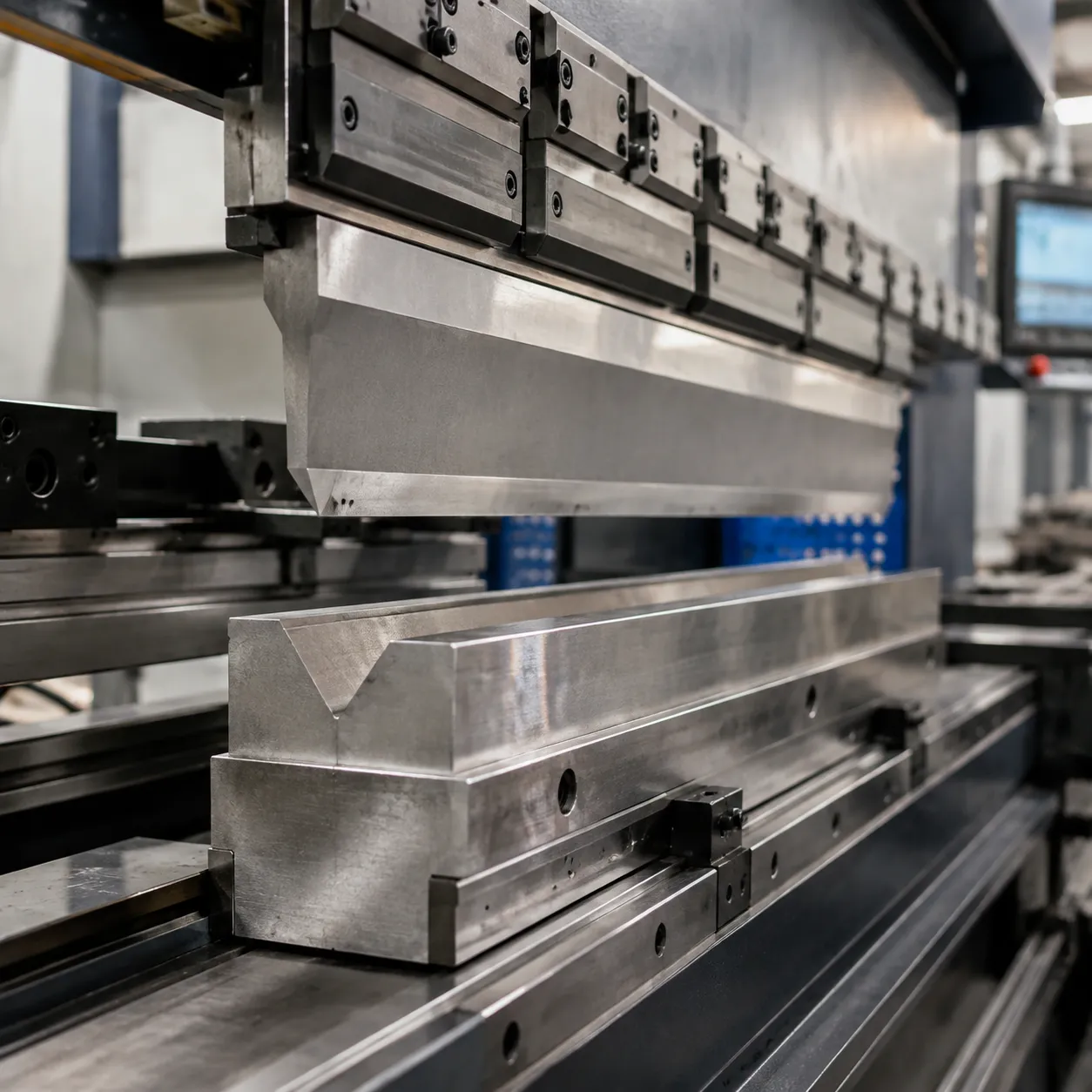
Standard milled dies feature microscopic surface peaks that act like teeth, scraping soft zinc off the sheet under tonnage. Tooling ground to Ra < 0.8 µm provides a mirror-like finish that dramatically lowers the coefficient of friction, giving zinc virtually no mechanical anchor points to adhere to during the bend stroke.
Deep Induction Hardening (55–60 HRC)
Un-hardened or lightly treated steel deforms under high forming pressure, generating localized frictional heat that welds zinc directly to the die shoulder. We utilize induction hardened press brake dies (55–60 HRC) with deep case depth. This high surface hardness prevents die deformation and stops zinc galling cold.
Physical Protective Barriers
When running critical jobs, eliminating metal-to-metal contact is the single most effective way to prevent zinc flaking:
Polyurethane Die Protection Film: Adhesive-backed die tape applied over the V-groove shoulder absorbs sliding friction and prevents raw sheet contact.
Anti-Marking Nylon Die Cloth: Heavy-duty woven sheets placed across the die bed protect both the workpiece surface and the press brake tooling.
Optimized V-Die Geometries
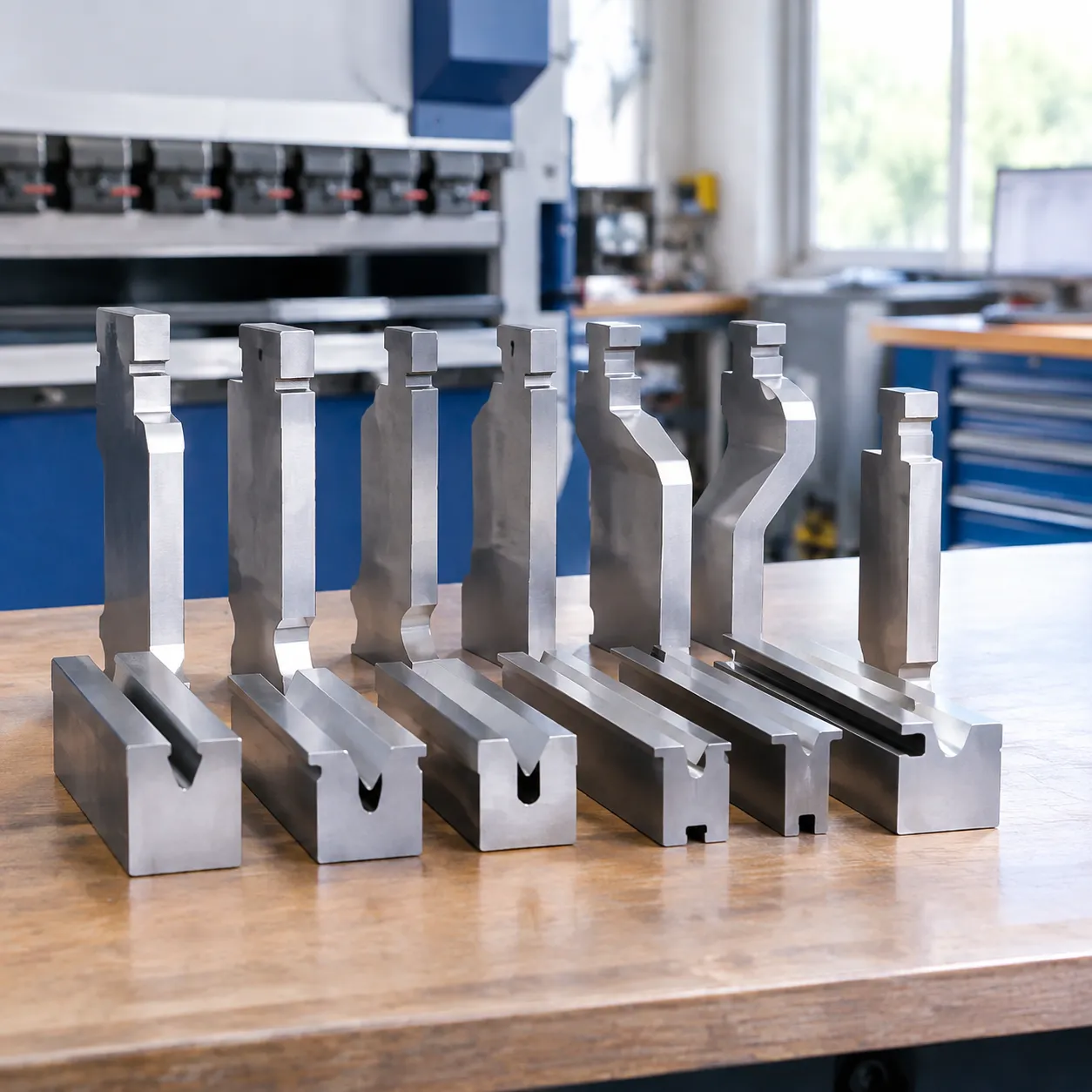
Tighter V-openings concentrate friction into a small contact area, causing rapid zinc transfer. Opening the V-die to 8x–10x sheet thickness and increasing the shoulder radius distributes forming pressure across a larger surface area. Upgrading your setup with precision-ground female press brake V-dies engineered with expanded shoulder radii drastically reduces sliding friction during deep bends.
Specialized Bending Lubricants
Dry bending galvanized sheet metal creates intense friction heat. Applying a light layer of vanishing lubricant for bending or specialized synthetic anti-galling oil cools the bend zone and provides a chemical barrier between the galvanized coating and die steel. Vanishing oils evaporate quickly after forming, leaving parts clean without requiring secondary washing.
CAMT Tooling Solutions for Galvanized Sheet Fabrication
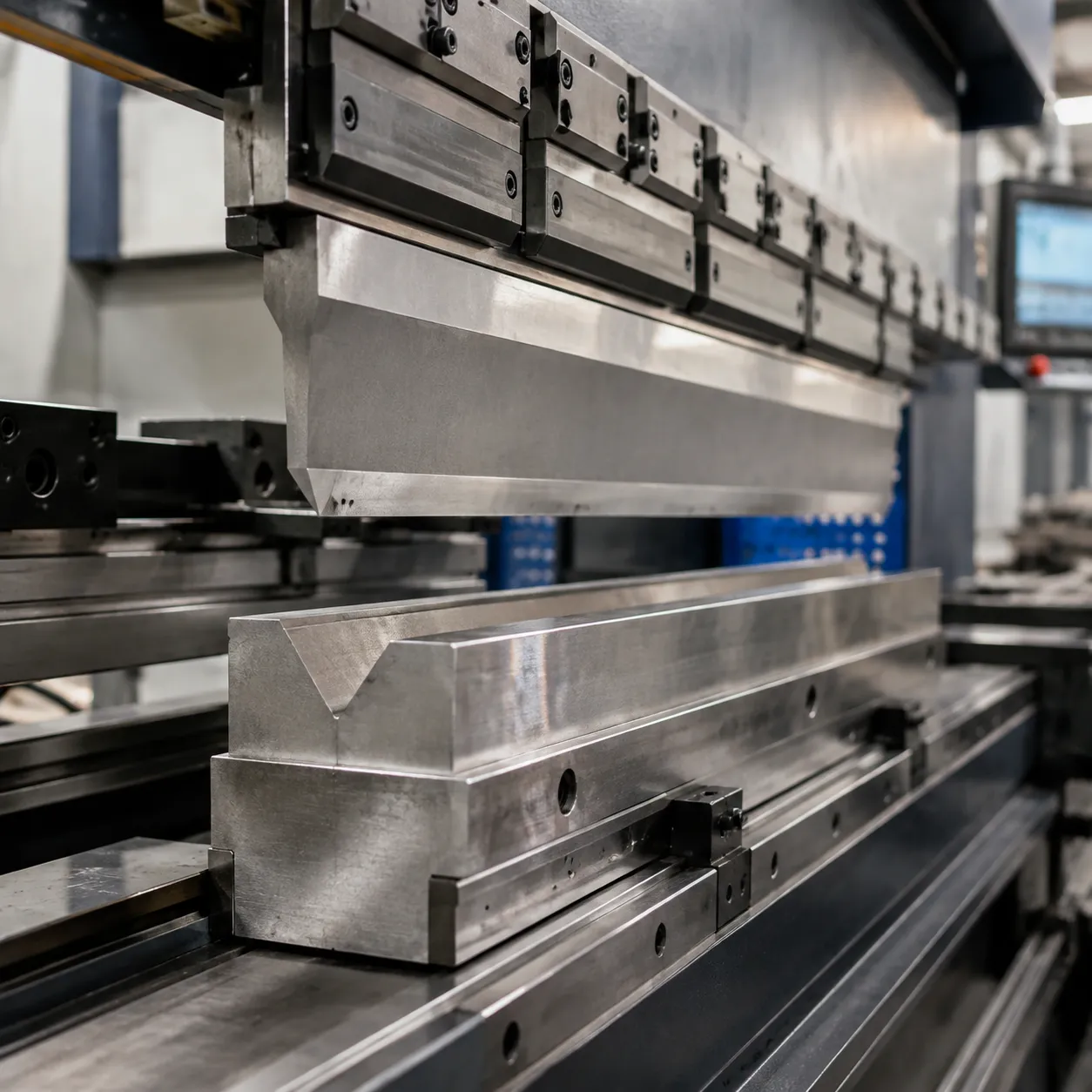
By pairing ultra-smooth surface finishes with targeted metallurgical hardening, our tooling eliminates zinc pickup before it degrades your bend accuracy.
Precision Engineering Benchmarks
- Micron-Level Grinding Tolerances (±0.01 mm): Eliminates micro-grooves where soft zinc particles wedge themselves, ensuring tight angle consistency.
- Ultra-Smooth Surface Roughness (Ra < 0.8 µm): Precision ground working surfaces drop friction coefficients drastically to prevent early micro-galling.
- Vacuum Heat-Treated Alloy Steel: High-grade alloy cores absorb intense shock loads without fracturing or core deformation.
- Localized Deep Induction Hardening (55–60 HRC): Hardened die shoulders resist physical scoring and zinc flaking under high tonnage.
Tooling Performance Comparison
| Feature / Standard | CAMT Precision Tooling | Standard Milled Tooling |
|---|---|---|
| Grinding Tolerance | ±0.01 mm | ±0.05 mm |
| Surface Finish | Ra < 0.8 µm | Ra 1.6–3.2 µm |
| Working Zone Hardness | 55–60 HRC (Induction Hardened) | 28–32 HRC |
| Zinc Pickup Resistance | Maximum | Low |
Our tooling provides drop-in compatibility across major machinery platforms without requiring modifications or adapter plates. Whether you run WILA press brake systems or operate high-speed Trumpf tooling setups, we manufacture precision ground dies for European, American Precision, and New Standard mounting systems—including Bystronic, LVD, Amada, and Cincinnati.
Daily Press Brake Die Maintenance Checklist
To maintain optimal performance and prevent press brake die galvanization, follow this shift-by-shift maintenance routine on your shop floor.
Pre-Shift Inspection: Preparation & Lubrication
Before striking the first bend, verify that your die shoulders are clean and properly lubricated to minimize initial friction:
- Surface Check: Inspect the V-die shoulder radii under bright lighting for leftover metallic dust, scale, or previous coating transfer.
- Light Oil Wipe-Down: Apply a thin, uniform layer of vanishing oil or light machine lubricant across the working surfaces of the die.
- Verify Tool Selection: Ensure you are using high-hardness, precision-ground tooling. Combining routine maintenance with proper hardened press brake die materials significantly reduces the rate of adhesive zinc transfer.
Mid-Shift Monitoring: Catching Early Zinc Pickup
Catching micro-galling early prevents soft zinc from compacting into hard, raised spots that gouge subsequent workpieces:
- Visual Part Audits: Inspect bent sheet metal flanges every 20–30 hits for surface scoring, flaking, or unexplained angle variation.
- Spot Mechanical Cleaning: If zinc transfer begins to form inside the V-die, pause the press brake and use a soft brass scraper or copper pad to gently remove zinc buildup press brake die surfaces without scratching the hardened steel.
- Re-lubricate: Reapply light lubricant to high-friction contact points immediately after clearing zinc particles.
Post-Shift Care: Deep Cleaning & Rack Storage
At the end of the shift, thoroughly clean and store tooling to protect precision-ground finishes from corrosion and contamination:
| Maintenance Step | Action Required | Recommended Tool / Agent |
|---|---|---|
| Neutral Chemical Cleaning | Spray V-die working areas to dissolve soft zinc film and wipe clean | Neutral-pH degalvanizing spray & lint-free industrial towel |
| Corrosion Prevention | Coat clean die surfaces with a rust-preventative oil layer | Non-gumming anti-rust protective spray |
| Structured Storage | Return dies to dedicated wooden or polyurethane-lined racks | Specialized press brake tooling storage rack |
Frequently Asked Questions About Press Brake Die Galvanization
How often should press brake dies be cleaned when bending galvanized steel?
Clean the dies at least once per shift, or immediately when you spot early zinc pickup along the shoulder radii. For high-volume production or heavy-gauge galvanized sheet metal, wipe down the tooling every 2 to 4 hours using a soft copper pad or brass scraper with light machine oil.
- Light production: End-of-shift inspection and light anti-rust oil wipe-down.
- Heavy production: Mid-shift mechanical cleaning of micro-galling to prevent permanent surface scoring.
- Tooling checks: Periodically inspecting your press brake V-dies ensures smooth sheet movement and stops localized zinc accumulation before it ruins bend consistency.
Will chemical degalvanizing sprays corrode or damage precision-ground die steel?
No, provided you stick to neutral-pH degalvanizing agents specifically formulated for metalworking tooling. To safely execute a press brake die galvanize remove routine with chemicals:
- Safe dwell time: Apply the spray, allow 3 to 5 minutes to soften the zinc buildup, and wipe completely clean with non-abrasive shop towels.
- Avoid strong acids: Never use muriatic or raw hydrochloric acids, as they degrade micro-finish tolerances (Ra < 0.8\ μm) and cause surface pitting.
- Post-cleaning seal: Always apply a fresh coat of protective machine oil right after chemical stripping to guard raw tool steel against flash rust.
Does using polyurethane protective tape alter bend angle accuracy or tolerances?
Polyurethane die protection tape adds a thin film layer (typically 0.4 mm to 0.8 mm thick) inside the V-opening. While this slightly changes punch penetration depth, it does not alter overall precision when properly managed:
- RAM depth adjustment: Adjust Y-axis penetration depth down by the film's thickness to compensate and lock in accurate bend angles.
- Eliminates metal-to-metal contact: The barrier prevents zinc flaking and galling entirely, protecting surface-hardened die shoulders (55–60 HRC).
- Extended die longevity: Preventing friction wear significantly prolongs tool precision—review our complete press brake V-die lifespan guide to see how protective barriers extend tool service life under heavy usage.