
Formula details
Product Details
Overview
Technical Performance & Engineering Advantages
| Performance Driver | Technical Feature | Engineering Benefit |
|---|---|---|
| Minimized Downtime | Multi-angle & multi-radius single setup | Executes distinct bends in one stroke, drastically reducing setup time. |
| Collision-Free Geometry | Relief-contoured tool design | Clears deep channel profiles, narrow return flanges, and enclosed cabinet profiles. |
| Enhanced Wear Resistance | Certified 4140 alloy tool steel | Withstands repeated high-tonnage pressing without edge breakdown or deformation. |
| Surface Protection | Ultra-smooth Ra < 0.8 µm finish | Minimizes friction drag to deliver mark-free bending on sensitive sheet metals. |
Core Tooling Highlights
- Single-Setup Efficiency: Process progressive geometry changes on one machine bed without mid-process tooling adjustments.
- High-Strength Durability: Engineered from certified alloy steel with targeted edge hardening to handle continuous, high-tonnage forming.
- Part Surface Integrity: Micro-finished tool surface prevents material galling and stops tooling marks on aluminum, stainless, and pre-painted sheets.
Technical Specifications Matrix for Multi Bend Press Brake Die
| Specification | Baseline Target |
|---|---|
| Material Grade | Certified 4140 alloy steel bending die steel, 42CrMo, or custom alloy steel |
| Grinding Tolerance | CNC precision ground press brake die accuracy to ±0.01 mm across full tool length |
| Working Surface Hardness | Edge: HRC 55–60 (Deep Induction Hardening) Core: HRC 28–32 |
| Surface Finish Roughness | Ultra-smooth Ra < 0.8 µm |
| Sectional Length Options | Full-length or custom precision segments |
| Quality Inspection | 100% CMM optical inspection & hardness verification |
Built for Precision Bending Performance
Our sheet metal bending tooling combines high core toughness with hard wear zones to maximize tool life under continuous production:
- Induction-Hardened Working Edges: Deep induction hardening on high-wear radii prevents structural fatigue while maintaining core ductility.
- Tight Tolerances: Precision grinding eliminates angular variation across long sheet sections or segmented tooling setups.
- Low-Friction Surface Finish: An ultra-smooth Ra < 0.8 µm finish minimizes surface friction, protecting sensitive alloys and reducing galling. For specialized tool geometry requirements, we design fully tailored custom press brake tooling built to your exact forming specifications.
Specialized Multi-Bend Profiles & Tool Configurations
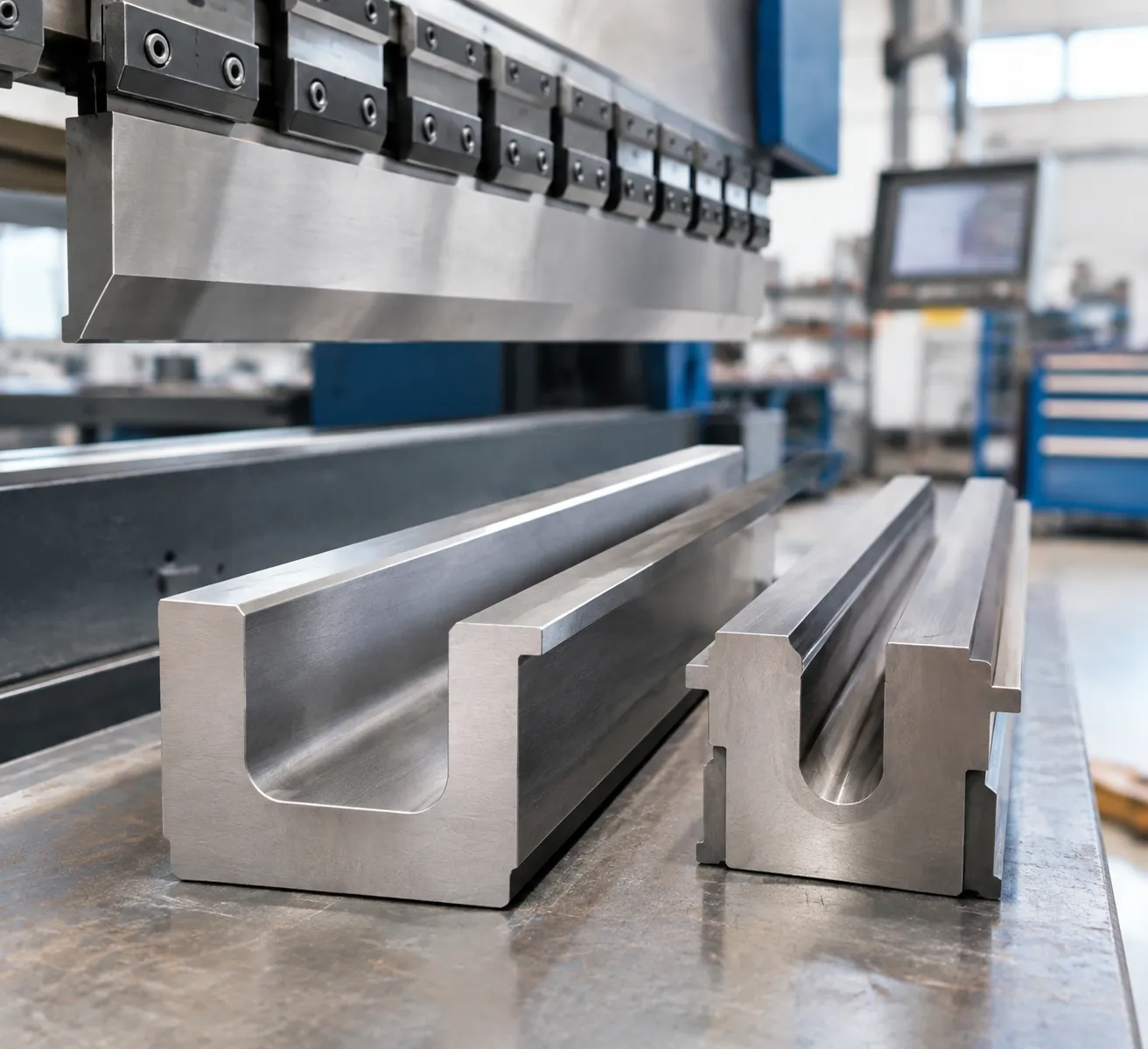
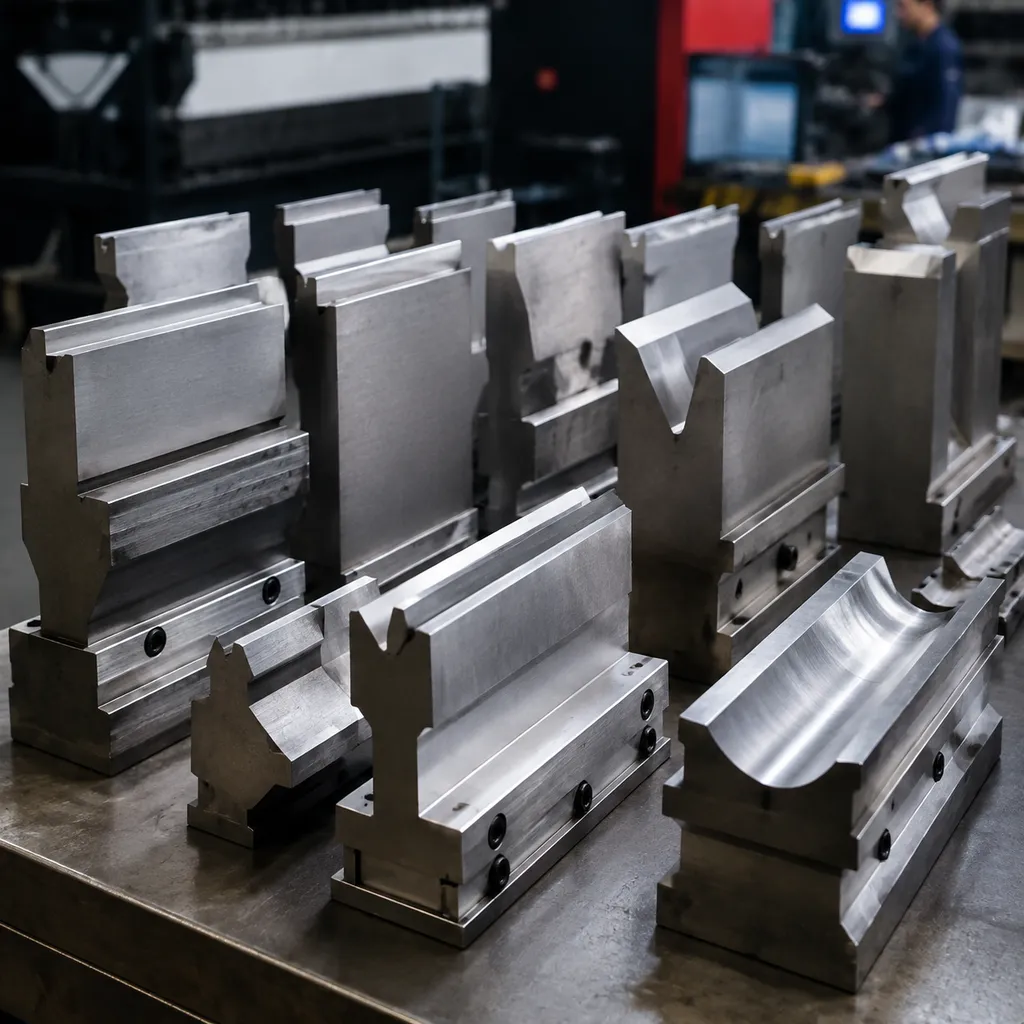
We engineer target-specific multi bend press brake die setups to form complex profiles in fewer press strokes. Matching the die geometry directly to your part specifications prevents workpiece interference and drastically cuts down production cycles.
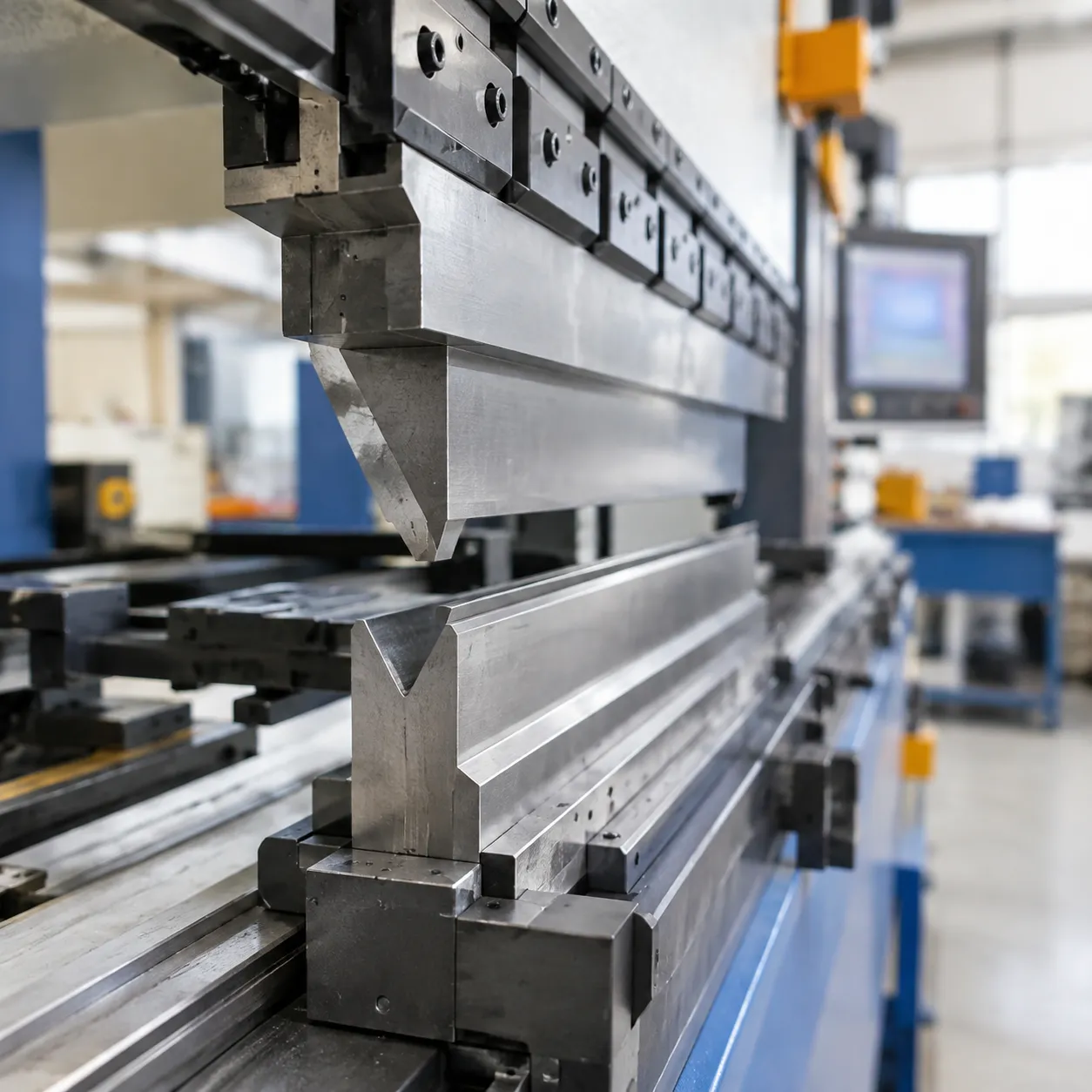
Multi-V Rotating Die Blocks
- Our heavy-duty 4-way press brake die blocks combine multiple V-openings—ranging from 6 mm to 100 mm+—on a single indexable body.
- Enables operators to process various sheet metal thicknesses across multiple bend steps without changing dies.
Custom Channel & Hat-Section Dies
- Form double-bend channel geometries and tight U-profiles in a single hit.
- Eliminates multi-step forming passes, ensuring uniform flange dimensions across high-volume production runs.
Gooseneck & Deep-Offset Multi-Bend Tooling
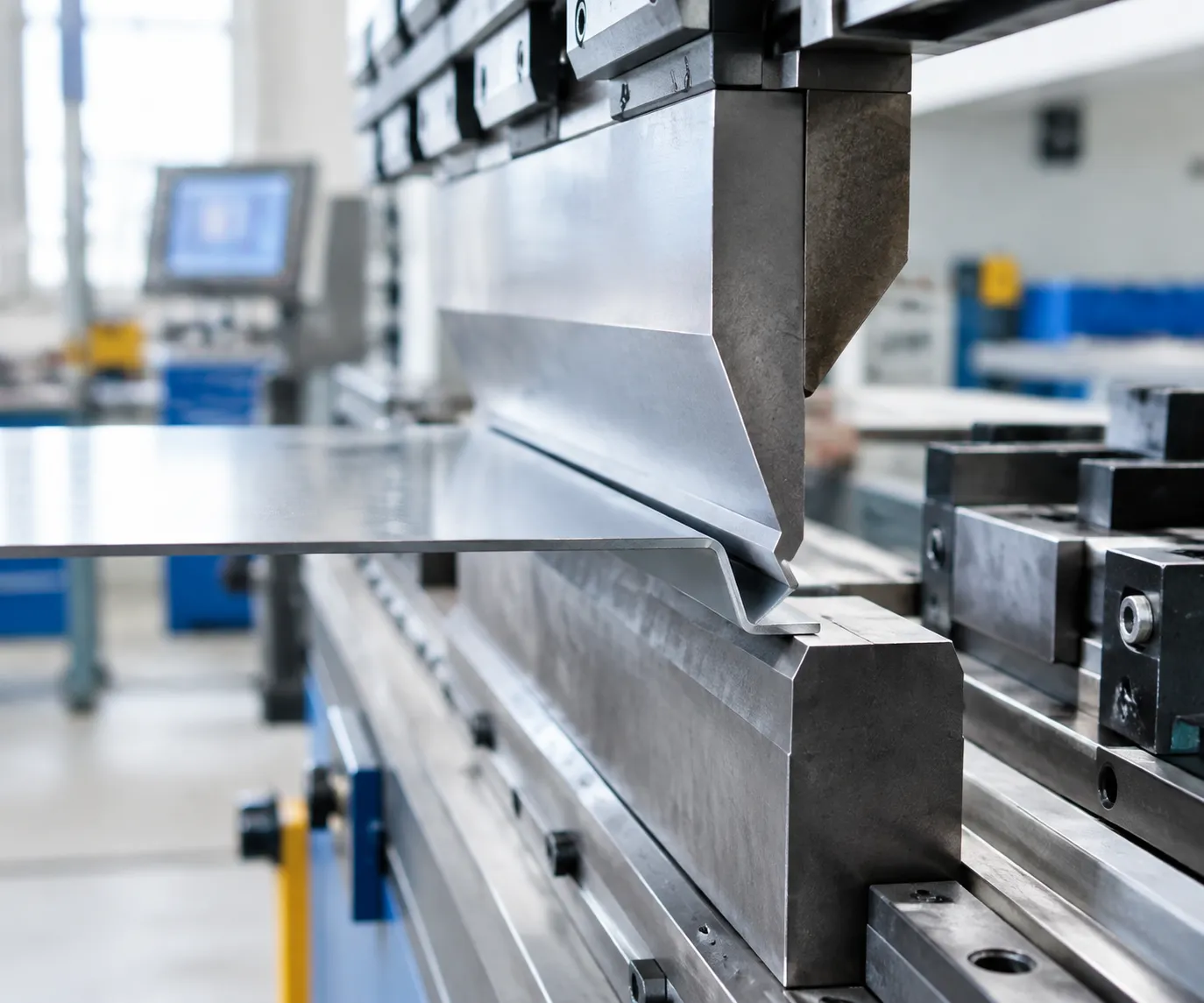
- Feature deep relief geometry designed to clear long return flanges.
- Prevents tool-part collision when forming deep box enclosures, electrical switchgear chassis, and architectural panels.
Adjustable & Modular V-Dies
- Available in CNC-controlled or manually adjusted variable V-opening configurations.
- Accommodates heavy plate variations smoothly while matching seamlessly with our versatile range of multi-V press brake dies.
System Compatibility & Machine Adaptation
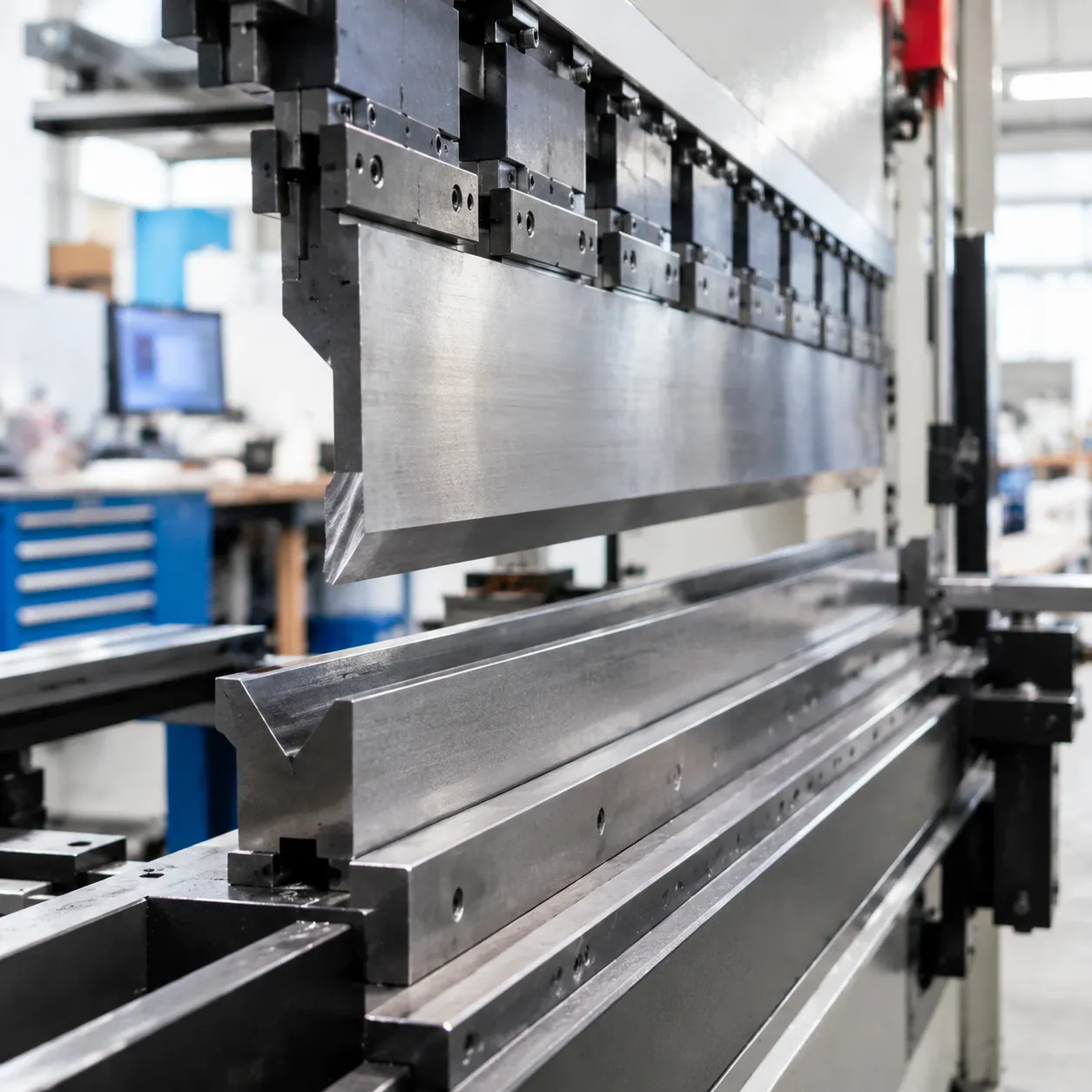
We engineer every multi bend press brake die to seat directly into your existing machinery without requiring custom adapter plates or bed modifications.
- European Precision Style: Engineered with standard bottom safety tangs for solid bed alignment. Reference our European press brake die rating guide for tonnage safety to match exact load ratings for multi-stage bottoming operations.
- American Standard / Precision Style: Features direct-fit tang geometries for drop-in setup on traditional North American rams and beds. Browse our direct-fit American style press brake tooling for compatible mounting configurations.
- WILA / Trumpf / New Standard Style: Utilizes self-seating precision pins and clamping grooves engineered for automated, hydraulic push-button clamping systems to minimize setup times.
- Broad OEM Brand Compatibility: Fully integrated with leading press brake machines including Amada, Bystronic, LVD, Cincinnati, Trumpf, WILA, and Durma.
Target Application Scenarios for Multi Bend Press Brake Dies
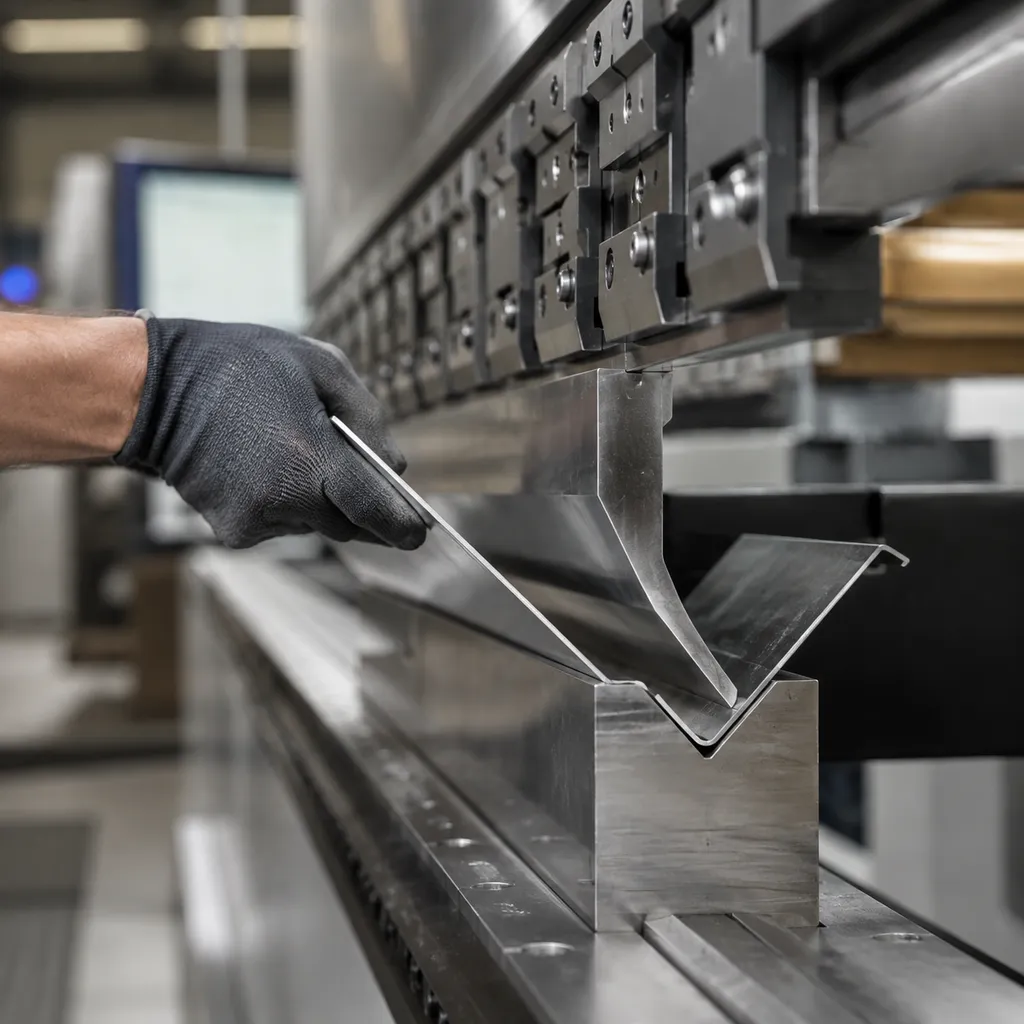
We design our multi bend press brake die tooling to eliminate setup bottlenecks and solve clearance issues across demanding sheet metal fabrication sectors.
- Electrical Enclosures & Switchgear: Form intricate multi-side return flanges and deep box channels without tool collisions or part interference.
- Elevator & Architectural Panels: Deliver flawless, mark-free bends on decorative aluminum cladding and high-finish stainless steel processing jobs.
- HVAC & Metal Furniture: Enable high-speed progressive forming on thin-gauge galvanized ducting, channels, and cabinet frames.
- Heavy Machinery & Infrastructure: Handle high-tonnage multi-stage bending on thick, high-tensile structural steel plates with complete confidence.
CAMT Custom Engineering & 3D Bending Simulation Workflow
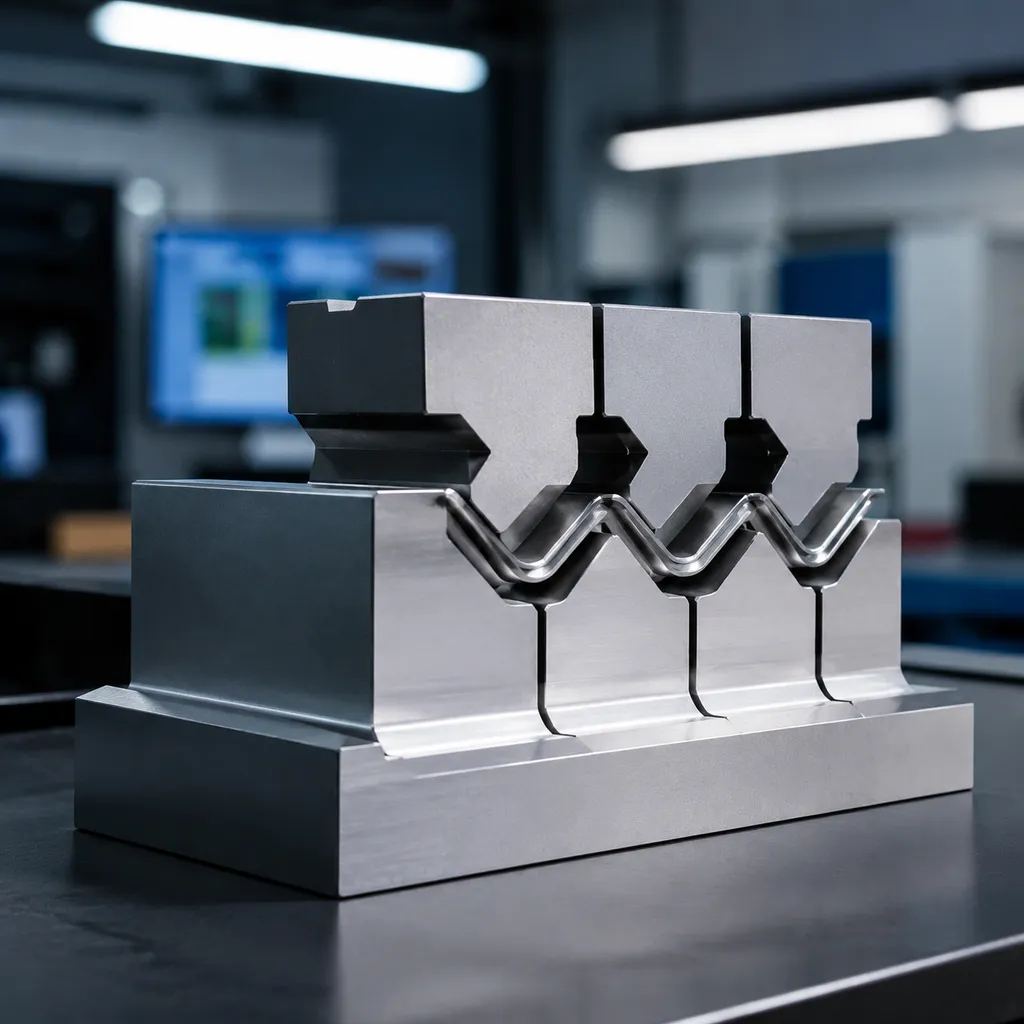
CAD Submission & Analysis
Submit your 2D files (DXF/DWG) or 3D models (STEP/IGES). We evaluate part geometry, bend sequence, flange heights, and sheet thickness to determine the exact punch and die setup needed for your sheet metal bending tooling.
3D Bending Simulation
We run full press-stroke 3D simulations to identify potential interference between the sheet metal, ram, and bed. This digital modeling verifies clearance for deep channel profiles, narrow return flanges, and complex offsets prior to manufacturing.
Tonnage & Springback Calculation
Our engineering team calculates exact bending force requirements based on material tensile strength, yield, and sheet thickness. We build springback compensation directly into the tool geometry to hit target bend angles consistently. To review material selection limits and structural properties, refer to our press brake tooling material guide.
Precision CNC Tooling Fabrication
Each CNC precision ground press brake die is manufactured from certified alloy tool steel through multi-axis CNC milling, vacuum heat treatment, and deep induction edge hardening. grinding achieves ultra-tight tolerances and smooth contact surfaces.
CMM Quality Inspection
Every finished die section undergoes comprehensive quality testing before packaging:
- Dimensional Precision: Verified across full tool length to ±0.01 mm using CMM optical measurement.
- Hardness Profile: Induction-hardened working edges rated at HRC 55–60, with a shock-absorbing core at HRC 28–32.
- Surface Polish: Roughness profiling ensures an Ra < 0.8 µm finish to eliminate friction drag and surface marking on bent parts.
Frequently Asked Questions (Technical FAQ)
What is the advantage of a multi bend press brake die over standard single-V dies?
A multi bend press brake die allows operators to process multiple material thicknesses or perform progressive channel bends in a single machine setup. Unlike standard single-V dies that require constant tooling swaps, a 10-way multi-V die block or custom multi-stage profile minimizes machine downtime, speeds up production cycles, and easily accommodates complex, narrow-return flanges.
How do I select the correct V-opening for a multi-V bending die?
Selecting the correct V-opening depends on material thickness (t), yield strength, and the required inner bend radius. We generally recommend applying the 8x t rule for air bending mild steel:
| Material Thickness (t) | Recommended V-Opening (V) | Typical Application Scenarios |
|---|---|---|
| 0.5 – 1.2 mm | 6 mm – 8 mm | Thin-gauge HVAC ducting, light chassis |
| 1.5 – 2.5 mm | 12 mm – 16 mm | Electrical enclosures, switchgear cabinets |
| 3.0 – 4.0 mm | 22 mm – 32 mm | Heavy metal furniture, structural channels |
| 5.0 mm and above | 8x t to 10x t | Infrastructure components, thick plate |
For specialized profiles or acute angles, review our full range of press brake V-dies to match your machine tonnage and springback parameters.
Can CAMT customize multi-bend tooling for specific press brake clamping systems?
Yes. We manufacture and precision-grind custom multi-bend tooling to match any press brake clamping system on the market:
- WILA / Trumpf / New Standard: Self-seating pin and button-clamping systems
- European Precision Style: Standard bottom safety tangs and bed configurations
- American Standard: Conventional press brake tang geometries
- Brand Compatibility: Direct fit for Amada, Bystronic, LVD, Cincinnati, and Durma machinery
How does CAMT prevent sheet metal scratching during multi-bend operations?
We protect sensitive materials like stainless steel, aluminum, and pre-painted sheet metal through three main features:
- Ultra-Smooth Surface Finish: CNC precision grinding achieves a surface roughness of Ra < 0.8 µm, drastically lowering friction drag.
- Deep Induction Hardening: Edge hardness reaching HRC 55–60 prevents galling and material pickup on the die shoulders.
- Non-Marking Accessories: Compatible geometry designed to work seamlessly with protective polyurethane die film.
Related Sources
- https://www.wilatooling.com/en-us/products/press-brake-tooling/new-standard-tooling/new-standard-premium
- https://camttooling.com/product/press-brake-die-sets-for-sale-high-strength-steel/
- https://www.harsle.com/docs/change-v-opening-
- https://www.wilatooling.com/en-us/products/press-brake-tooling/new-standard-tooling/new-standard-premium/