
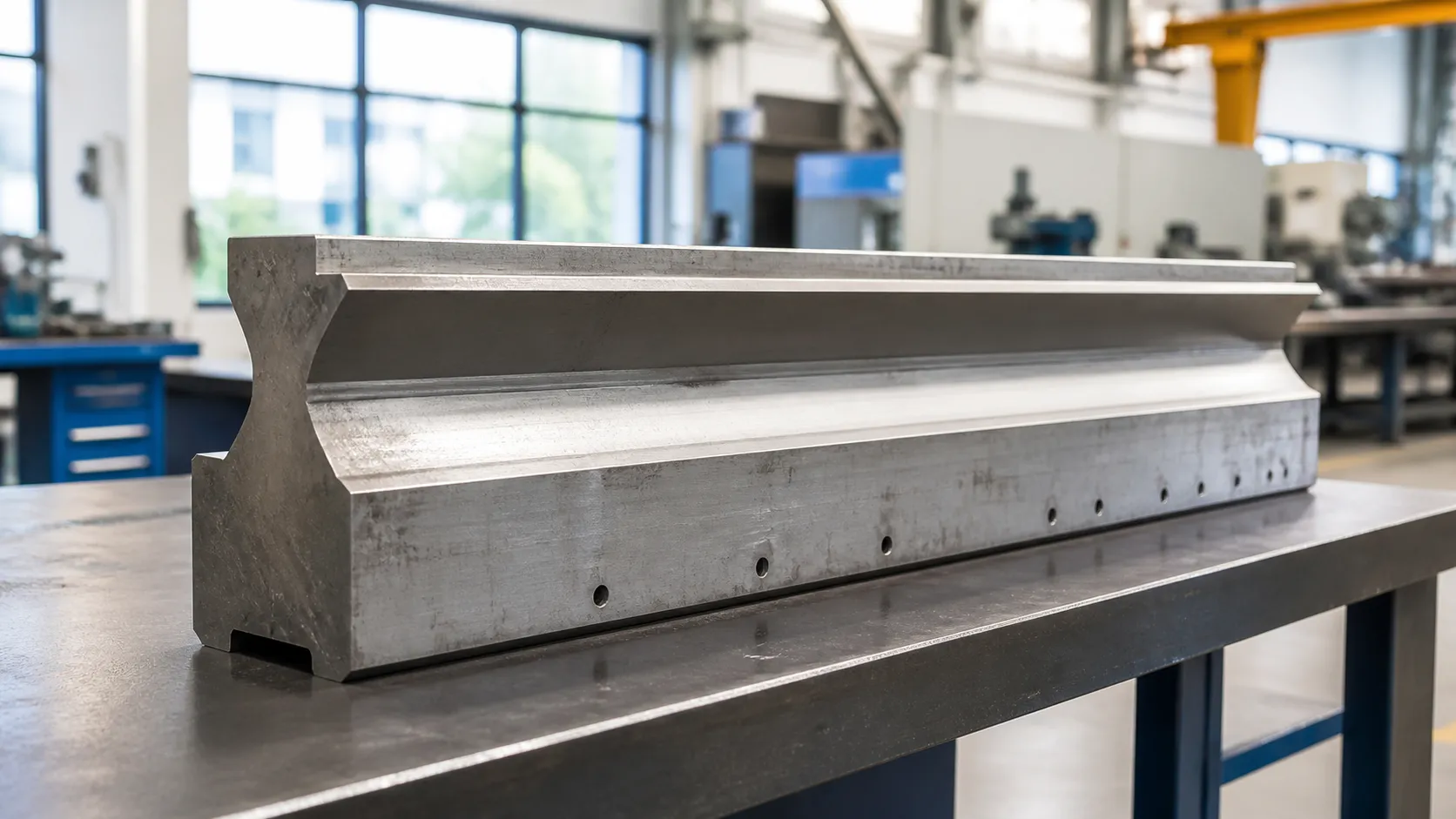
Formula details
Product Details
Overview
High-Tonnage Performance & Structural Integrity
Core Engineering Specifications
- Base Material: Forged 42CrMo alloy steel for extreme compressive yield strength
- Grinding Tolerance: Precision CNC profile grinding to ±0.01 mm
- Working Surface Hardness: Localized induction hardening to HRC 55–60
- Surface Polish: Ultra-smooth finish of Ra < 0.8 µm to minimize friction and material galling
- Load Rating: Full capacity performance engineered for 250-ton hydraulic press brake operations
Technical Specifications & Dimension Matrix
Below is our standardized dimension matrix covering off-the-shelf single V, adjustable, and multi-V dies built for high-tonnage operations.
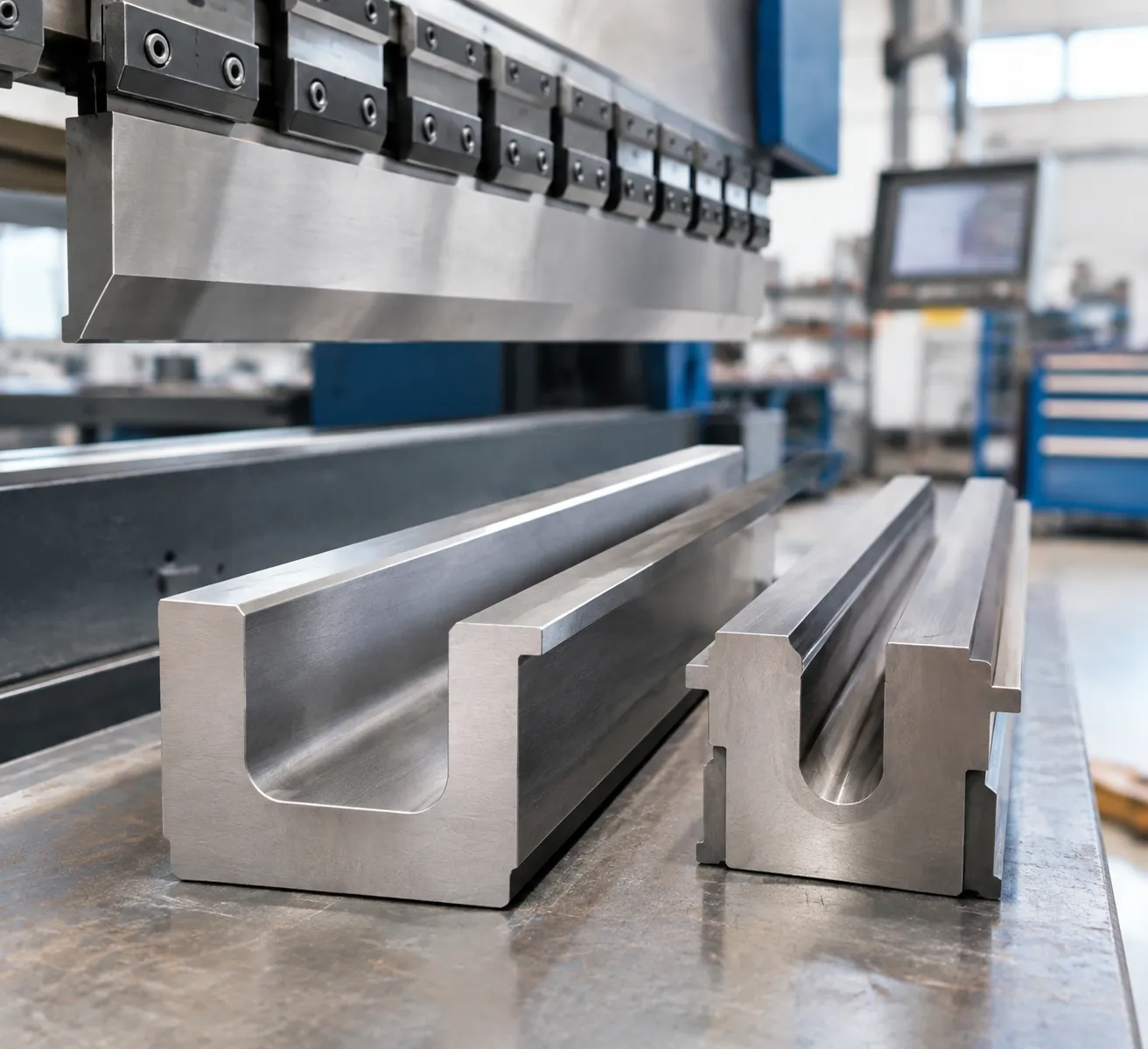
250-Ton Lower Die Model Specifications
| Die Type | V-Opening Range | Max Plate Thickness | Max Load Capacity | Standard Lengths |
|---|---|---|---|---|
| Single V-Die | 16 mm – 100 mm | 1.5 mm – 10 mm | 250 Ton / Meter | 835 mm, 415 mm, Custom |
| Multi-V Block | 16 mm – 160 mm | 1.5 mm – 16 mm | 220 Ton / Meter | 835 mm, 415 mm, Solid |
| Adjustable V-Die | 60 mm – 300 mm | 6.0 mm – 25 mm | 250 Ton / Meter | Modular Sections |
Modular & Segmented Length Options
To optimize setup times and operator handling on heavy tooling, we offer versatile sectioning for all segmented press brake dies:
- Standard Full Length (835 mm): Perfect for long-run production on continuous bed lengths.
- Half Length (415 mm): Lighter weight for fast manual tool changes and localized forming.
- Sectioned Sets (835 mm Cut Set): Pre-segmented into precise block sizes for box forming and varied flange dimensions.
- Custom Sectioning: Custom-machined lengths tailored directly to fit your specific press brake bed grooves.
Review our detailed press brake tonnage guide to verify specific opening calculations and safety load limits for your 250 ton press brake tooling setups.
42CrMo Press Brake Tooling Metallurgy & Heat Treatment
To withstand extreme bending forces without cracking or deforming, every 250 ton press brake die we manufacture relies on premium 42CrMo alloy tool steel. This material delivers exceptional tensile strength and high compressive stress resistance during heavy-gauge plate forming. To learn more about selecting the best steel grades for your shop, review our detailed press brake die material guide.
Two-Stage Thermal Treatment Process
We subject each die body to a specialized dual-stage heat treatment process to maximize service life under peak hydraulic pressure:
- Controlled Vacuum Heat Treatment: We process the entire tool body in a vacuum furnace to achieve a uniform core toughness of HRC 47–52. This structural base prevents catastrophic body cracking under maximum tonnage loads.
- High-Frequency Induction Hardening: We apply localized induction hardening directly to the high-wear working V-radii and shoulders. This raises working surface hardness to HRC 55–60, drastically reducing wear, galling, and radius breakdown over thousands of cycles.
By pairing a shock-absorbing core with hardened working surfaces, our 42CrMo press brake tooling ensures long-term dimensional precision under heavy fabrication demands.
V-Die Opening Guidelines & Tonnage Calculations
Calculating the correct lower V-die opening and tonnage limits is critical to protecting your tooling and achieving precise bend angles under heavy loads.
The 10–12× Plate Thickness Rule
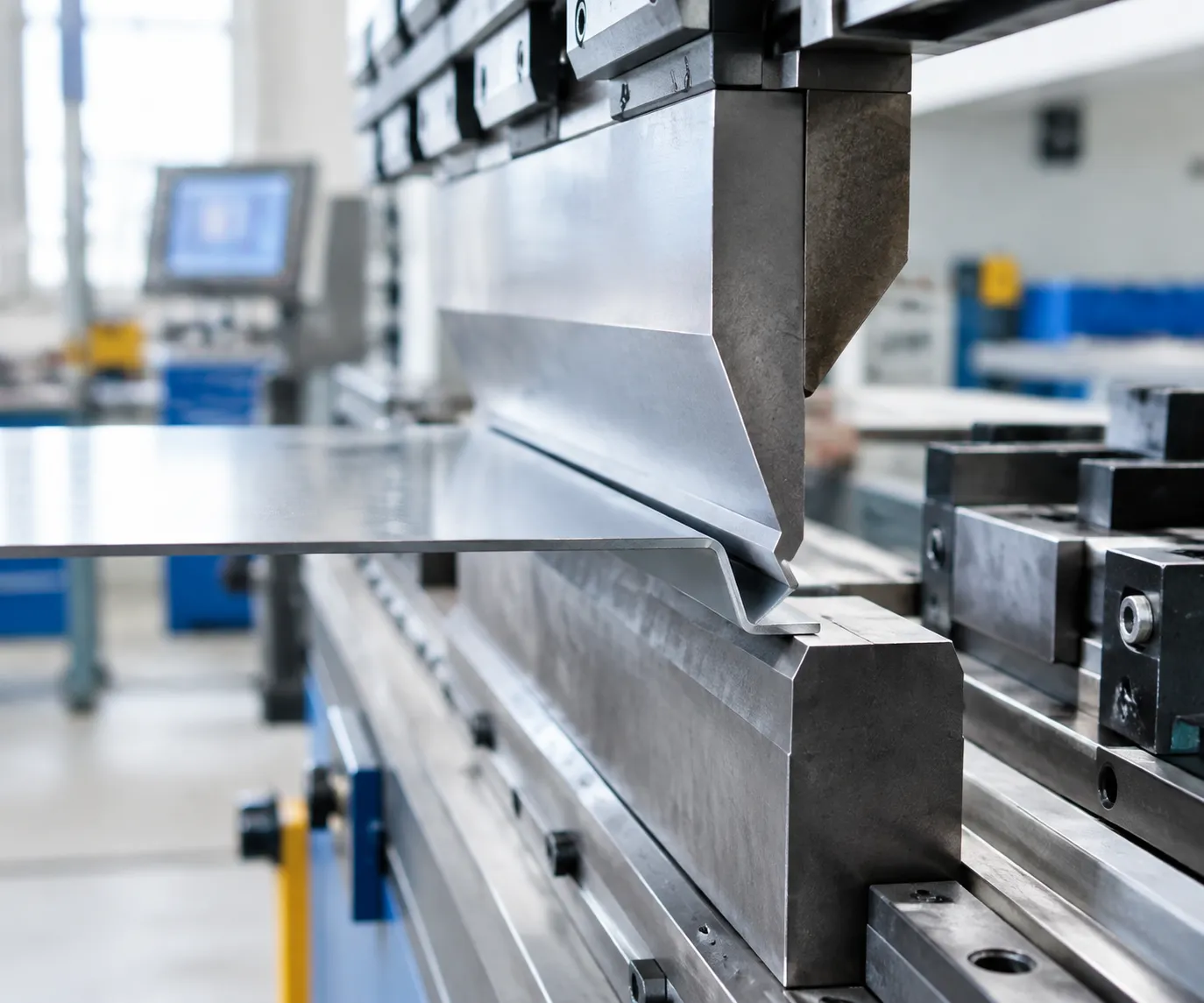
When forming heavy plate with a 250 ton press brake die, standard rules shift. While light sheet metal typically uses an 8× opening, high-tensile heavy plate requires a 10–12× plate thickness opening:
- Reduces Tonnage Demand: Spreading the bend force over a wider V-opening significantly lowers the required bending force per foot.
- Prevents Tool Stress: Keeps load levels well within our dies' certified operating limits to prevent micro-fracturing.
- Improves Bend Radius: Delivers smoother bend radii with a lower risk of outer-flange cracking on structural steel.
Choosing the right female press brake v-die opening ensures your machine runs efficiently without straining hydraulic pumps or damaging the bed rail.
Air Bending vs. Bottoming Tonnage Ratings
Understanding your press brake die load capacity per linear foot or meter prevents structural fatigue and tool failure:
| Bending Method | Tonnage Requirement | 250-Ton Capacity Suitability |
|---|---|---|
| Air Bending | Lower force baseline | Recommended: Ideal for full 10 ft to 14 ft heavy plate forming. |
| Bottoming | 3× to 5× Air Bending load | Restricted: Limited to lighter gauges or short section lengths to prevent tool overload. |
Crowning & Deflection Compensation Across Full Bed Lengths
Applying 250 tons across 10 ft, 12 ft, or 14 ft bed lengths causes natural machine ram and bed deflection, resulting in uneven bend angles from end to center. We correct bed deflection using two key approaches:
- Controlled Crowning Systems: Integrating hydraulic or mechanical crowning beds that counter-deflect under load to ensure a uniform angle across the full part length.
- Precision Shimming: Utilizing micro-shims under the lower die mount for fixed-bed setups to achieve repeatable angular accuracy on long production runs.
Universal Machine Compatibility & Clamping Style Integration
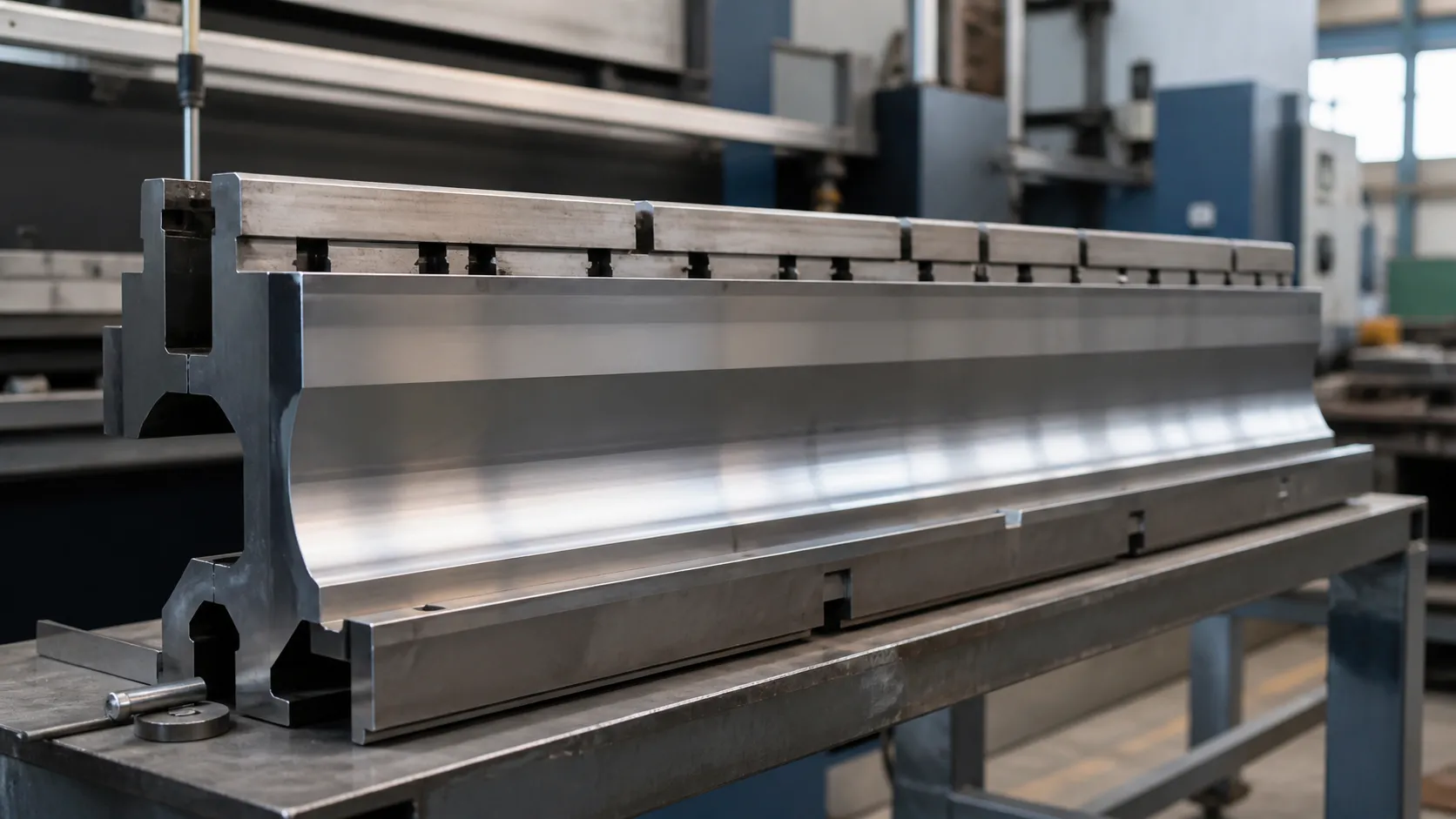
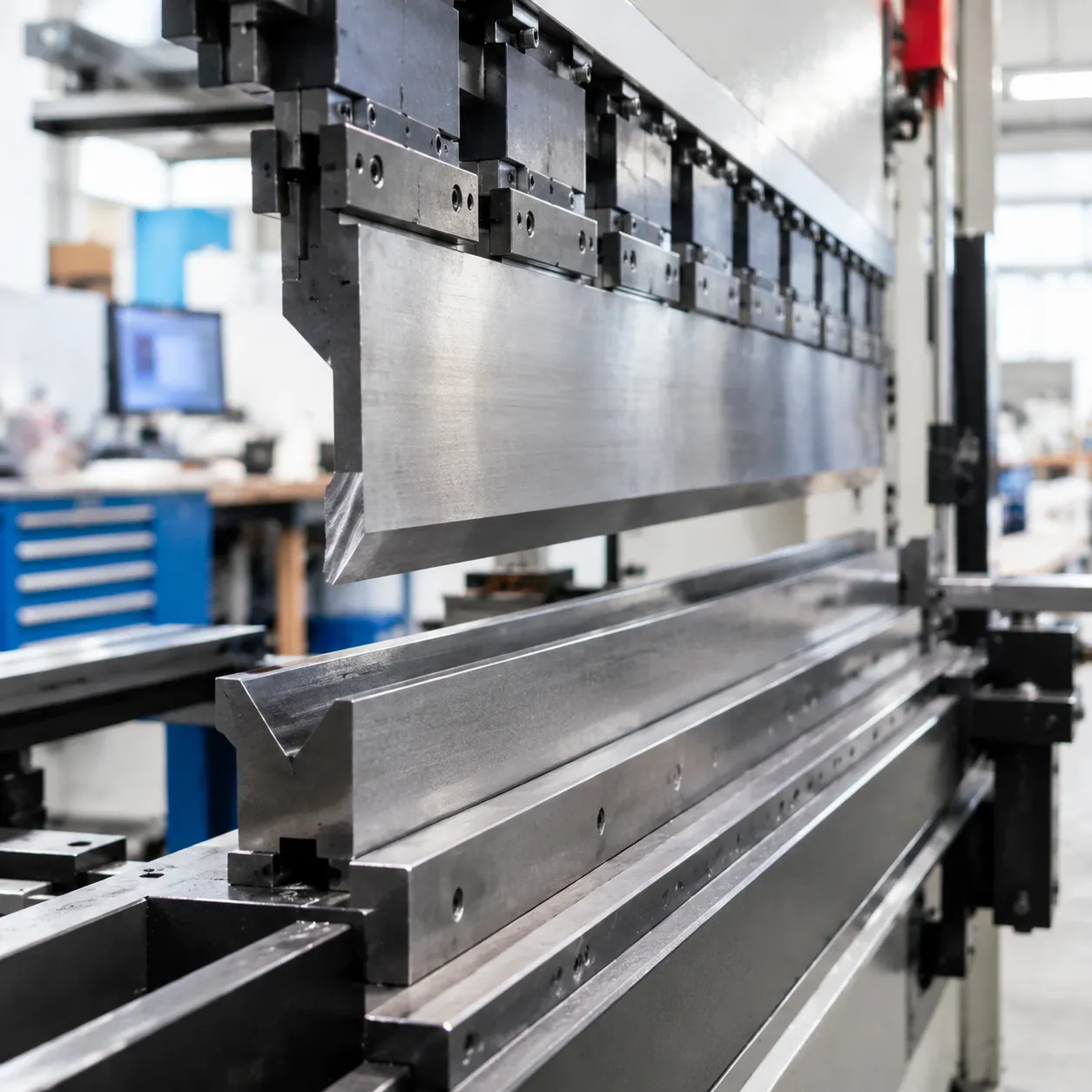
- American Precision Style: Features standard safety tangs and planed bases designed for a secure seat in traditional American press brake bed groove mounts.
- European / Promecam Style: Engineered as quick-change sectioned blocks fitting any standard European style bottom die receiver, enabling fast tool swaps during high-tonnage runs.
- New Standard / WILA Style: Built for pin-locking hydraulic and pneumatic clamping systems, delivering max alignment accuracy when using WILA style heavy duty tooling.
- Custom Bed Rail Mounts: We manufacture custom bottom tangs and adapter rails tailored to exact OEM specifications for Bystronic, LVD, Trumpf, Amada, and Cincinnati machinery.
Specialized 250-Ton Tooling Configurations
Multi-V Die Blocks & Single V-Dies
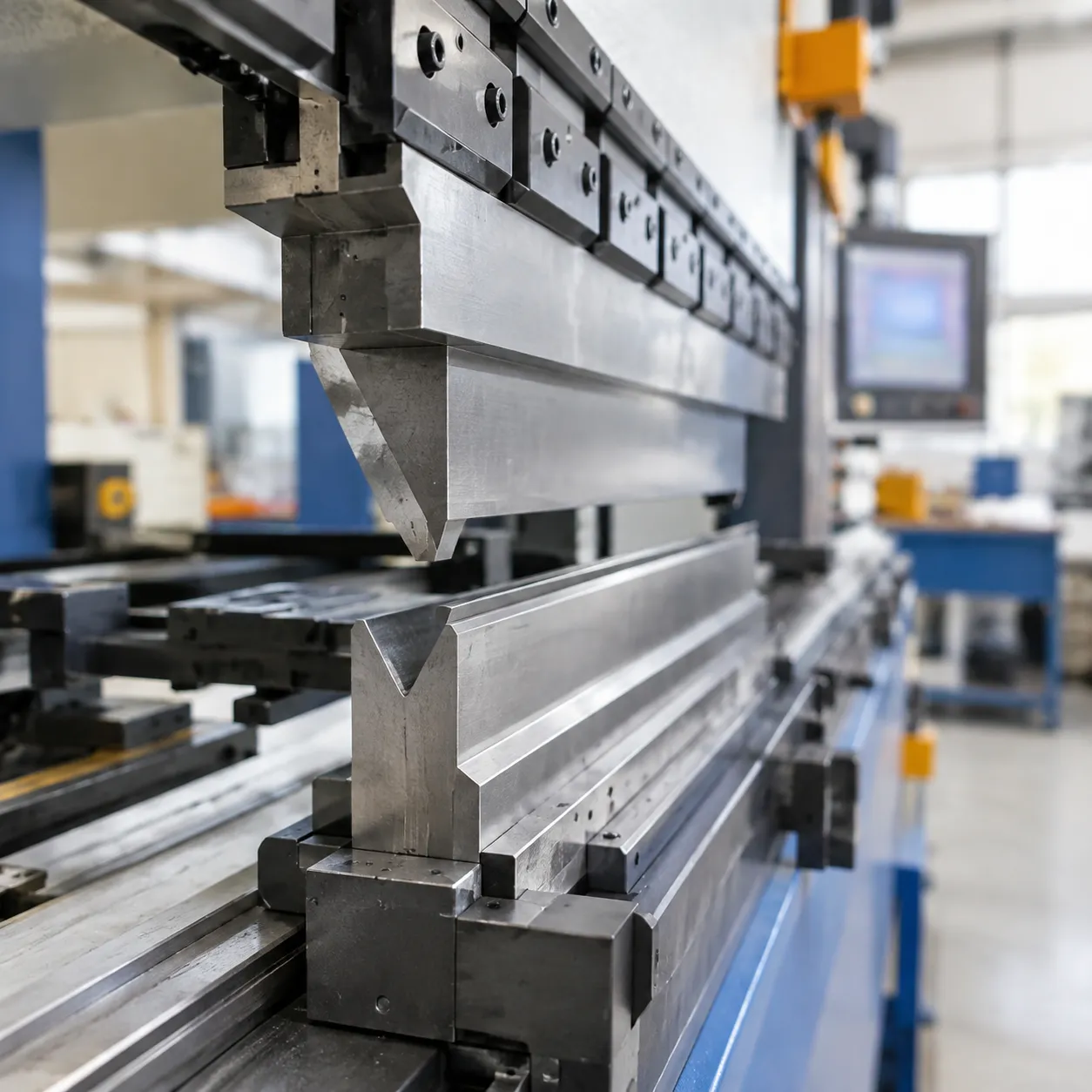
- 4-Way Multi-V Die Blocks: Rotate four distinct V-openings on a single block to switch between thin gauge sheet metal and thick structural plate. This versatile setup eliminates frequent die changes during high-tonnage runs.
- Single V-Dies with Radius Shoulders: Machined with oversized, precision-ground shoulder radii to reduce surface friction, preventing galling and marking on cosmetic stainless steel and aluminum plate. View our heavy-duty V-dies designed for high-tonnage applications.
Hemming Combinations & Segmented Tool Packages
- Hemming & Flattening Combinations: Perform sharp angle pre-bending and final seam flattening in a single press stroke setup, delivering the extreme tonnage capacity required for structural seam closures. Check out our high-load hemming dies for rapid stage bending.
- Sectioned Tool Packages: Supplied in standardized 835 mm and 415 mm lengths alongside left/right horn sections. These segmented sets allow operators to configure flexible bending lengths for four-sided box forming and complex multi-length enclosure channels.
Quality Control & Manufacturing Process
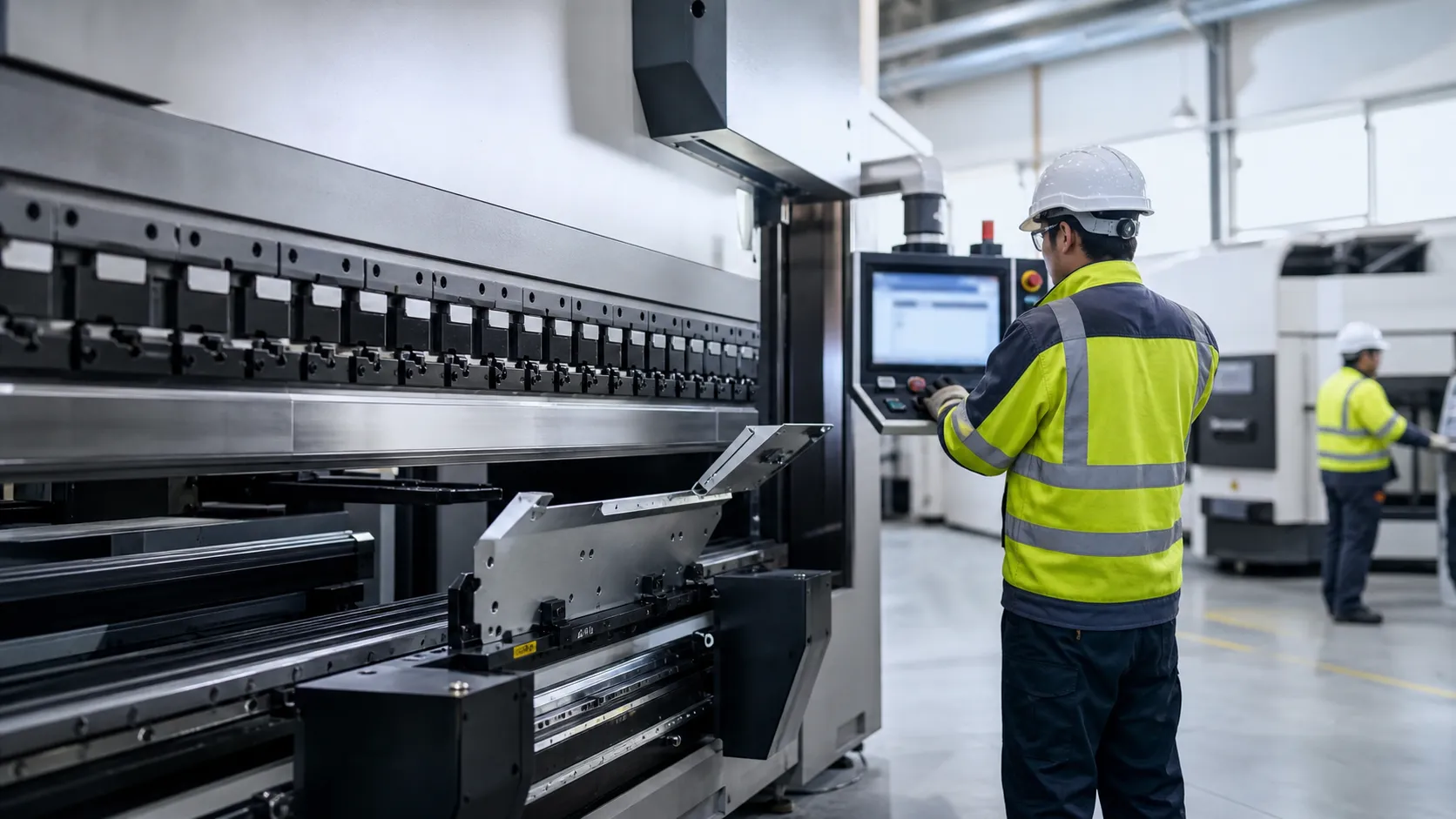
Our standardized manufacturing process eliminates material flaws and geometric deviations at every stage of production.
Our 6-Step Precision Manufacturing Workflow
- 1. Certified Alloy Steel Inspection & Spectrometric Analysis: We verify the chemical composition of incoming 42CrMo raw stock using X-ray spectrometry to guarantee structural integrity before machining.
- 2. Rough Machining & Stress Relieving: CNC milling cuts the baseline profile, followed by thermal stress relief to prevent distortion during later operations.
- 3. Vacuum Heat Treatment: Computer-controlled vacuum furnaces treat the entire tool body, delivering a uniform core toughness of HRC 47–52.
- 4. Localized High-Frequency Induction Hardening: We apply targeted induction hardening along the working V-radii to achieve HRC 55–60 surface hardness where contact stress is highest.
- 5. Precision CNC Surface & Profile Grinding: CNC grinding achieves profile tolerances within ±0.01 mm and a smooth surface finish of Ra < 0.8 µm to reduce friction and tool wear.
- 6. 100% Quality Verification & Export Packaging: Through strict quality control procedures, including optical CMM measurement and full-length hardness testing, we verify every critical dimension before applying anti-rust coating and sealing the tooling in reinforced wooden export crates.
Quality Assurance Parameters
| Manufacturing Stage | Metric / Standard | Verification Method |
|---|---|---|
| Material Verification | 42CrMo Alloy Steel | Spectrometric Analysis |
| Core Toughness | HRC 47–52 | Rockwell Hardness Tester |
| Surface Hardness (V-radii) | HRC 55–60 | Portable Hardness Verification |
| Grinding Surface Finish | Ra < 0.8 µm | Profilometer Testing |
| Profile Tolerance | ±0.01 mm | Optical CMM Inspection |
Heavy Fabrication Application Scenarios
- Construction & Structural Infrastructure: Precision forming of heavy-gauge channels, structural gussets, utility poles, and bridge support plates.
- Earthmoving & Heavy Equipment: Handles high compressive forces to produce crane booms, excavator bucket liners, and heavy chassis frame rails.
- Industrial Containers & Tanks: Delivers consistent radius control on high-tensile pressure vessel components, tank shells, and heavy material hoppers.
- HVAC & Industrial Enclosures: Ideal for bending thick plate mounting brackets and structural frames required in heavy-duty sheet metal fabrication.
Custom Engineering & Direct Factory RFQ Process
CAD File Submission & Technical Evaluation
Submit your part profiles or tool concepts in DXF, DWG, STEP, or IGES formats. Our engineering team conducts a thorough technical review prior to quote confirmation, utilizing dedicated custom tooling development services to guarantee exact structural integrity and bending precision.
Every submission includes our complimentary engineering verification:
3D Bending Simulation: Identifies tool clearances and part interference before steel cutting starts.
Tonnage & Minimum Flange Calculations: Verifies plate yield stress to protect dies against localized overload.
Collision Risk Assessment: Evaluates punch-to-die throat clearances for complex box or multi-bend sequences.
Through expert technical support, we verify that your custom 250 ton press brake die integrates cleanly into your existing machine configuration.
Required Quote Information Checklist
To receive an accurate factory quote and lead time within 24 hours, provide the following parameters with your RFQ:
| Specification Parameter | Required Details | Example Inputs |
|---|---|---|
| Material Specifications | Material type, yield strength, and plate thickness | Hardox 450, 0.500 in (12.7 mm) Carbon Steel |
| Machine Model & Tonnage | Press brake brand, model, and total bed length | Bystronic / Trumpf 250-Ton CNC Press Brake |
| Clamping & Mount Style | Receiver style on lower bed rail and upper beam | WILA Heavy Duty, European, American Planed |
| Target Profile & Radius | Inside radius requirements and min flange length | R = 10 mm, V-opening 100 mm, 835 mm sections |
250 Ton Press Brake Die FAQ
How do I choose between a single V-die and a multi-V block for 250-ton operations?
Choose a single V-die when forming thick plate requiring maximum clearance, specialized radius shoulders, or dedicated high-tonnage production. Opt for a multi-V die block if your shop frequently switches material thicknesses and requires setup flexibility without changing lower tooling.
| Feature | Single V-Die | Multi-V Die Block |
|---|---|---|
| Primary Focus | Heavy-plate forming & custom radii | Versatile multi-gauge bending |
| Tonnage Rating | Maximum concentrated load resistance | High capacity across 4-way rotated V-grooves |
| Changeover Time | Standard swap per geometry | Instant rotation between V-openings |
To learn more about matching your tooling setup to specific plate thicknesses, consult our press brake tool selection guide.
What is the maximum load capacity per foot for a 250 ton press brake die?
Load capacity depends directly on the base width, V-opening size, and shoulder radius. Standard 42CrMo 250 ton press brake die profiles safely handle between 75 to 80 tons per linear foot (up to 250 tons per meter). Always match the recommended tonnage-per-foot rating to your machine bed length to prevent permanent tool deformation.
Can 42CrMo press brake dies be customized for non-standard clamping systems?
Yes. We custom-machined base mounts, tangs, and pin-locking adapters for all major machine beds, including American Precision, European/Promecam, WILA/New Standard, and custom bed grooves for machines like Cincinnati, Bystronic, LVD, and Trumpf.
How does induction hardening improve service life?
Targeted high-frequency induction hardening hardens the high-wear working V-radii to HRC 55–60, preventing shoulder galling and surface wear. Meanwhile, controlled vacuum heat treatment maintains a shock-absorbing HRC 47–52 core hardness, protecting the die against brittle cracking under maximum hydraulic pressure.