
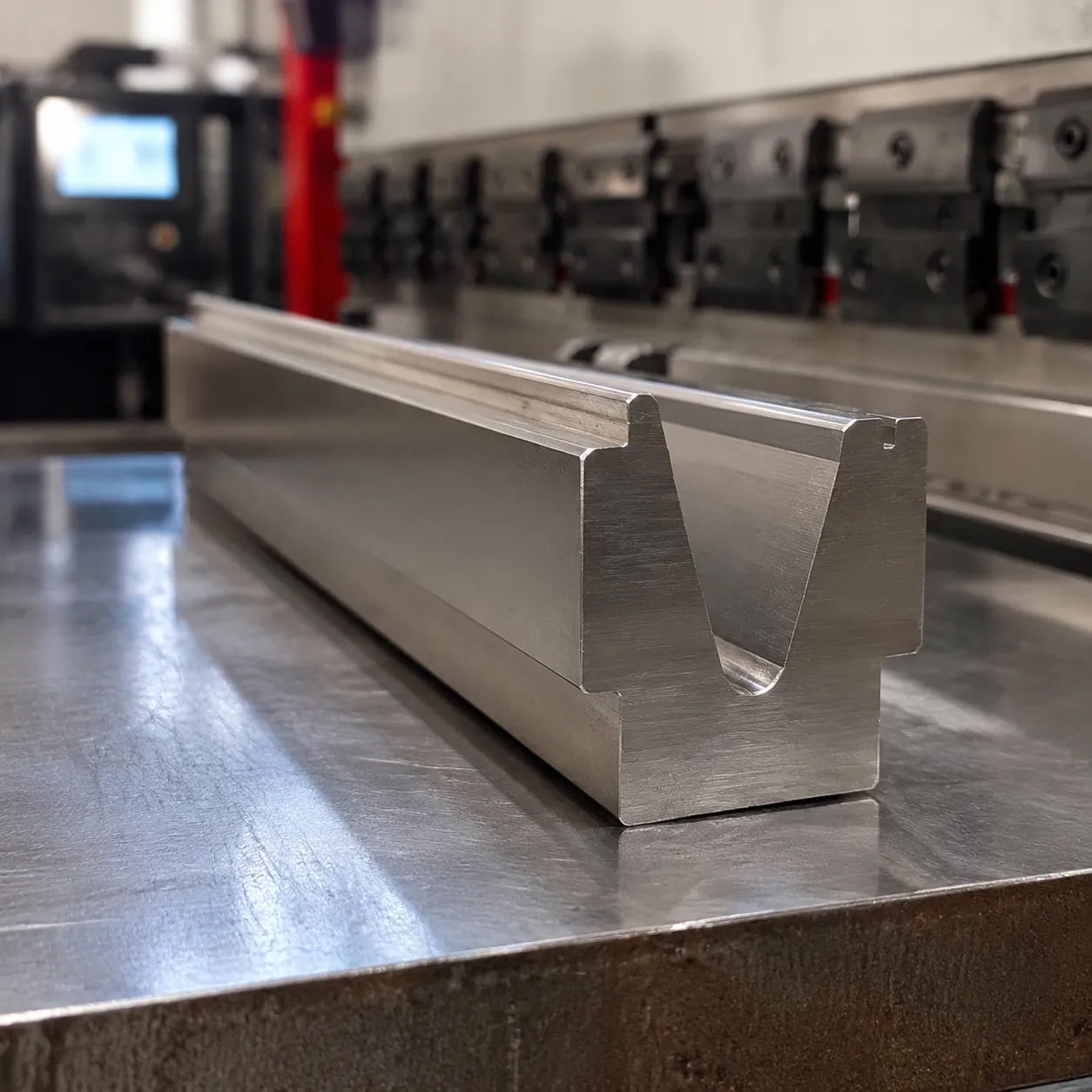
Formula details
Product Details
Overview
What Is a Rolla V Press Brake Die and How Does It Work?
We engineer the Fab Supply Rolla V press brake die to revolutionize sheet metal bending by replacing rigid tool geometry with dynamic rolling motion. Standard lower dies rely on fixed shoulders, but a Rolla V press brake die utilizes precision-ground, dynamic rotating insert jaws mounted on hardened pivot pins. As the upper punch drives sheet metal into the Rolla V lower die, these dual rotors pivot smoothly beneath the material, supporting the workpiece continuously through the entire stroke.
Traditional V-Dies vs. Rolla-V Technology
| Feature | Traditional Static V-Die | Fab Supply Rolla V Press Brake Die |
|---|---|---|
| Jaw Mechanics | Fixed, sharp die shoulders | Dynamic rotating jaw inserts |
| Contact Motion | Sliding drag across metal surfaces | Synchronized rolling contact |
| Surface Impact | Scrapes, tooling marks, and carbon drag | Mark-free sheet metal forming |
| Minimum Flange | Requires standard V-opening support | Bends ultra-short flanges effortlessly |
| Hole Proximity | Distorts holes near the bend line | Bends close to cutouts without warping |
Eliminating Friction and Material Drag
Traditional bending relies on high sliding friction, dragging raw sheet metal over sharp shoulder radii. Our rotating jaw press brake die eliminates drag by matching the angular motion of your workpiece.
- Rolling Contact: The rotors roll with the sheet during punch engagement, converting destructive sliding friction into frictionless rotation.
- Flawless Cosmetics: Eliminates material scraping, tool galling, and die marks on polished stainless steel, soft aluminum, and pre-coated sheets.
- Extended Wear Life: Eliminates localized point-loading on the tool body, preserving precision ground tolerances over high-volume production runs.
Key Advantages of Fab Supply Rolla V Press Brake Dies
Markless Bending on Sensitive Stock
- Zero Surface Scraping: The rotating inserts support the material smoothly, making this ideal markless press brake tooling for mirror-polished stainless steel, aluminum, and pre-painted sheet metal.
- Eliminates Protective Film: You no longer need expensive protective tapes or urethane pads to avoid tooling marks.
- Cosmetic Quality Assurance: Maintains immaculate surface finishes required for architectural panels and high-end electronics enclosures.
Bending Near Laser-Cut Holes and Ultra-Short Flanges
- No Hole Distortion: By supporting the workpiece continuous through the stroke, bending near laser cut holes, slots, or notches happens without pulling or deforming the cutouts.
- Short Flange Capability: Act as a specialized short flange bending die, letting us bend narrow edges that would normally fall directly into standard lower die openings.
- Reduced Distortion: Keeps edges square and maintains structural integrity right up to the bend line.
Lower Setup Downtime and Exceptional Durability
- Flexible V-Opening Adjustments: Works effectively as an adjustable press brake die, allowing us to run multiple sheet thicknesses without swapping out lower tooling for every job. You can review our press brake v die chart and tonnage guide to verify tonnage limits for specific material gauges.
- Heavy-Duty Tonnage Support: Built to withstand intense forming loads while protecting the press brake bed from uneven wear.
- Extended Tool Lifespan: Hardened dynamic components resist heavy wear, delivering consistent precision over long production cycles.
Fab Supply Rolla V Tooling Lineup and Technical Specs
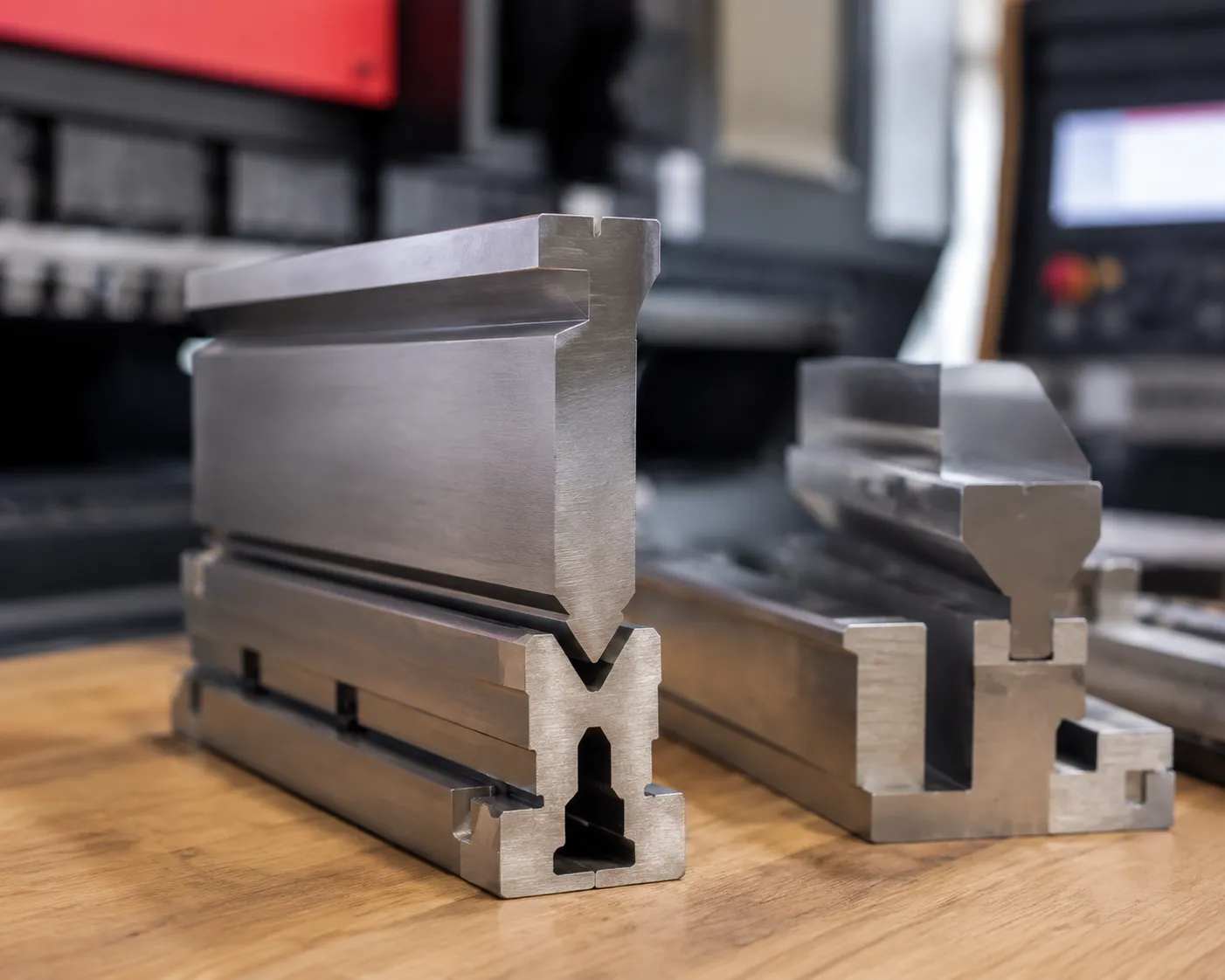
Standard Rolla V Series Breakdown
| Model | Sheet Thickness Range | Core Application |
|---|---|---|
| Model 1 | 0.5 mm – 2.0 mm | Fine electronics enclosures, thin polished sheet metal |
| Model 2 | 1.5 mm – 3.0 mm | Standard cosmetic sheet metal forming and short flange parts |
| Rolla V Model 3.5 | 3.0 mm – 6.0 mm | Mid-gauge chassis, architectural panels, tight hole proximity |
| Model 4 | 5.0 mm – 8.0 mm | Heavier enclosures and structural panels requiring mark-free finish |
Heavy-Duty XT Series and Adjustable Options
When working with thick plate, our heavy-duty rolla v xt1 xt2 series provides increased tonnage capacity while retaining full rotational geometry:
- XT1 Series: Built for heavy-duty forming up to 12 mm steel plate, featuring reinforced inserts to sustain extreme bending forces without structural deflection.
- XT2 Series: Extreme-duty tooling rated for heavy structural components up to 16 mm material thickness.
- Adjustable Rolla-V Dies: Variable geometry units designed for seamless multi-gauge material production. You can quickly reconfigure the rotor support block rather than swapping out bottom tooling, serving as a versatile alternative to standard multi-bend press brake dies.
Tang Styles and Machine Compatibility
We supply these dies in all industry-standard mounting styles to guarantee direct compatibility with your existing press brake machine setup:
- European Precision Style: Standard 13 mm tang fit for Euro-style clamp systems.
- Wila / Trumpf Style: Safety pin and button setups for fast vertical loading and automatic self-seating.
- Amada Style: Precision-ground tangs matching Japanese-style press brakes.
- American Traditional Style: Standard 0.500 in. tang fitting directly into traditional American die rails, along with direct-fit press brake die replacements for American and European styles.
Best Applications for Rolla V Dies in Sheet Metal Shops
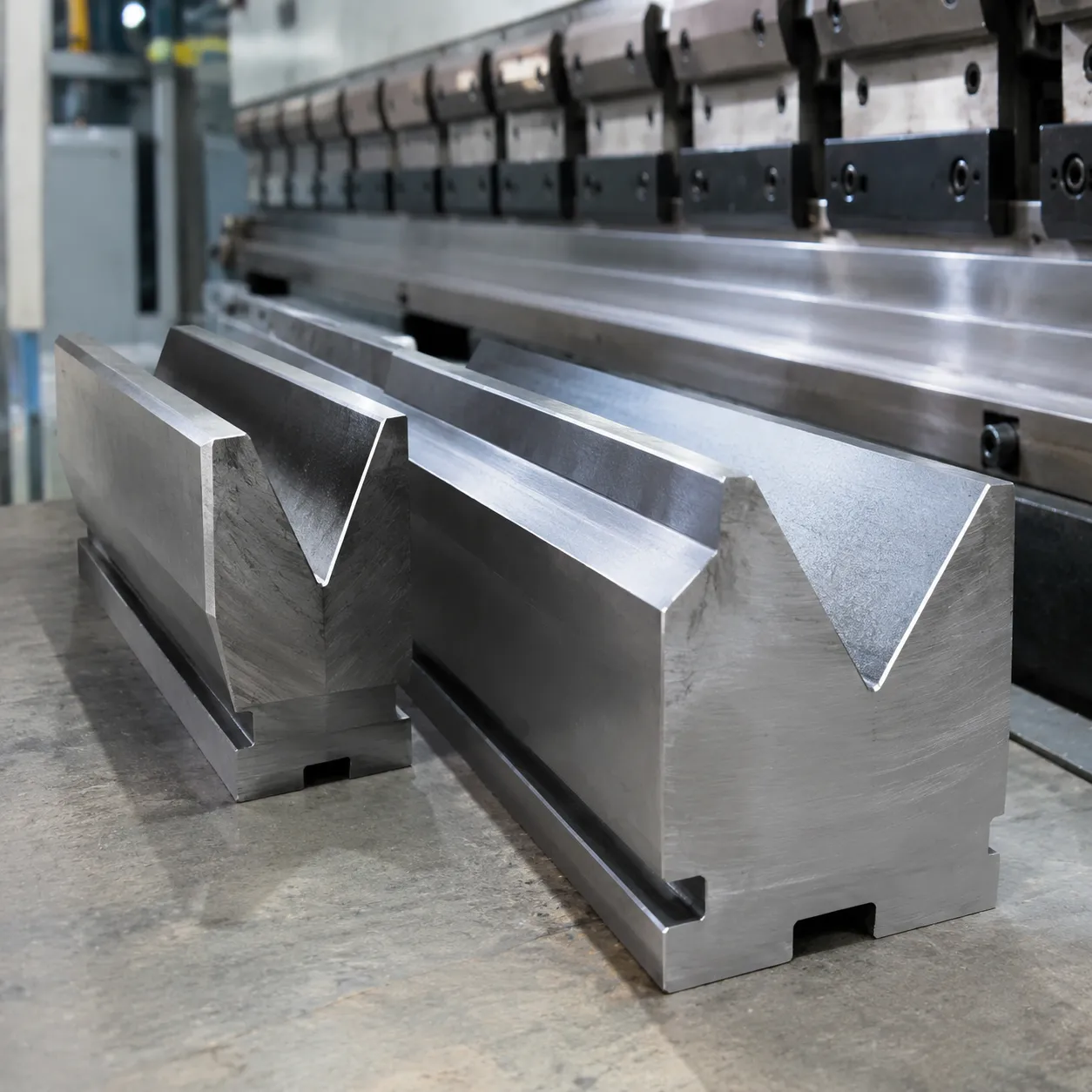
Architectural Panels and Cosmetic Components
- Zero Surface Scratches: Ideal for mirror-polished stainless steel, brushed aluminum, and pre-painted architectural panels.
- Eliminate Secondary Polishing: Incorporating press brake dies with rollers for mark-free bending keeps surface-critical electronics enclosures and cosmetic parts pristine, eliminating the labor cost of buffing out drag lines.
Bending Near Laser-Cut Holes and Short Flanges
- Prevent Hole Distortion: Standard V-dies pull material into the bottom cavity, stretching nearby holes, slots, and notch cutouts. The dynamic rotors offer immediate support beneath the sheet, preserving exact hole geometry.
- Ultra-Short Flange Bending: Seamlessly form narrow edge flanges that would normally fall straight into a conventional lower die opening.
Single-Hit Channel Forming
- Specialty Rotor Profiles: Swap standard rotors for concave or Pac-Man inserts to form tight channels, hat sections, and complex profiles in a single press stroke.
- Faster Production Cycles: Streamline complex multi-hit forming operations into rapid, single-hit steps for demanding sheet metal fabrication environments.
Large Radius Bending Without Tool Wear
- Smooth Rolling Contact: Dynamic rotors roll with heavy laser-cut plates during large radius sweeps, preventing localized tooling wear caused by abrasive material edges.
- Consistent Radius Accuracy: The fab supply rolla v press brake die distributes tonnage evenly along the bend line, ensuring repeatable bend angles and long tool life under heavy workloads.
How to Pick the Right Rolla V Press Brake Die for Your Setup
Selecting the right rolla v press brake die comes down to matching your shop's material mix, minimum flange limits, and tonnage demands. When we outfit custom press brake setups, we evaluate four core criteria to ensure clean, markless bends on every run.
Material Thickness vs. Minimum Flange Length
Standard V-dies require a flange length of at least 6 to 8 times sheet thickness to prevent dipping. With a **fab supply rolla v press brake die
Maintenance and Care for Your Rolla V Press Brake Die
To keep your fab supply rolla v press brake die performing at peak precision, routine care is non-negotiable. Proper handling protects your investment and maintains the smooth rotation required for mark-free bending.
Daily Cleaning Protocols
Metal dust, mill scale, and laser dross settle inside the rotor cavities and pin slots during operation. If left unchecked, this debris restricts insert rotation and leads to uneven bends.
- Air Blowout: Use clean, compressed air to flush out debris from the rotor cavities after every shift.
- Surface Wipe: Clean all rotor contact surfaces using a lint-free cloth and mild degreaser.
- Slot Inspection: Check pin slots daily to ensure no metallic shavings are trapped behind the rotating inserts.
Lubrication Guidelines
Dynamic inserts need free movement to eliminate friction. We recommend following a strict lubrication schedule to prevent binding:
| Maintenance Task | Frequency | Recommended Product |
|---|---|---|
| Rotor Pin Lubrication | Every 8 operating hours | Dry-film PTFE or light synthetic spray |
| Cavity Wipe | Daily | Solvent-based clean rag |
| Full Tool Overhaul | Monthly | Deep cleaning & rust preventative coating |
Pro Tip: Never use heavy grease on dynamic rotating jaws. Thick grease traps metal dust, creating an abrasive paste that damages precision ground press brake tooling.
Safe Handling and Installation
Heavy rolla v press brake die setups require careful installation into the bed slot to avoid damaging both the machine and the tool tangs.
- Lifting Equipment: Always use overhead hoists or lifting pins when mounting heavy tooling blocks into the press brake bed.
- Bed Alignment: Clean the bed slot thoroughly before insertion. Seat the tang square against the bed rail before applying clamping pressure.
- Visual Check: Verify that all dynamic inserts rotate freely by hand before running the first cycle under load.
Preventing Material Cross-Contamination
Cross-contamination damages cosmetic sheet metal surfaces, leading to costly scrap rates.
When switching from carbon steel to stainless steel stock, free iron particles left on the tooling transfer onto the workpiece, causing surface rust over time. Clean the lower die setup completely when changing materials, or keep dedicated rotor inserts reserved exclusively for non-ferrous and high-finish stainless steel processing jobs. Using dedicated high-strength press brake die sets ensures long-term part quality and preserves part finish integrity.
Rolla V Press Brake Die FAQs
How does a Rolla V die prevent sheet metal scratching during bending?
Unlike static lower dies where sheet metal slides across hard edges, a rolla v press brake die features dynamic rotating inserts. As the punch drives material down, these precision rollers rotate smoothly with the sheet. This eliminates sliding friction entirely, delivering a completely markless finish on stainless steel, aluminum, and pre-painted stock.
Can Fab Supply Rolla V dies fit my standard press brake machine?
Yes. We supply these dies with universal tang configurations compatible with American, European, Wila, Trumpf, and Amada mounting systems. If your machine uses non-standard bed slots, adapter bases let you mount a fab supply rolla v press brake die into virtually any setup. For complete compatibility, explore our full range of press brake dies and mounting hardware.
What is the smallest flange length I can bend with a Rolla V die?
Because the rotating rotors support the workpiece directly at the bend line, you can form extremely short flanges—often down to 1.5 times material thickness. Traditional V-dies drop short flanges into the cavity, but rolling jaws keep the sheet fully supported throughout the stroke.
How do Rolla V dies compare to urethane pads for mark-free bending?
- Durability: Urethane pads degrade and split under high production volumes, whereas steel rotors withstand hundreds of thousands of cycles.
- Tonnage Requirement: Urethane requires significantly higher press brake tonnage. Rolla-V tooling operates at standard bending force.
- Accuracy: Rigid rotor inserts ensure precise, repeatable bend angles that film or film-wrapped v-dies struggle to maintain over time.
Are replacement rotors and pins easy to swap out when worn?
Yes. The modular construction makes routine maintenance straightforward. You can pull the side retaining pins, lift out the worn rotors, and drop in new precision-ground inserts right on your shop floor in minutes—no expensive grinding or full tool replacement required.