
Formula details
Product Details
Overview
Dynamic Rolling Contact vs. Conventional Friction
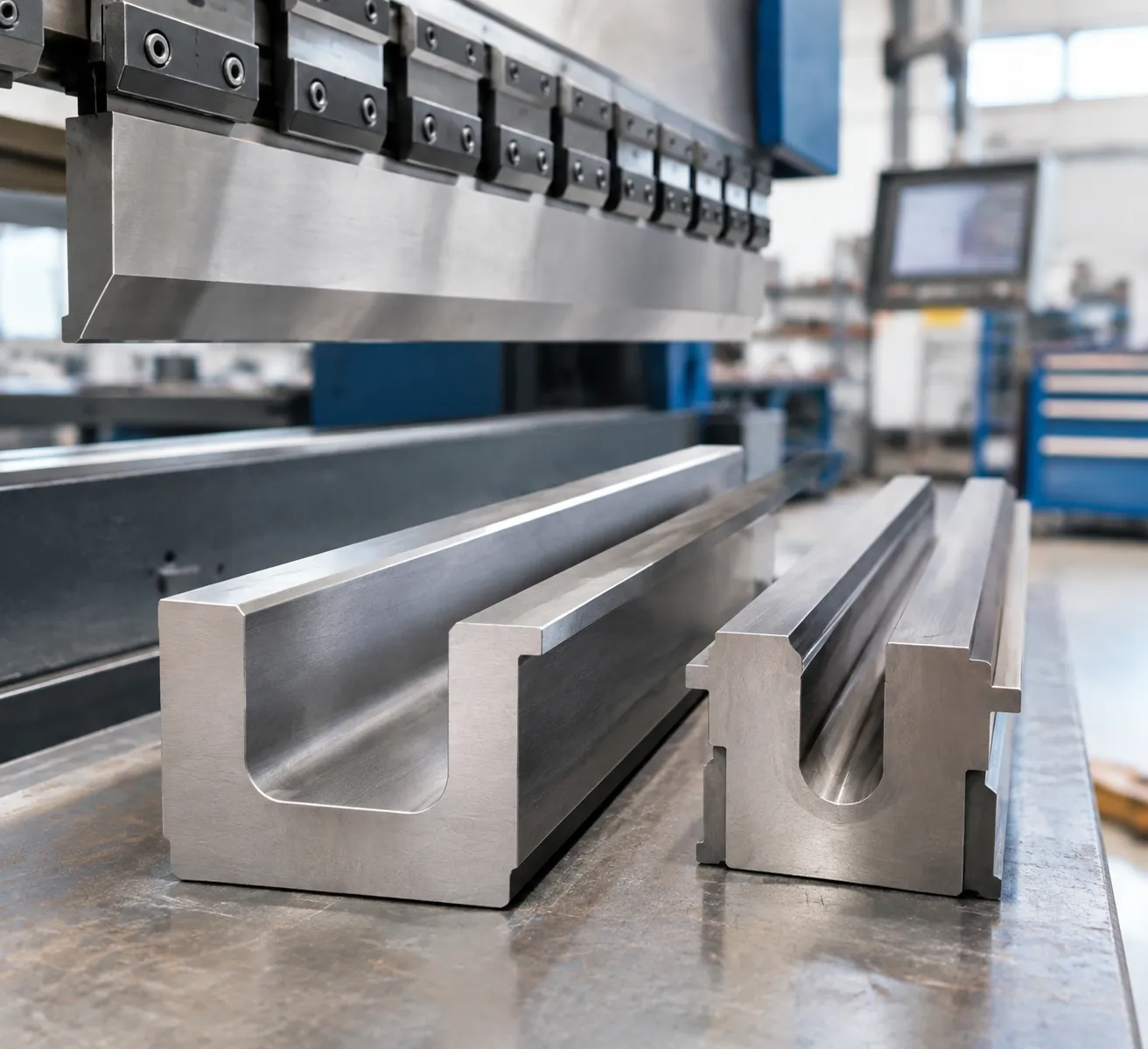
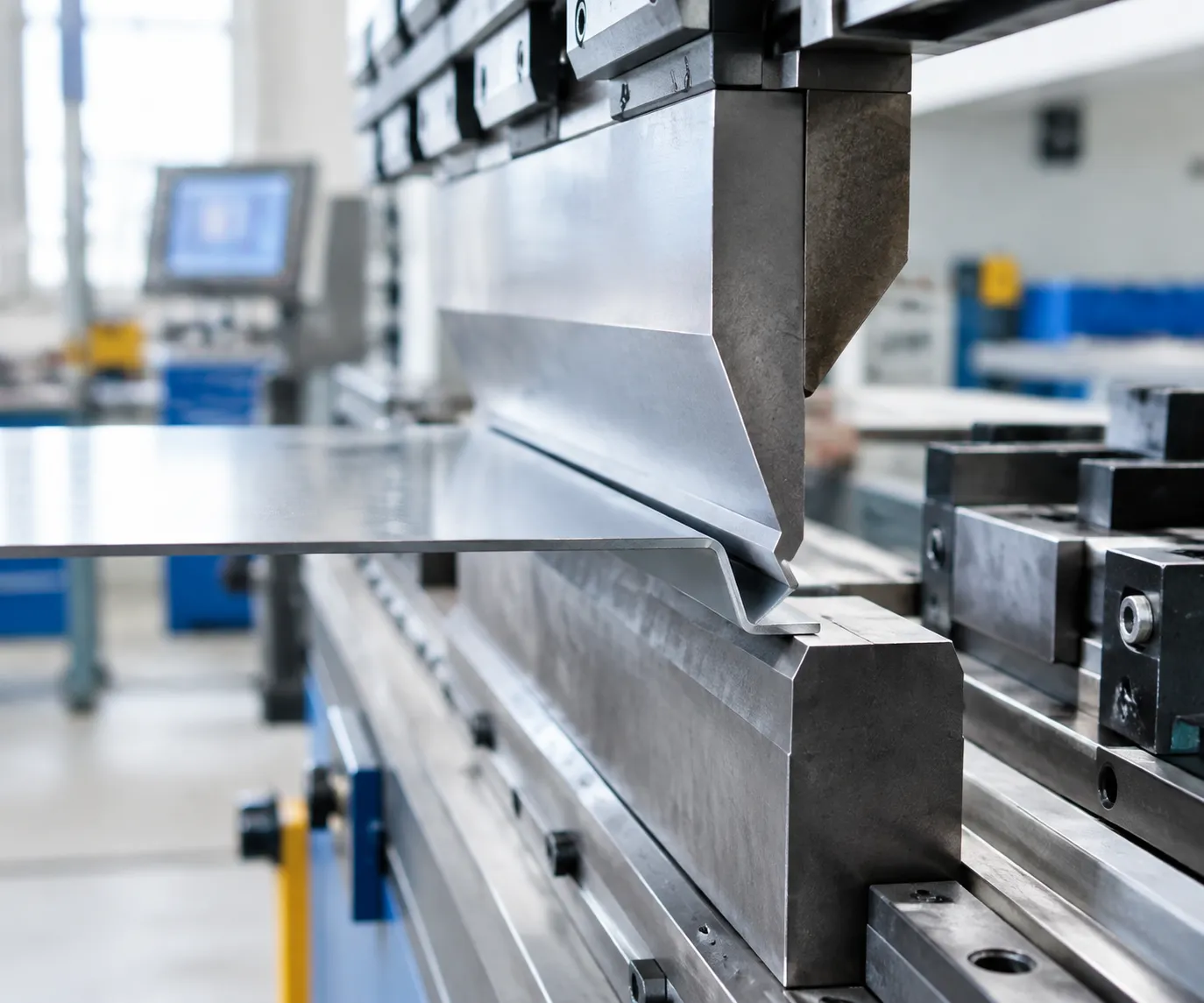
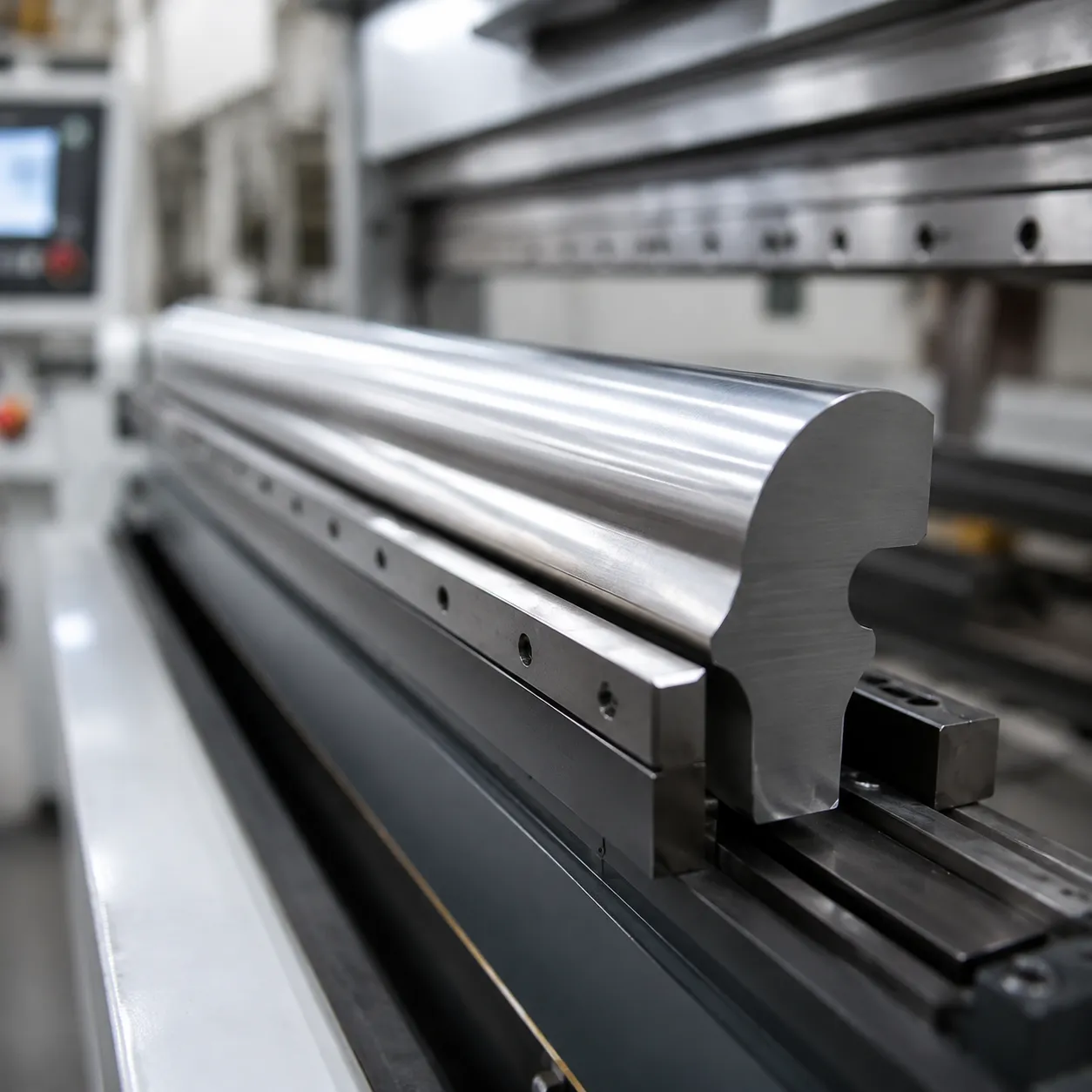
Traditional sheet metal bending forces raw material to drag across rigid V-die shoulders, leaving deep drag lines and straining press brake hydraulics. We engineered our press brake die with rollers to eliminate sliding friction, replacing it with fluid rotational movement that protects both the sheet surface and machine components.
Scratch-Free Stainless & Pre-Painted Bending
- Synchronized Material Entry: Precision-ground, hardened steel rollers turn dynamically with the sheet during punch penetration, eliminating rubbing abrasion.
- Zero Secondary Finishing: Completely prevents carbon transfer, galling, and scratch lines on mirror-finish stainless steel, pre-painted panels, and brushed aluminum without using expensive die film.
Ultra-Short Flanges & Precision Folds Near Holes
- Tangential Surface Support: The roller shoulder die continuous support point keeps short flanges resting firmly above the die pocket rather than slipping into the cavity.
- Distortion-Free Cutouts: Forms crisp, repeatable bends adjacent to punched holes, laser-cut slots, and notches with zero edge drop-off or geometry deformation.
10–15% Tonnage Reduction & Extended Tool Life
- Lower Force Requirements: Converting sliding friction into rolling contact drastically lowers lateral drag, reducing required hydraulic bending tonnage by 10–15%.
- Protected Die Shoulders: Eliminating heavy contact friction protects die shoulders from localized wear, preserving tight bending tolerances over hundreds of thousands of cycles.
CAMT Roller Die Series & Dimensional Specifications
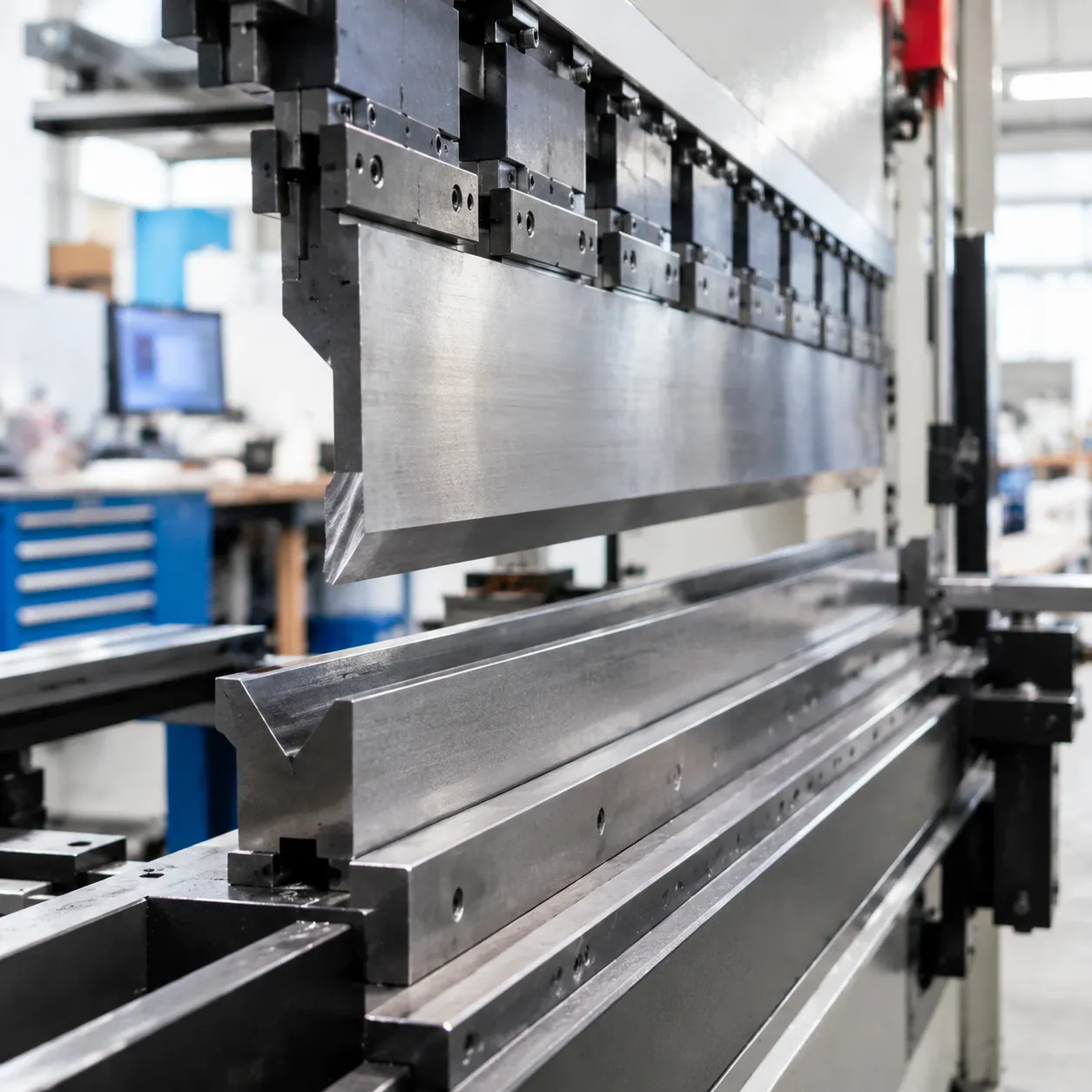
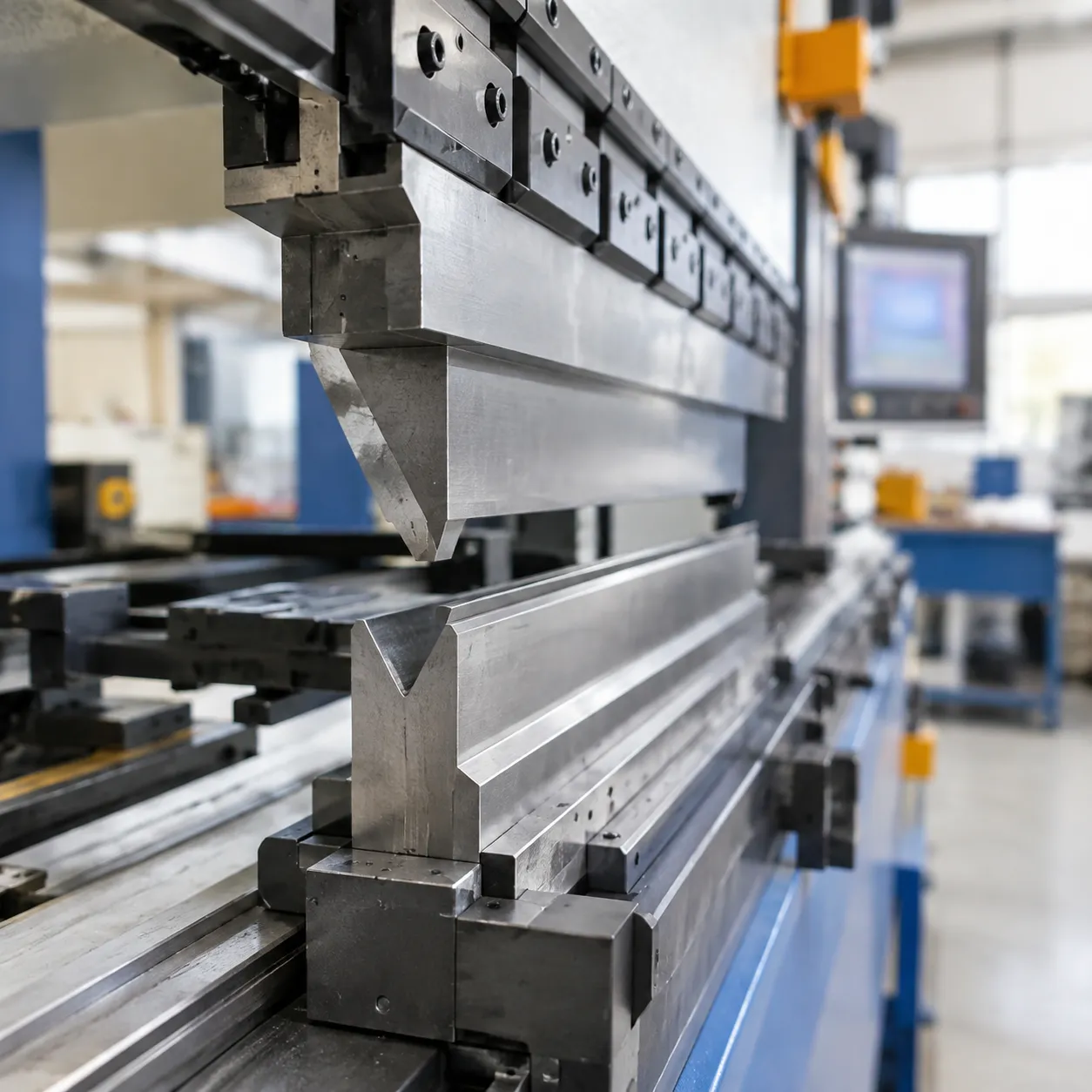
We engineer our press brake die with rollers line to handle diverse metal fabrication challenges. Check our complete press brake die size chart and dimensions guide for matching V-openings to your machine setup.
Dimensional Product Matrix
| Series | Equivalent V-Opening | Roller Diameter | Max Tonnage Capacity | Sheet Thickness | Bending Angles |
|---|---|---|---|---|---|
| Short-Flange Series | 8 mm – 16 mm | 6 mm – 12 mm | 100 T/m | 0.8 mm – 2.0 mm | 30° – 180° |
| Medium-Duty Series | 16 mm – 50 mm | 12 mm – 25 mm | 200 T/m | 1.5 mm – 6.0 mm | 30° – 180° |
| Heavy Plate Series | 50 mm – 160 mm | 25 mm – 50 mm | 400 T/m | 6.0 mm – 20.0 mm | 45° – 180° |
| Adjustable Roller V Die | 20 mm – 200 mm | 20 mm – 60 mm | 500 T/m | 2.0 mm – 25.0 mm | 30° – 180° |
Refer to our reference press brake V-die tonnage guide to match specific material yield strengths and inner radii to your machine capacity.
Material & Steel Grade Standards
- Certified 42CrMo4 Alloy Steel: Machined from high-grade alloy forged billets to eliminate internal stress voids and withstand continuous compression loads.
- Deep Vacuum Heat Treatment: Delivers an optimal balance between structural core toughness and high surface wear resistance rated at HRC 55–60.
- Induction-Hardened Pin Seats: Load-bearing roller pins undergo localized high-frequency induction hardening to prevent galling and pin deformation under maximum tonnage limits.
Clamping System & Adapter Compatibility
Our rotary press brake die configurations integrate directly with your existing tooling setup without requiring custom press brake modifications:
- Amada / Promecam & European Precision: Standard 13 mm tangs with precision safety grooves for fast tool setup.
- Trumpf / Wila System: Pin-positioned button mechanisms for automatic self-seating alignment and drop-down safety.
- Bystronic & LVD: Heavy-duty shoulder-bearing surfaces engineered specifically for high-tonnage hydraulic clamping systems.
- American Standard: Traditional 0.500 in tang width options designed for universal American-style press brake retrofits.
Application Engineering: Where Roller Dies Deliver Maximum ROI
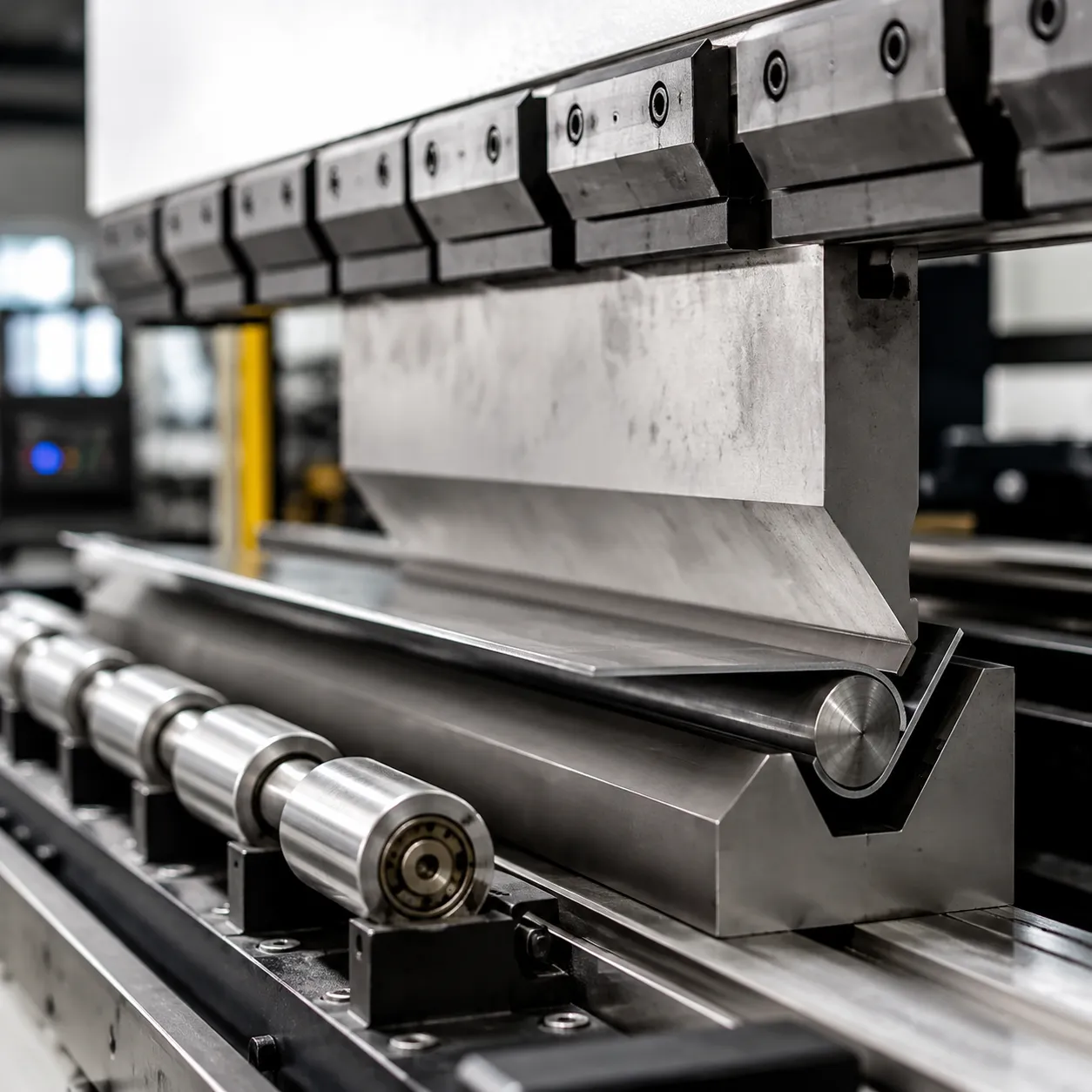
Deploying a press brake die with rollers transforms high-friction bending bottlenecks into smooth, predictable shop-floor operations. We engineer specialized press brake dies to eliminate secondary refinishing and protect surface-critical metal components across four core industrial sectors:
- Stainless Steel Architectural Panels: Eliminates carbon transfer, gouging, and die drag lines on decorative facade panels, elevator doors, and commercial kitchen fixtures. Utilizing dedicated stainless steel non-marking tooling ensures mirror-finish and brushed panels move cleanly through the bend sequence without requiring labor-intensive manual polishing.
- Electronics & Electrical Cabinets: Forms tight-radius bends on pre-coated, anodized, or zinc-plated metal enclosures without cracking or flaking protective layers. The rolling contact point preserves surface integrity, preventing corrosion risks on server racks and control cabinets.
- Aerospace & Automotive Components: Processes high-strength aluminum and titanium alloys where micro-scratches and surface indentations compromise fatigue strength. Our mark-free press brake tooling distributes load forces tangentially to maintain full material integrity under structural testing.
- Heavy Machinery & Defense Fabrications: For thick plate metal bending, our heavy-duty press brake die sets replace sliding friction with smooth rotation. This lowers hydraulic tonnage demands by 10–15% and protects die shoulders from rapid wear and premature deformation.
Operational Guidelines: Selecting the Right Roller V-Opening
Tonnage & V-Width Calculation
Selecting the ideal opening for a press brake die with rollers requires accounting for material yield strength, sheet thickness, and target inner radius. Because our rolling contact design converts sliding friction into smooth rotation, hydraulic tonnage demand drops by 10–15% compared to a conventional female press brake V die.
We calculate the required bending tonnage on roller shoulder die setups using the modified friction formula:
- Bending Force Formula: P = (1.33 * Rm * S^2 * L) / V
- P = Required bending force (kN)
- Rm = Material tensile strength (N/mm²)
- S = Sheet thickness (mm)
- L = Bending length (m)
- V = Roller shoulder distance / V-equivalent opening (mm)
- V-Width Rule of Thumb: For mild steel and aluminum, select a roller opening equal to 6x to 8x sheet thickness. For stainless steel, set the shoulder span to 8x to 10x sheet thickness to mitigate springback while protecting the hardened roller pin bearings.
Minimum Flange Length Rules
Traditional V-dies demand a minimum flange length of 0.67 * V to keep the sheet from dropping into the die opening. A CAMT roller V die provides continuous tangential sheet support, allowing operators to execute clean bends on flanges up to 40% shorter than standard tooling allows.
| Sheet Thickness (S) | Standard V-Die Min. Flange | CAMT Roller Die Min. Flange | Net Flange Savings |
|---|---|---|---|
| 1.5 mm | 8.0 mm | 4.8 mm | 40% Shorter |
| 2.0 mm | 10.5 mm | 6.3 mm | 40% Shorter |
| 3.0 mm | 16.0 mm | 9.6 mm | 40% Shorter |
| 6.0 mm | 32.0 mm | 19.2 mm | 40% Shorter |
- Bending Near Punched Features: Position cutouts or slots as close as 1.5x sheet thickness to the bend line without egging or distorting hole profiles.
- Short Leg Stability: Precision ground press brake roller inserts prevent material draw-in during stroke entry, maintaining target flange tolerances within ±0.15 mm.
Precision Manufacturing: Built for Micron-Level Repeatability
- Spectro-Verified Alloy Steel Sourcing: We begin every precision ground roller die with certified 42CrMo4 alloy steel stock. Spectrometer testing verifies carbon and chromium ratios down to the exact percentage, eliminating micro-voids and preventing stress fractures under full load.
- CNC Multi-Axis Profile Grinding: We machine all roller pockets, pin seats, and body channels on multi-axis CNC grinders, maintaining critical dimensional tolerances within ±0.01 mm. This exact fit guarantees uniform rotational action across the entire tool length.
- Vacuum Heat Treatment: Our deep vacuum heat-treating process yields a balanced core toughness combined with a surface hardness between HRC 55–60. Paired with proper press brake die maintenance tips, these hardened contact surfaces withstand millions of cycles without spalling.
- Optical & CMM Surface Inspection: Every roller shoulder die component undergoes non-contact profilometer testing and CMM validation to confirm a surface roughness of Ra < 0.8 µm, ensuring smooth material flow during sheet entry.
- Anti-Corrosion Treatment & Export Packaging: Finished dies receive a protective anti-rust oil dip before being sealed in moisture-barrier wrap and packed in heavy-duty, reinforced wooden crates for safe transit anywhere in the world.
Custom Roller Tooling Designed for Your Specific Part Profiles
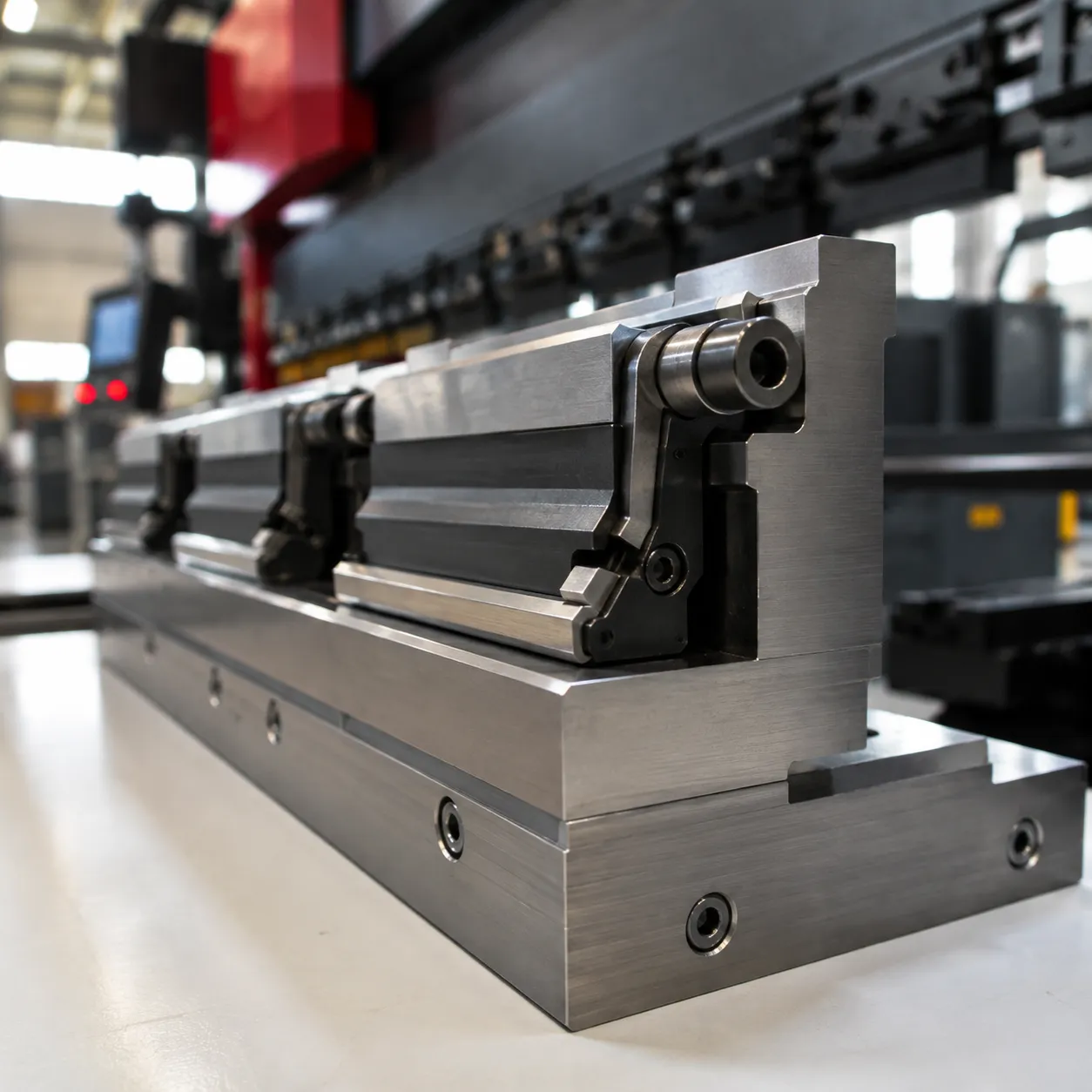
Standard off-the-shelf tooling cannot always accommodate specialized sheet profiles, non-standard bend radii, or tight clearance envelopes. We engineer custom press brake die with rollers configurations tailored directly to your exact part geometry, sheet properties, and press brake machine setup.
| Stage | Process Step | Engineering Focus & Deliverables |
|---|---|---|
| 01 | Drawing Submission | Send 2D/3D CAD models (.STEP, .IGS, .DWG) along with sheet material specifications and target inner radii. |
| 02 | Structural & Tonnage Analysis | We calculate bending forces and stress envelopes, consulting our press brake tooling material guide to match optimal steel grades and heat treatments. |
| 03 | 3D Collision Simulation | Virtual verification ensuring total clearance between punch, die, sheet metal, and machine ram throughout the full stroke. |
| 04 | Prototype & Sample Production | Rapid turnaround for pre-production tool validation and physical sample test bends. |
| 05 | Mass Production & Direct Factory Delivery | Precision-machined, 100% optical-inspected tooling shipped directly to your shop floor. |
Custom Design Engineering Highlights
- Tailored Roller Pocket Geometries: We customize roller shoulder diameters and insert gaps to eliminate material marring on pre-painted or brushed panels.
- FEA Strain Analysis: Every custom rotary press brake die design undergoes structural stress modeling to prevent deflection under peak hydraulic loads.
- Direct Adapter Integration: Custom tooling tangs match your existing clamping setup, ensuring plug-and-play installation without extra bed adapters.
Technical Tooling FAQs
Preventing Marks on Stainless Steel
Conventional V-dies drag metal over sharp die shoulders, creating dark scrape lines and galling. A press brake die with rollers eliminates this by replacing sliding friction with smooth rolling motion. Hardened steel roller inserts rotate naturally with the sheet metal during the stroke. This continuous tangential contact prevents surface abrasion on pre-painted sheets, mirror-finish panels, and architectural stainless steel, eliminating secondary buffing and expensive protective film.
Modular Replacement of Worn Rollers
We engineer our non-marking bending die series with modular, shop-floor serviceability in mind. You do not need to replace the complete die block when working components reach high cycle limits. Individual press brake roller inserts and load-bearing pins can be replaced independently in minutes.
| Die Component | Material & Heat Treatment | Serviceability |
|---|---|---|
| Main Body | Certified 42CrMo4 Alloy Steel (HRC 28–32) | Permanent Base Tooling |
| Rotating Rollers | Premium Vacuum Hardened Tool Steel (HRC 55–60) | Field-Replaceable Inserts |
| Support Pins | High-Frequency Induction Hardened Steel | Press-Fit Replacement |
Bending Near Holes and Cutouts
Standard V-dies pull metal directly into the V-cavity, distorting nearby laser-cut holes, slots, and notch geometries. A rotary press brake die provides immediate material support at the initial contact line. Because the material rolls across the top surface rather than sliding into an open void, holes located near the bend line maintain exact geometric roundness without edge blowouts.
Maximum Supported Plate Thickness
Our heavy-duty roller shoulder die range accommodates plate thicknesses up to 25 mm (1 in) for high-tensile carbon steel and structural armor plate. Rolling friction reduces overall machine tonnage requirements by 10–15%, protecting hydraulic circuits and preventing permanent shoulder grooving on large-radius tooling.
Clamping System and Machine Compatibility
CAMT roller dies integrate directly into all major machine standards. We supply native tangs and adaptive base profiles for Amada/Promecam, Trumpf/Wila, Bystronic, LVD, and custom standard setups. If your shop runs mixed machine brands, our dies integrate seamlessly into existing American and European press brake tooling configurations without requiring secondary bed modifications.
Related Sources
- https://wilsontool.com/en-us/resources/mark-free-bending-solutions-brochure
- https://www.fabsupplyinc.com/the-advantages-of-using-rolla-v-press-brake-tooling-for-metal-fabricators/
- https://www.thefabricator.com/thefabricator/article/bending/press-brake-bending-tips-for-forming-tapered-bends-and-determining-minimum-flange-lengths
- https://www.thefabric
- https://yangtool.com/amada-press-brake-tooling/