
Formula details
Product Details
Overview
Gooseneck Press Brake Punch Overview
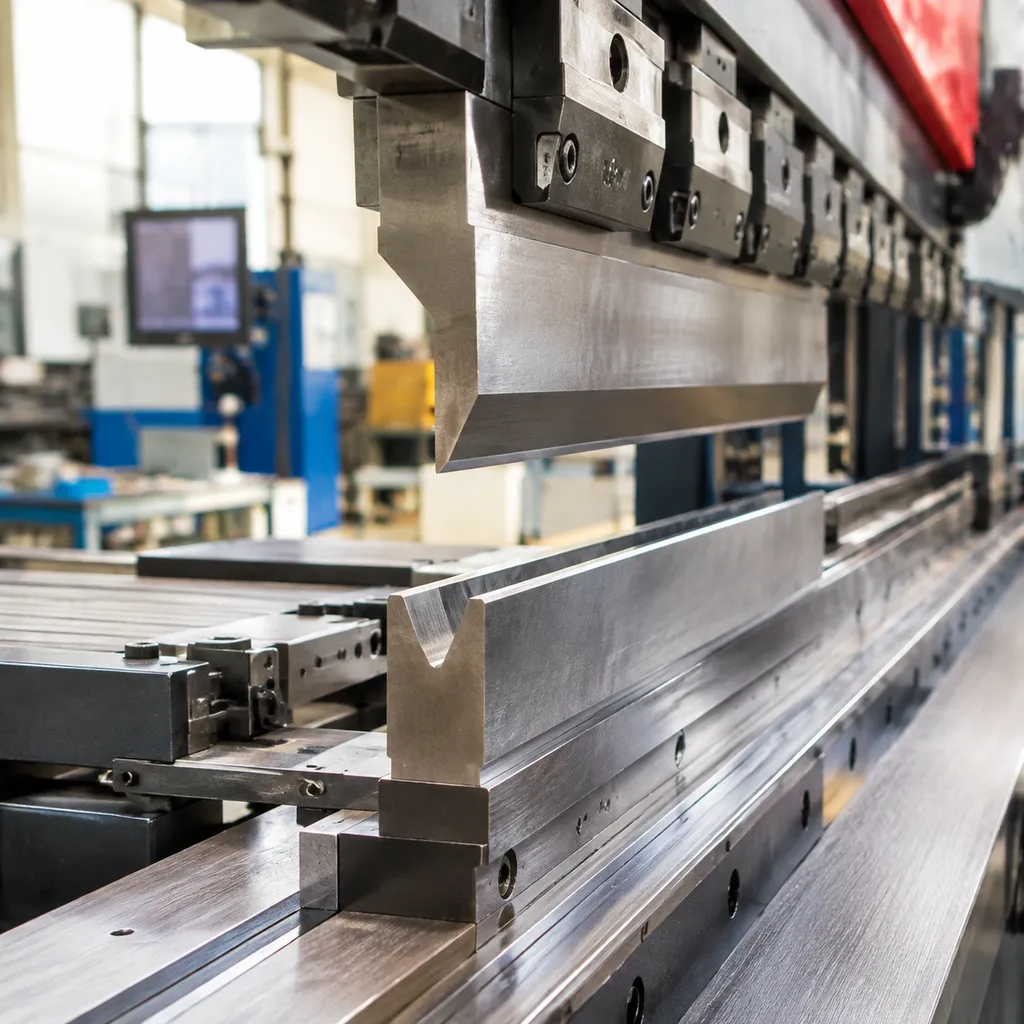
A gooseneck press brake punch is a specialized top tooling profile engineered with a deep, inward-relieved throat. When forming multi-bend sheet metal components, standard straight punches frequently collide with previously formed flanges. We utilize a press brake gooseneck punch to create an offset clearance zone, allowing standing metal edges to cycle upward into the tool relief without contact or distortion.
Clearance for Return Bends and Deep Channels
The cutaway profile of a gooseneck punch for press brake operations fundamentally changes how sheet metal moves through the bend line:
- Eliminates flange collision: The recessed throat accommodates standing vertical flanges, preventing interference on secondary and tertiary bends.
- Maintains dimensional accuracy: By clearing narrow reverse legs and deep channels, the tool prevents part warping and uneven bend angles.
- Simplifies multi-stage bending: A gooseneck punch press brake setup handles both initial open bends and severe return folds in a continuous workflow, reducing the need for intermediate tool changes.
Key Part Geometries Supported
We rely on the gooseneck geometry to execute complex profiles that standard tooling cannot clear:
- Four-Sided Box Forms: Clears upright side flanges when closing deep pans, chassis, and electronic enclosures.
- Deep U-Profiles: Reaches deep into narrow channel bases without dragging against parallel side walls.
- Return Flanges: Enables narrow, inward-facing hems and lip returns on cabinets, metal furniture, and architectural cladding.
- Multi-Bend Closures: Provides the structural clearance needed for inward return bends in sequential staging setups.
Key Features and Benefits of Gooseneck Tooling
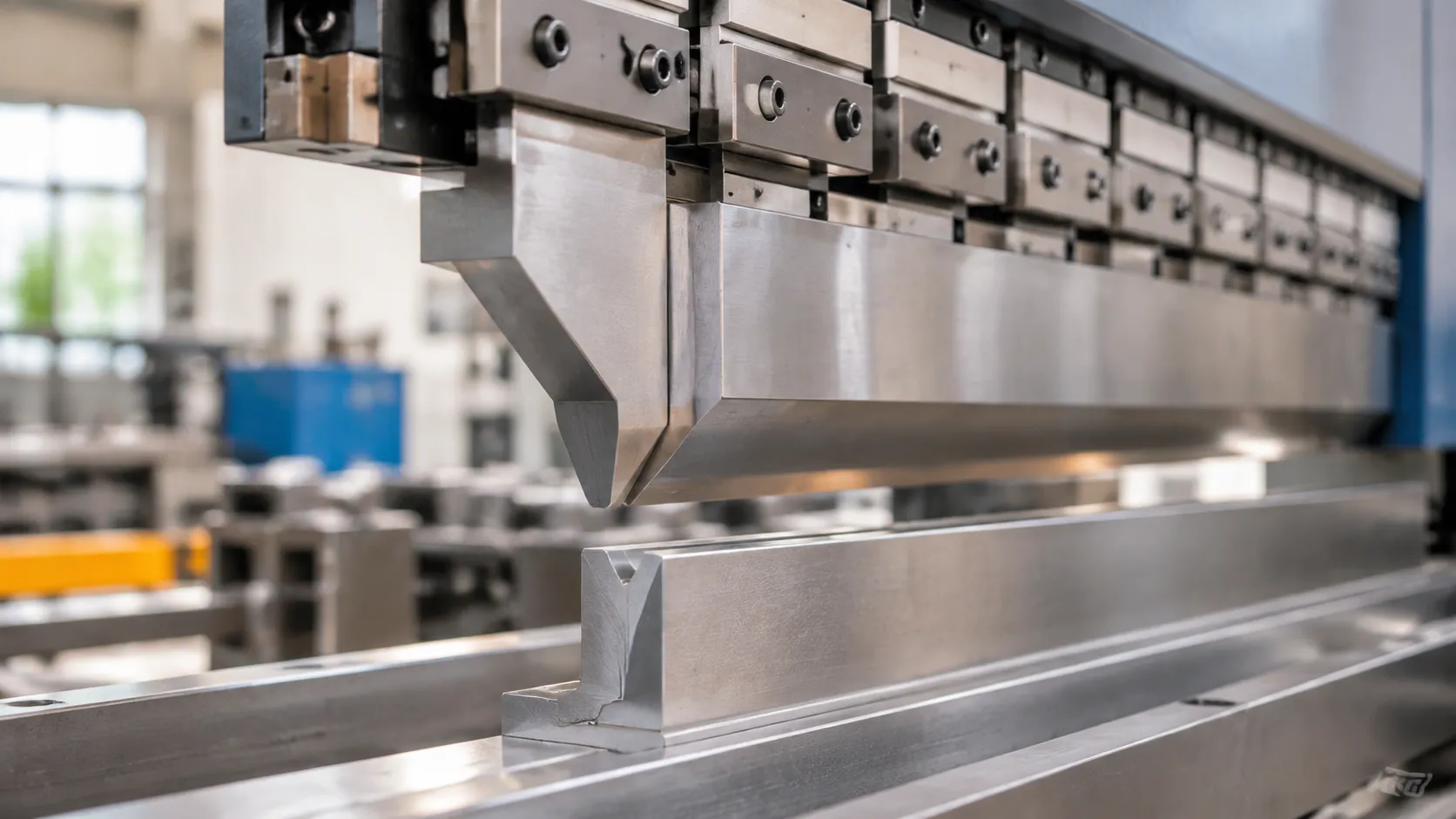
Deep Throat Clearance for Complex Profiles
The primary advantage of a gooseneck punch for press brake operations is its recessed belly geometry. By cutting back the punch body behind the tip, the tool creates a dedicated relief area:
- Eliminates flange collision: Lets previously formed legs swing behind the tool centerline during bending.
- Simplifies deep channel bending: Allows deep U-channels and narrow door profiles to form in fewer steps.
- Supports multi-bend operations: Clears pre-formed offset ribs, tabs, and standing seams without part distortion.
Punch Tip Angle and Radius Options
A press brake gooseneck punch must balance clearance with structural load strength. We produce these punches with versatile tip geometries to suit different materials and bend angles:
- Tip Angles: Commonly available in standard 88°, 85°, and acute angles for bottoming, air bending, and springback compensation.
- Tip Radii: Ranging from tight radii (R0.6 mm, R0.8 mm) for light-gauge precision sheet to larger radii (R1.5 mm, R3.0 mm and above) to prevent cracking on heavier gauge work.
Precision-Ground Tool Steel and Induction Heat Treatment
Durability matters when you exert high forming pressures against a relieved tool body. Our manufacturing process ensures every gooseneck punch press brake profile handles heavy production runs:
- High-Grade Tool Steel: Machined from alloy tool steels engineered to resist fatigue and plastic deformation under localized stresses.
- Induction Hardening: Working tip areas and critical load-bearing shoulders undergo deep induction hardening to maintain dimensional accuracy and resist abrasive wear.
- Precision CNC Grinding: Every mounting tang and contact face is precision-ground for immediate alignment. You can easily pair these punches with compatible press brake punch and die high-precision tooling setups across your production floor.
Solid Full-Length vs. Segmented Tooling Sections
Depending on the types of parts your operators handle, choosing between solid lengths and segmented kits determines your setup speed and box-forming capability.
| Tooling Type | Best Applications | Core Benefits | Limitations |
|---|---|---|---|
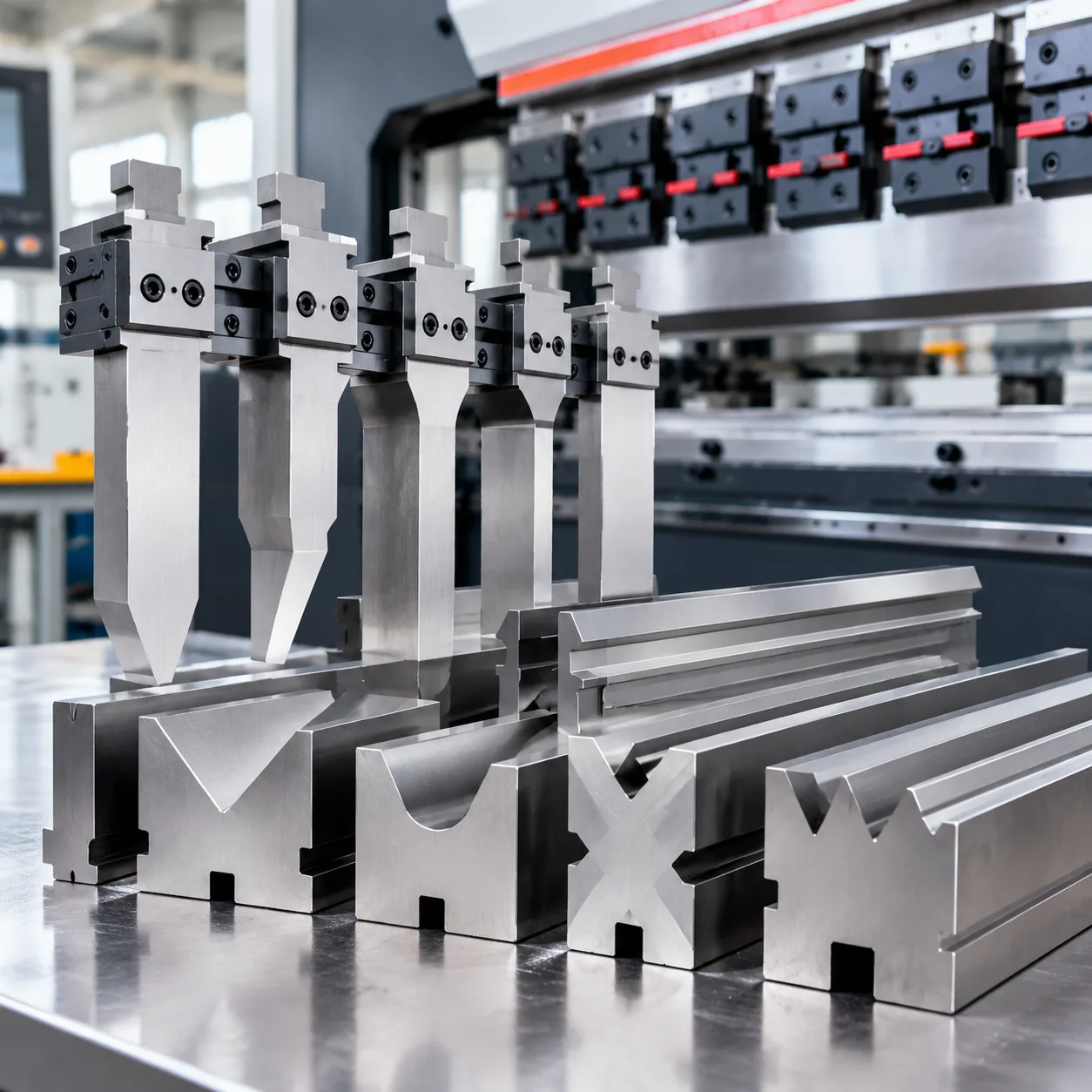
| Solid Full-Length Punches | Long, continuous channel work, heavy enclosures, architectural trims | Maximum structural strength across the entire bed; zero line marks between cuts | Cannot clear vertical end-flanges when bending 4-sided closed boxes |
| Segmented Punch Sets | Electrical cabinets, four-sided boxes, trays, variable-width work | Flexible assembly to any bed width; includes cut-away left/right horn sections | Takes slightly longer to load and align individual segments |
Using a segmented gooseneck punch for press brakes provides the ultimate flexibility, allowing operators to leave spaces for returned side flanges while maintaining solid support across the active bend line.
Technical Specifications for Gooseneck Press Brake Punch Tooling
When selecting a press brake gooseneck punch, verifying physical clearances and load limits against your machine setup prevents tool deflection and premature wear.
Clamping Style and Holder Compatibility
We manufacture our tooling to mount seamlessly into standard industrial tool holders and clamping bars:
- European / Amada Style: Features standard safety clicks, tang shoulders, and safety tang grooves for fast vertical or horizontal loading.
- American Traditional Style: Machined with standard 0.500" tangs to suit domestic mechanical and hydraulic clamping bars.
- Wila / Trumpf Compatible: Precision ground with push-button safety pins and CNC hydraulic clamping tangs for high-speed automated clamping.
Key Dimensions and Profile Specs
Every gooseneck punch for press brake setups relies on balanced geometry between throat depth and spine thickness to avoid cracking under load.
| Specification Parameter | Standard Range / Metric | Standard Range / Imperial | Key Considerations |
|---|---|---|---|
| Punch Tip Angle | 26°, 30°, 60°, 85°, 88°, 90° | 26°, 30°, 60°, 85°, 88°, 90° | Matches air-bend springback allowance |
| Punch Tip Radius | R0.2 mm – R3.0 mm | R0.008" – R0.125" | Ground for tight bends without material fracture |
| Working Height | 100 mm – 300 mm | 3.94" – 11.81" | Matches machine open height and stroke clearance |
| Relief / Throat Depth | 45 mm – 125 mm | 1.77" – 4.92" | Provides return-flange clearance |
| Max Allowable Tonnage | 400 kN/m – 1000 kN/m | 25 Tons/ft – 68 Tons/ft | Dependent on neck relief depth and spine thickness |
Relief Depth and Throat Clearance
The deep cutout on a gooseneck press brake punch provides the necessary relief window for completed flanges during secondary bends. When calculating your bend sequence, ensure your reverse flange depth remains at least 2 mm to 3 mm inside our published throat clearance profile to prevent metal-on-tool collision.
Load Limits and Tool Balancing
Because the gooseneck design offsets the bending centerline from the punch body, bending forces produce severe lateral deflection forces. Always check your required forming force against our rated linear load limits and review our press brake v die chart and tonnage guide to prevent exceeding allowable pressure limits. For matched bottom tooling profiles and height pairings, verify dimensions using our press brake die size chart and dimensions guide prior to setup.
Applications and Part Profile Compatibility
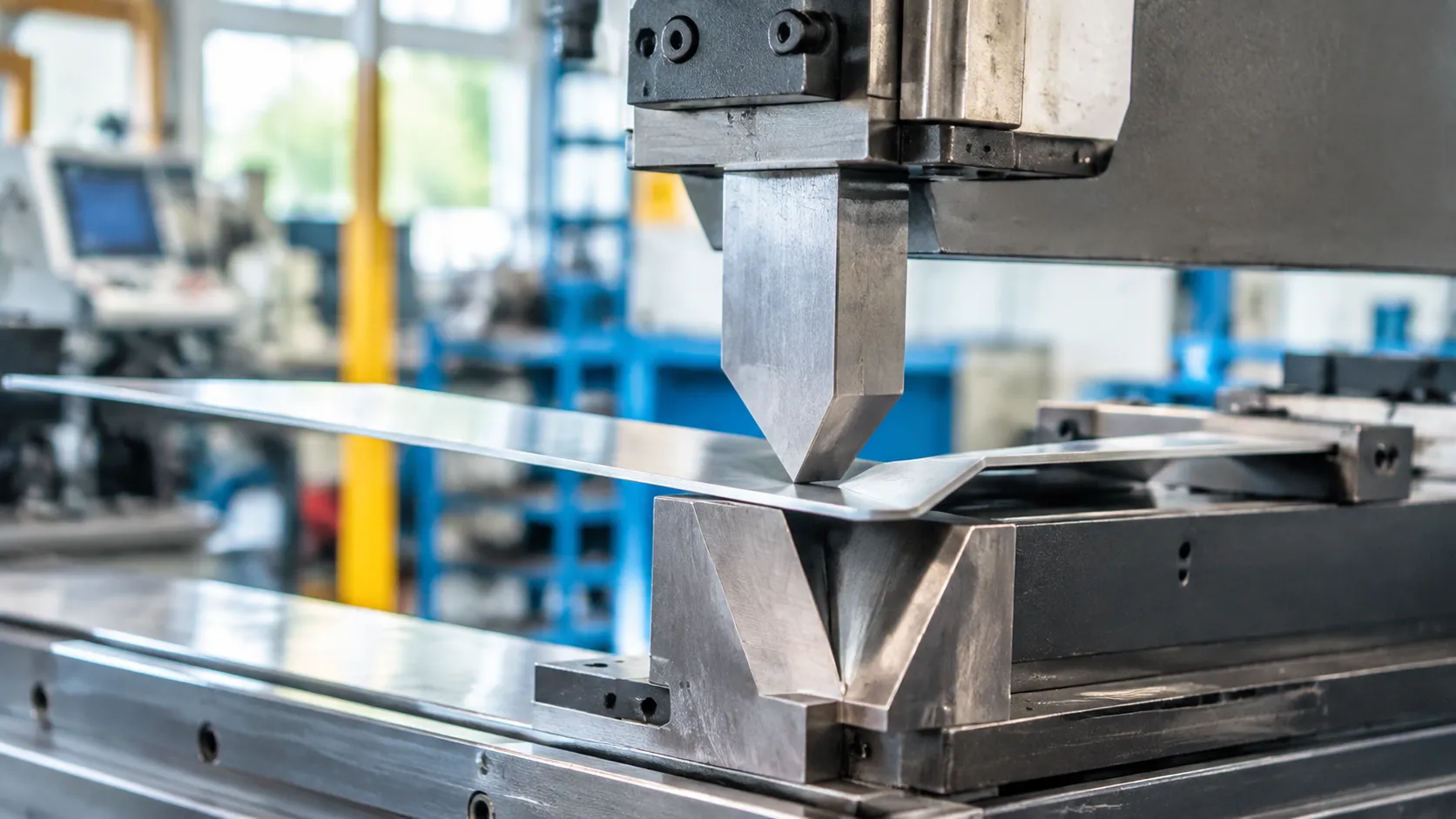
Deep Return Bends and Narrow Reverse Flanges
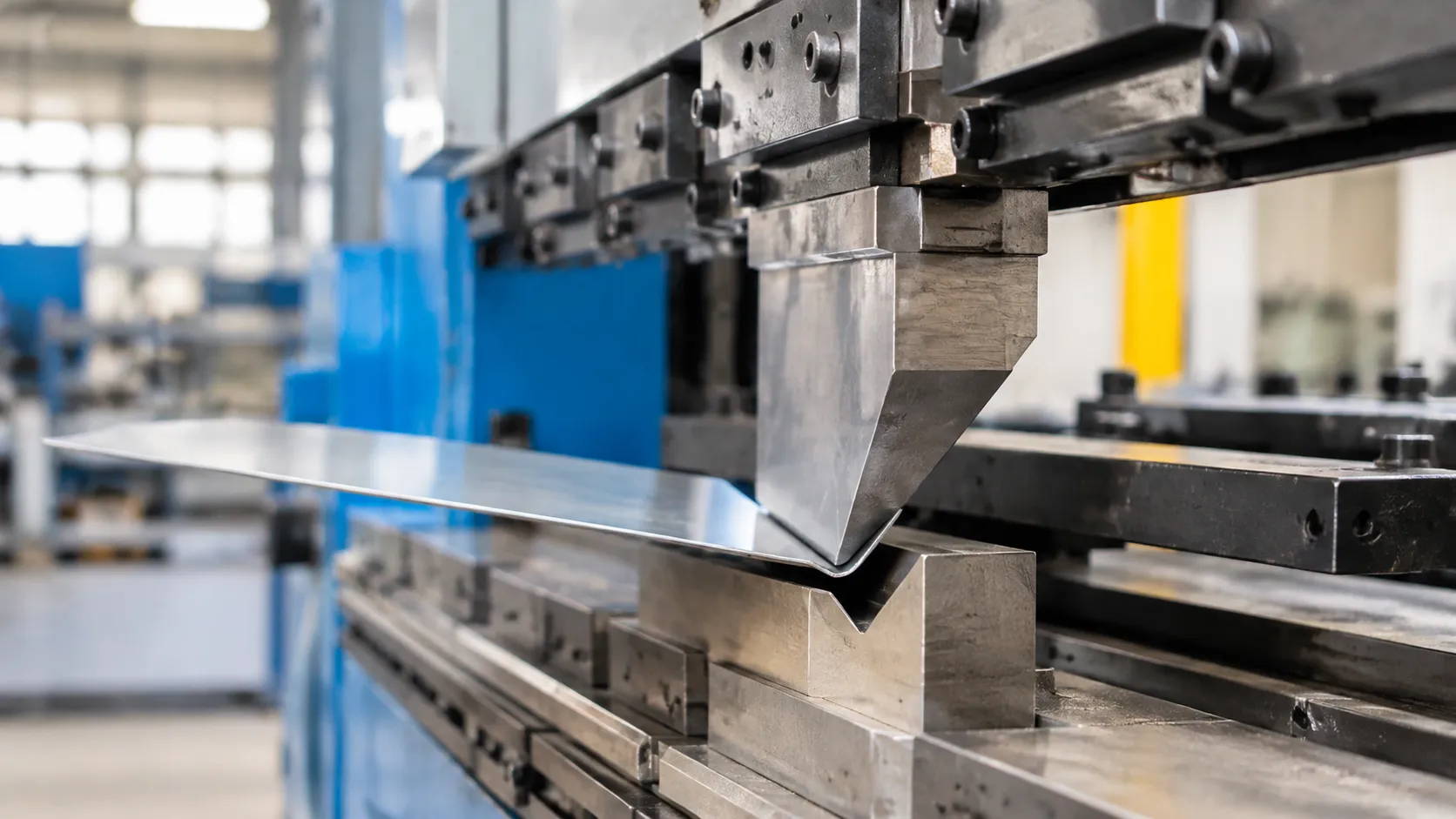
A standard straight punch often collides with previously bent legs. Using a gooseneck punch for press brake jobs lets the reverse flange tuck directly into the punch's recessed relief pocket:
Narrow U-profiles: Bend narrow legs without the tooling wall crushing the first bend.
Return flanges: Accommodate standing flanges up to the full relief depth of the punch throat.
Tight hems and offsets: Maintain bend line accuracy immediately following an offset bend.
Four-Sided Box Forming and Deep Channels
Forming deep enclosure panels requires open tooling space on both sides of the centerline:
Deep channel profiles: Form deep structural channels and hat sections without secondary forming hits.
Four-sided boxes: When combined with segmented tool lengths, the recessed geometry of a press brake gooseneck punch allows pre-bent end tabs to clear the punch body completely during the final closure bends.
Obstacle Clearance in Multi-Bend Sequences
Complex parts with multi-bend sequences frequently present intermediate obstacles:
Pre-punched louvers and knockouts: The relief area spans over existing hardware or raised surface forms.
Stepped profiles: Form inward-facing flanges on brackets and chassis parts without interference.
Predictable cycle times: Running a dedicated gooseneck punch press brake setup eliminates awkward part flipping or split-operation tool changes.
Standard Sheet Metal Fabrication Scenarios
We supply gooseneck tooling across a wide range of everyday forming environments, making high-tolerance parts for:
Electrical cabinets and industrial enclosures: Clean 90-degree bends on multi-flanged door panels and body frames.
HVAC ductwork and transitions: Seamless forming of return channels and deep casing seams.
Electronics chassis and server racks: Tight tolerance bending on narrow, highly stepped sheet components.
Whether you run light-gauge aluminum or heavy structural steel, integrating a reliable gooseneck punch for press brakes into your sheet metal fabrication workflow prevents scrap, eliminates collisions, and keeps your production line moving.
Press Brake Tooling and Machine Compatibility
Before setting up a gooseneck punch for press brake operations, we verify that the tool geometry, tang design, and machine physical limits match your equipment. Ensuring full system compatibility prevents tool damage, clamp slippage, and stroke collisions during deep bending sequences.
Matching Punch Tang Style to Your Clamping System
A secure seat requires matching the tang of your press brake gooseneck punch directly to your upper beam clamping mechanism:
- European / Promecam Style: Features standard tang dimensions with safety grooves or push-button safety pins for rapid vertical or horizontal loading.
- American Standard: Uses standard traditional hook or safety tang designs fastened via mechanical clamp bars.
- Wila / Trumpf Style: Designed for high-precision hydraulic or pneumatic push-button clamping systems with automatic seating and alignment.
If your machine uses quick-change adapters, we provide standard tang modifications to ensure your gooseneck top tooling locks in squarely without play.
Verifying Lower Die and Holder Alignment
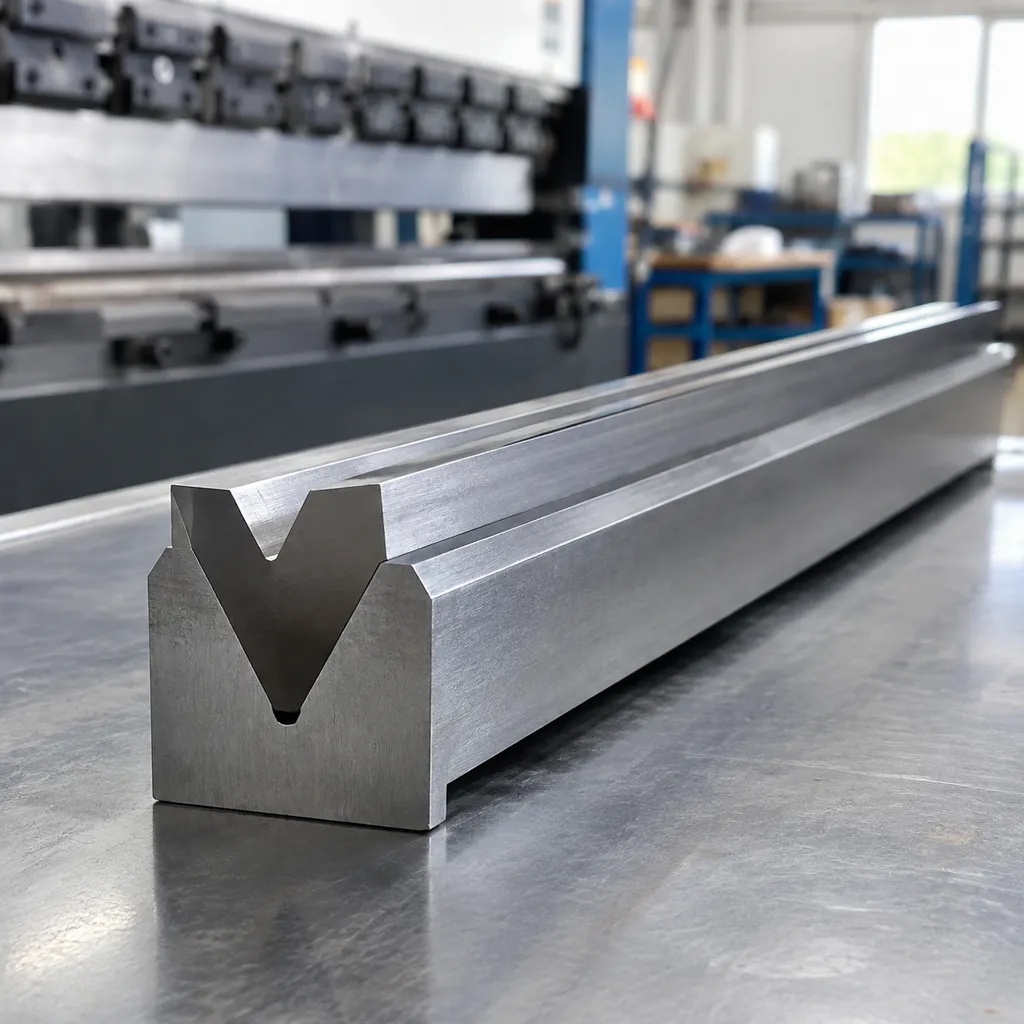
A deep-clearance punch must work in direct alignment with your bottom tooling. When pairing a gooseneck punch press brake setup with matching precision press brake punches and bottom tools, check the following:
- Centerline Offset: Confirm that the punch tip aligns exactly with the center of your press brake V-dies under load.
- Shoulder and Die Clearance: Ensure the narrow neck relief clears the outer edges of multi-V or single-V die holders during the complete downward stroke.
| Checkpoint | Parameter to Confirm | Primary Risk If Ignored |
|---|---|---|
| Tang Type | American, European, or New Standard | Tool slippage or seating failure |
| Die Centerline | Punch tip to V-die center alignment | Uneven bend angles, tool deflection |
| Holder Height | Upper intermediate holder clearance | Collision during reverse-bend execution |
Machine Stroke, Shut Height, and Open Length Checks
Because a gooseneck press brake punch typically features a taller profile to accommodate return clearance, verifying machine working room is mandatory:
- Open Height (Daylight): The total distance between the upper ram and the lower bed when fully raised must fit the punch height, die height, intermediate holders, and sheet material thickness.
- Stroke Length: Ensure your ram has enough downward stroke travel to reach the required bottoming or air-bending position inside the V-die opening.
- Closed Height (Shut Height): Verify that the fully closed ram position does not over-compress or bottom out tall punch profiles.
Information Needed to Verify Press Brake Model Fit
When we confirm fitment for your machine, gather these primary machine details:
- Machine Details: Make, specific model, and nominal tonnage capacity.
- Upper Clamping System: Mechanical clamp plate, manual quick-clamp, or hydraulic system.
- Clearance Numbers: Total open daylight height, stroke length, and holder dimensions.
- Target Part Profile: Maximum return flange depth and sheet thickness to ensure the selected throat relief handles the part without ram interference.
How to Select the Right Gooseneck Punch for Press Brakes
Choosing the right gooseneck punch for press brakes comes down to avoiding tool collisions while handling your bending tonnage. When we evaluate tooling for a specific job, we look directly at part geometry, return flange depth, material limits, and clearance margins.
1. Analyze Final Part Geometry and Bend Sequence
Before selecting a gooseneck press brake punch, map out your bend progression from first to last hit:
Flange orientation: Confirm whether previous bends point toward or away from the punch body.
Collision points: Check where the sheet swings during upward stroke to prevent it from striking the punch shank.
Sequence feasibility: Test if reordering the bend sequence lets you run a standard tool before committing to deeper relief profiles.
2. Calculate Return Flange Depth and Throat Clearance
A press brake gooseneck punch works by providing open space behind the punch tip:
Flange depth vs. relief depth: Measure the return flange length ($L$) and ensure the punch throat depth ($D$) exceeds it with at least 2 to 3 mm of safety margin.
Return leg clearance: For deep U-channels, ensure the inner profile width clears the back of the punch body throughout the entire cycle.
| Selection Metric | What to Measure | Tooling Impact |
|---|---|---|
| Throat Depth | Return flange length | Prevents collision on the return leg |
| Relief Angle | Inward flange angle | Cleans past 90° bends or acute returns |
| Punch Height | Deep box side walls | Avoids premature ram contact |
| Tip Radius | Sheet thickness ($t$) & material type | Controls cracking and part accuracy |
3. Check Sheet Metal Type, Gauge, and Inside Radius
Material properties dictate the tool tip design. When bending mild steel, stainless steel, or aluminum, you must select the right press brake punch radius to prevent material cracking or premature tool wear. Thicker gauges require larger nose radii to distribute stress evenly along the bend line.
4. Verify Punch Load Limits Against Required Bending Force
Because a gooseneck punch press brake profile is carved out for clearance, it handles less load than a standard straight punch:
Tonnage per foot/meter: Calculate the required air-bending tonnage for your material thickness and die opening.
Rated capacity: Compare your tonnage calculation against the maximum allowable load stamped on the tooling body.
Off-center loading: Factor in the natural side-thrust generated by the relieved neck under heavy loads.
5. Standard vs. Custom Gooseneck Tooling
Most jobs clear using our stock off-the-shelf profiles. When parts feature extra-deep returns, narrow channels, or non-standard bend angles, we configure custom relief depths, modified punch angles, or tailored tip geometries to fit your exact specifications.
Available Configurations and Custom Options
We supply standard stock profiles and tailored geometries to fit your shop's bending requirements. Whether running standard channels or deep return flanges, our tooling configurations keep machine setup simple and collision-free.
Standard Stock Profile Dimensions
Our standard stock gooseneck press brake punch inventory covers the most common sheet metal profiles. These tools are pre-ground, hardened, and ready for immediate deployment.
| Specification Parameter | Standard Range / Options |
|---|---|
| Punch Angles | 88°, 85°, 30° (acute relief) |
| Standard Tip Radii | R0.8 mm, R1.0 mm, R1.5 mm, R3.0 mm |
| Working Heights | 100 mm to 210 mm |
| Standard Throat Depths | 50 mm to 90 mm return bend clearance |
| Full Lengths | 415 mm, 835 mm solid bars |
Segmented Punch Sets for Box Bending Flexibility
Running four-sided boxes or return flanges with tight corners requires rapid length adjustments. We supply every gooseneck punch for press brakes in solid lengths or fully sectioned sets.
- Standard Segment Breakdown: Includes precision-cut pieces (such as 10, 15, 20, 40, 50, 100, and 200 mm sections) to build any custom bending length.
- Relieved Horns: Left and right end-horns clear pre-bent flanges during enclosed box folding.
- Interchangeable Tolerances: Every segmented section is matched and precision ground to uniform heights, preventing uneven pressure points along your bend line.
Custom Relief, Modified Angles, and Tip Radii
When standard profiles interfere with unusual part geometries, we grind custom tooling tailored directly to your process. Using our press brake die clearance guide, you can identify critical collision points before finalizing your custom design.
- Extended Throat Clearances: Deeper relief pockets built specifically for wide return channels and deep door profiles.
- Modified Tip Angles: Sharper or modified clearance angles designed to avoid early contact on narrow channel work.
- Custom Tip Radii: Large radii to match strict customer blueprint specs or minimum bend radii on high-tensile sheet metal.
Requirements for Custom Profile Manufacturing
To manufacture a custom press brake gooseneck punch tailored to your project, we need four core data points:
- Part CAD Drawing: A 2D cross-section (DXF or DWG) showing your part profile, material thickness, and bend sequence.
- Material Properties: Metal grade, yield strength, and sheet thickness.
- Machine Interface: Press brake make, model, clamping style, and maximum allowable tonnage.
- Clearance Constraints: Minimum required throat relief depth and punch height to clear adjacent bends without exceeding machine open height limits.
Ordering and Quote Request Details
Getting the right gooseneck press brake punch built and delivered requires exact machine and profile data. We streamline the quote process so you receive accurate pricing, verified load ratings, and fast turnarounds without back-and-forth delays.
Required Part Drawings and Bend Profiles
To verify that a gooseneck punch for press brake operations provides sufficient clearance, provide clear part geometry before ordering:
- Part CAD Files: Provide 2D or 3D cross-sections (.dxf, .dwg, or .step) displaying your final formed profile.
- Flange Dimensions: Specify return bend heights, channel widths, and inside bend radii.
- Material Data: List sheet metal thickness, material grade (e.g., mild steel, aluminum, stainless), and tensile strength to confirm tonnage limits.
Machine Details and Clamping Specifications
Every press brake bed and upper beam configuration has unique limitations. When selecting a gooseneck punch for press brakes, submit the following equipment specifications:
| Parameter to Submit | Why It Matters | Details to Include |
|---|---|---|
| Machine Make & Model | Verifies total stroke, daylight, and tonnage limits | OEM brand, rated tonnage, overall bed length |
| Clamping Style | Ensures correct tang fitment and safety tang alignment | European/Promecam, American standard, or New Standard/Wila |
| Tool Length & Segmentation | Matches your box-bending or broad-sheet requirements | Solid full-length sections (e.g., 835 mm) vs. segmented sectional sets |
| Lower Tooling Setup | Prevents interference with bottom dies | Die height and V-opening; reviewing your press brake V-die lifespan helps ensure matching tool wear |
Lead Times, Packaging, and Global Shipping
We build and ship press brake gooseneck punch orders with strict quality controls to protect precision-ground surfaces during transit:
- Production Lead Times: Standard stock lengths ship within 24 to 48 hours. Custom profile milling and specialized relief geometries typically ship in 2 to 3 weeks.
- Protective Packaging: Every gooseneck punch press brake tool is coated with anti-corrosion oil, sealed in protective wrap, and secured in heavy-duty wooden crates to prevent tip or tang impact during transport.
- Shipping Methods: We provide door-to-door air freight for urgent line-down replacement tooling as well as consolidated sea freight and standard freight carriers for bulk and full-length tooling packages worldwide.
Frequently Asked Questions
What is a gooseneck press brake punch used for?
A gooseneck press brake punch forms narrow return bends, deep channels, four-sided enclosures, and U-profiles. The relieved geometry provides throat clearance, allowing previously bent return flanges to swing past the tool body without colliding.
How does a gooseneck punch provide clearance for return bends?
The recessed cutaway behind the punch tip creates an open pocket. As the sheet metal curls upward during the stroke, the reverse flange enters this relief area instead of making contact with the tool, enabling narrow edge returns and channel clearing.
How do I check whether a gooseneck punch fits my press brake?
Verify three key compatibility factors before ordering:
| Checkpoint | What to Verify |
|---|---|
| Tang Style | European/Promecam, American standard, or specialized clamping |
| Machine Clearance | Tool working height + die height must not exceed daylight/open height |
| Stroke Limit | Ensure the beam stroke accommodates the depth of the throat relief |
What measurements are needed to select the right punch?
To identify the correct gooseneck punch for press brake jobs, calculate:
Return Flange Depth: The length of the leg swinging toward the punch.
Throat Depth Needed: The horizontal clearance required to clear the leg.
Material Thickness and Type: Used to confirm tonnage limits.
Inside Bend Radius: Dictates the punch tip radius.
Can a gooseneck punch be made to a custom profile?
Yes. When standard profiles do not provide adequate relief for deep-box bends or narrow offsets, we manufacture custom tooling with deeper throats, modified face angles, extended working heights, and specific tip radii.
Should the punch be selected together with the press brake die?
Yes. Proper clearance depends on how the part sits in the lower V-die during the bend cycle. Pairing our gooseneck press brake tooling with the correct V-opening ensures the part clears both the punch throat and the die shoulder. For multi-step profiles requiring rapid transitions, fabricators often evaluate matching offset punches alongside their standard die setups.
What information should I send when requesting a quote?
To receive a rapid quote for a gooseneck punch for press brakes, provide:
Part Drawing: A DXF, DWG, or PDF detailing part dimensions and bend sequences.
Material Specs: Metal grade and sheet thickness.
Machine Information: Press brake make, model, clamping style, and rated tonnage.
Tool Length: Full-length section or segmented cut sets.