
Understanding Press Brake Die Angle Basics
What is a Press Brake Die Angle?
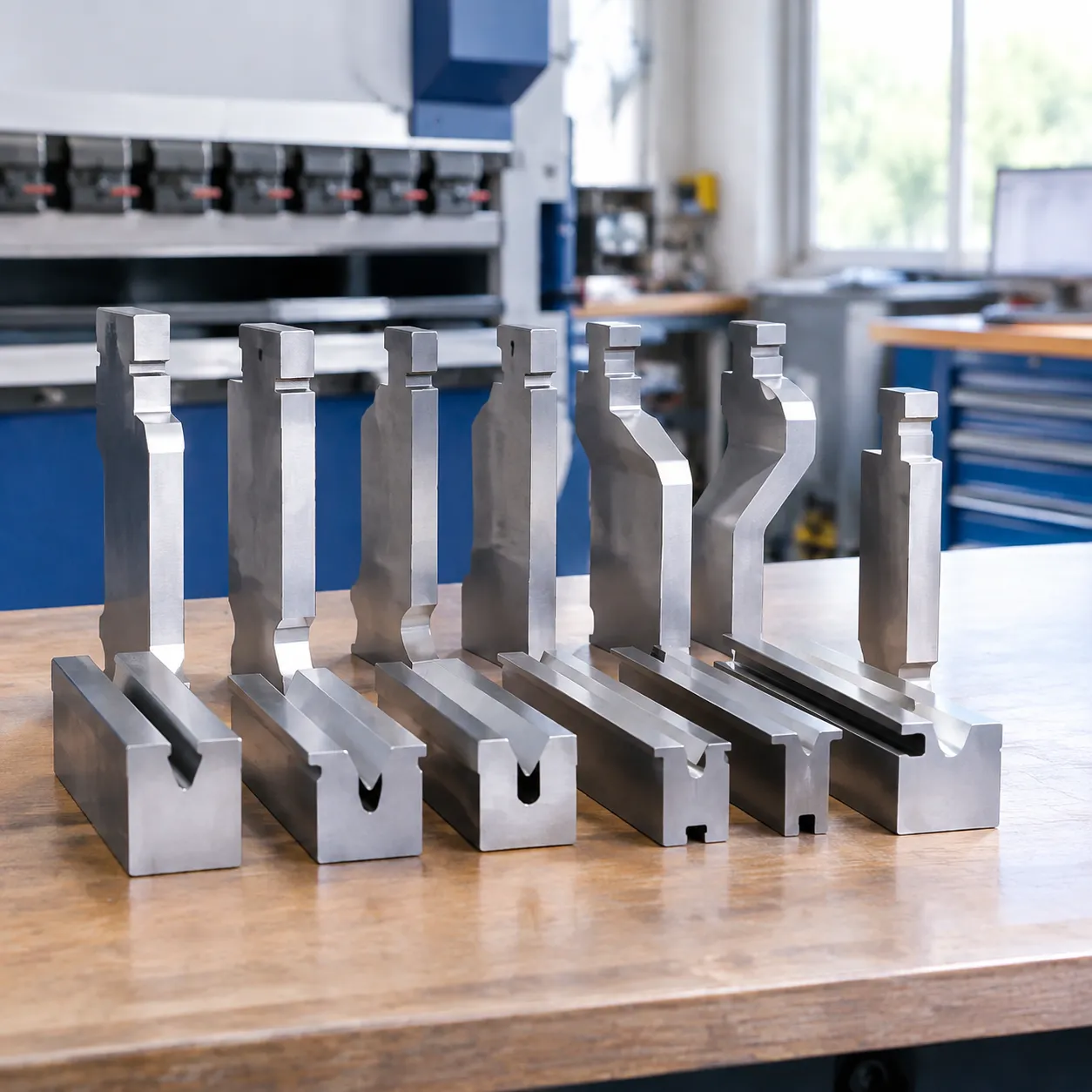
A press brake die angle is the machined V-groove opening angle on the bottom tooling that shapes sheet metal under tonnage. It defines the physical clearance limit for the workpiece as the top punch forces material down into the V-opening. Selecting the correct press brake die angles ensures your sheet metal bends cleanly to the targeted profile while compensating for material elastic recovery.
Why Die Angle Selection Dictates Bend Accuracy
Choosing the right press brake die angle directly impacts your bend precision, structural integrity, and tooling lifespan. Using an improper angle leads to costly rework and out-of-spec parts.
- Springback allowance: The die angle provides the necessary space to over-bend the material so it rebounds to the exact target angle.
- Tonnage control: Matching the angle to your bending strategy prevents excessive pressure buildup on the press brake frame and tooling edge.
- Bend consistency: Proper press brake tooling angles eliminate uneven flange lengths and inconsistent radius dimensions across long production runs.
Punch Angle vs Die Angle
Understanding punch angle vs die angle is critical for precision forming. While operators often assume both tools must match, air bending requires distinct angular specs to prevent material binding and achieve exact part geometry.
| Feature | Punch Angle | Press Brake Die Angle |
|---|---|---|
| Primary Function | Drives material down into the V-opening to establish inside bend radius | Supports sheet edges and defines maximum stroke depth |
| Angle Selection | Equal to or sharper than the die angle (e.g., 85° punch with 88° die) | Designed to accommodate sheet metal springback allowance |
| Air Bending Rule | Penetrates without making contact with die side walls | Sets the geometric boundary for maximum bend angle |
| Tooling Clearance | Must maintain relief to avoid pinching the workpiece | Requires sufficient clearance to allow free sheet movement |
How Bending Methods Impact Press Brake Die Angles
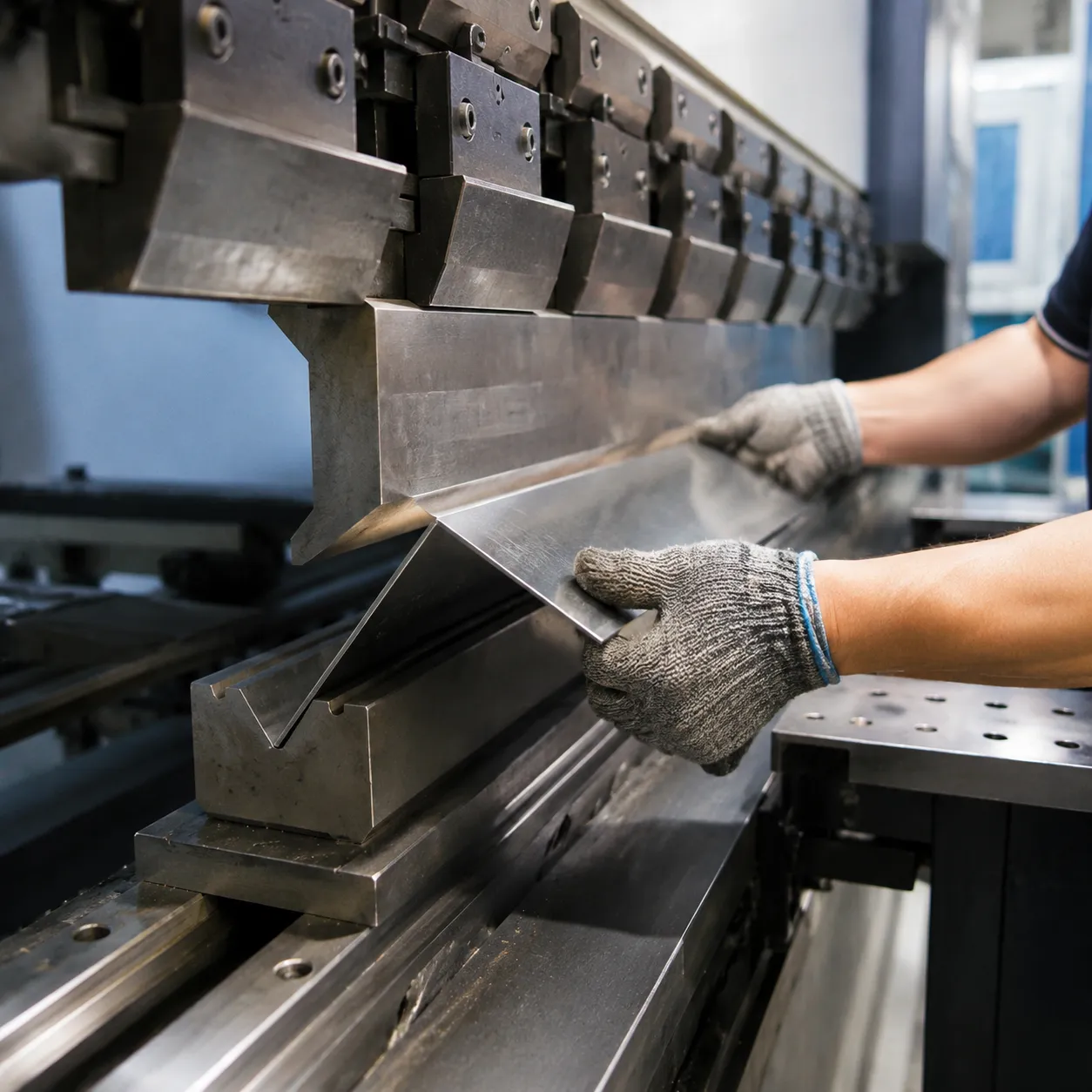
Air Bending Die Angles and Springback Control
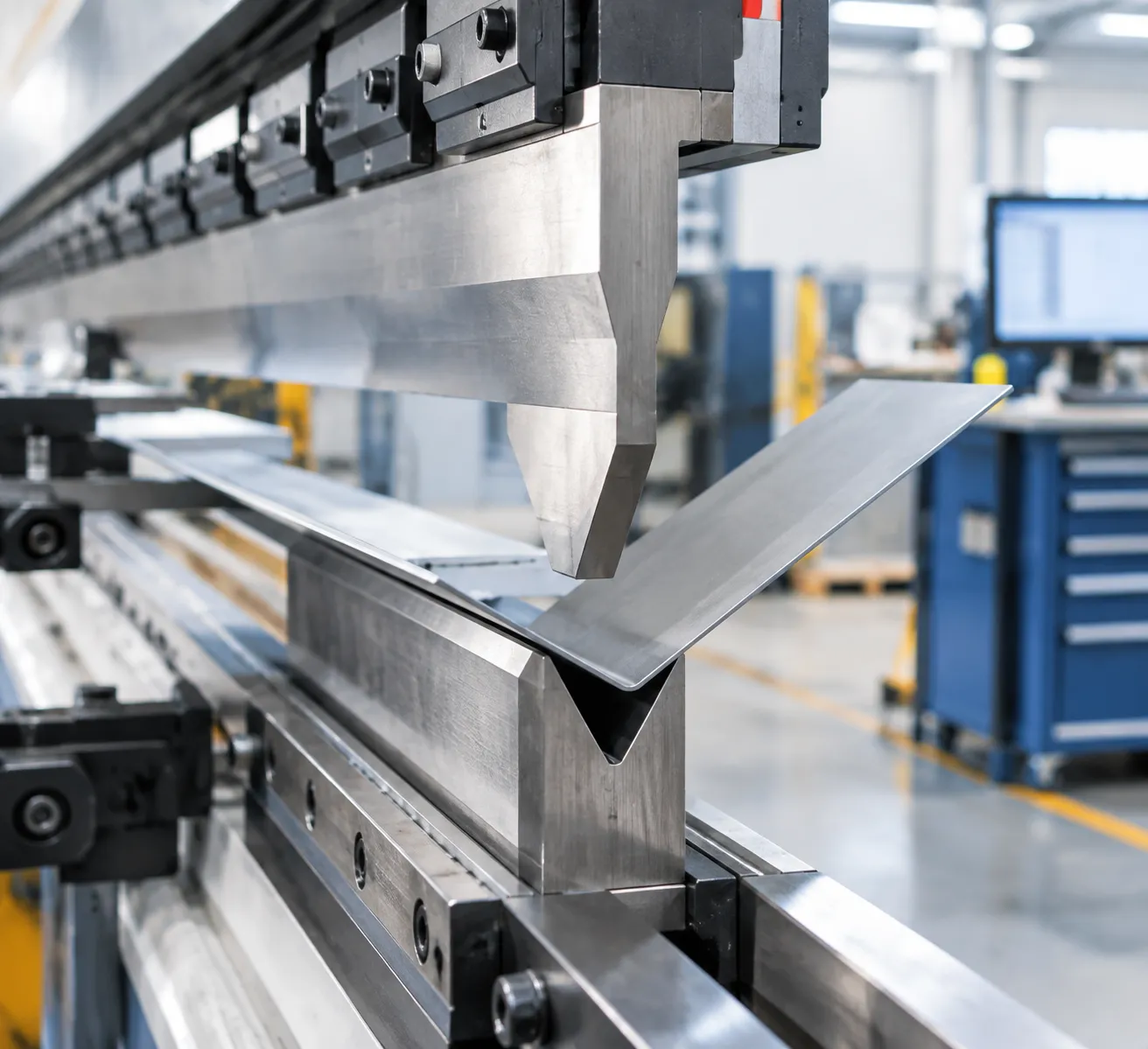
In air bending, the sheet metal contacts only three points: the punch tip and the two top edges of the V-groove opening. Because the material never touches the bottom of the tool, sheet metal springback allowance becomes your biggest variable.
To hit a finished 90-degree angle, we use an acute air bending die angle—typically an 88 degree press brake die or 85-degree tool—allowing the punch to over-bend the metal so it springs back to the target angle. Pairing proper angle selection with a reliable female press brake V-die for precise sheet metal bending gives you maximum flexibility across different material thicknesses without swapping tooling constantly.
Bottoming V Die Angles for Repeatability
Bottoming presses the sheet metal against the sidewalls of the lower tool without fully penetrating the die root. This method relies on mechanical contact for consistency:
- Angle Alignment: A bottoming V die angle usually matches your desired final bend (often 90 degrees) or is slightly acute (88 degrees) to offset minor elastic recovery.
- Tonnage Efficiency: Requires significantly less force than coining, making it a dependable option for medium-to-high volume production runs that demand consistent repeatability.
Coining Press Brake Dies and Extreme Tonnage
Coining stamps the punch profile directly into the sheet metal under extreme pressure, permanently setting the material at the bend root to eliminate springback entirely.
- Exact Geometry: The coining press brake die angle must exactly match your desired bend angle (typically 90 degrees).
- High Tonnage Demand: Demands 5 to 10 times the force of air bending, which drastically accelerates wear on your press brake tooling angles and machine hydraulic systems.
| Bending Method | Typical Die Angle | Tonnage Required | Springback Management |
|---|---|---|---|
| Air Bending | 85° – 88° (Acute) | Low | Over-bends material to allow springback |
| Bottoming | 88° – 90° | Medium | Material contacts die walls to set angle |
| Coining | 90° (Exact match) | High to Extreme | Eliminates springback by deforming metal |
Standard Press Brake Die Angles and Applications
| Die Angle | Bending Style | Primary Application & Material Fit |
|---|---|---|
| 90° Die | Bottoming & Coining | Standard right-angle bends in low-springback mild steel and soft aluminum. |
| 88° Die | Air Bending | Compensates for 2° of springback in standard cold-rolled steel. |
| 85° Die | Air Bending | High-tensile metals, stainless steel, and materials with high elastic recovery. |
| 30° – 60° Acute Die | Air Bending & Hemming | Deep channels, narrow profile boxes, and stage-1 hemming pre-bends. |
90-Degree V-Dies for Standard Bends
- Bottoming focus: Best suited for bottoming and coining applications where the punch forces the sheet to conform directly to the V-groove.
- Air bending limitations: A 90 degree bending die is rarely used for 90° air bending because natural material relaxation opens the finished angle beyond common tolerance limits.
85-Degree and 88-Degree Dies for Springback Control
- Standard overbending: An 88 degree press brake die provides the small overbend needed to achieve a true 90-degree final angle in standard mild steel during air bending.
- High-tensile alloys: An 85 degree V die offers extra clearance to absorb higher sheet metal springback allowance found in stainless steel and high-yield alloys.
- Tooling selection: Utilizing dedicated metal-forming press brake dies ensures consistent angular accuracy across varying material batches.
Acute Press Brake Die Angles for Deep Bends and Hemming
- Clearance and depth: An acute angle V die (30°, 45°, or 60°) provides maximum punch clearance for deep box profiles and tight return bends.
- Tool versatility: A 30° press brake die angle functions as a versatile multi-angle tool, allowing operators to air-bend any final angle from 30° to 170° without changing setup.
- Hemming pre-bends: Essential for two-step hemming operations where the sheet requires a sharp pre-bend before final flattening. Reviewing a press brake V-die chart helps verify tonnage limits when driving acute tooling into thicker sheet stock.
How to Choose the Right Press Brake Die Angle
Choosing the right press brake die angle isn't just about matching the target angle on your part drawing—it's about predicting how the sheet metal will react under pressure. Picking the wrong press brake die angles leads to constant springback battles, material cracking, or unnecessary machine strain.
Factoring in Material Type and Tensile Strength
Different metals rebound differently after the punch releases pressure. To achieve a precise bend, your tooling profile must account for the material's yield strength and sheet metal springback allowance.
- Mild Steel: Low springback (1° to 2°). Standard 88-degree or 90-degree bending dies handle air bending efficiently.
- Stainless Steel: High springback (3° to 5°). Requires an 85-degree or 88-degree press brake die angle to overbend the material into tolerance.
- High-Strength Alloys: Severe springback (up to 10° or more). Demands acute angle V dies (such as 30°, 45°, or 60°) so you have enough clearance to overbend.
- Aluminum: Low springback, but sensitive to cracking. Choosing durable die materials by reviewing a press brake die material guide helps ensure your shop floors run reliable tooling for soft vs. hard tempers.
Matching Die Angle to Sheet Metal Thickness and V-Opening Width
Your press brake die angle must work seamlessly with your V-groove opening calculation. As a standard shop rule for air bending mild steel, set your V-opening width to 8 times the sheet metal thickness (8x T).
When managing multiple sheet gauges throughout the day, flexible setups like a high-strength 4-way press brake die let you quickly rotate between various V-openings while keeping your tooling angles consistent.
| Sheet Metal Thickness | V-Opening Width | Recommended Press Brake Die Angle | Primary Bending Method |
|---|---|---|---|
| 0.5 mm – 2.0 mm | 6x to 8x Thickness | 88° or 90° V-die | Air Bending |
| 2.5 mm – 6.0 mm | 8x to 10x Thickness | 85° or 88° V-die | Air Bending / Bottoming |
| 6.0 mm+ (Heavy Plate) | 10x to 12x Thickness | 75° to 88° V-die | Air Bending |
Accounting for Inside Bend Radius and Material Elasticity
During air bending, the inside press brake bend radius is naturally formed by the width of the die opening rather than the punch tip radius alone.
- Wider Openings Increase Rebound: A wider V-die creates a larger inside bend radius, which increases material elasticity and springback. You'll need a slightly sharper press brake die angle to compensate.
- Radius-to-Thickness Ratio: Ensure your punch and die angle matching doesn't force a bend radius smaller than the material's minimum tolerance, which causes metal fatigue or fracturing along the bend line.
Troubleshooting Press Brake Die Angle Mistakes
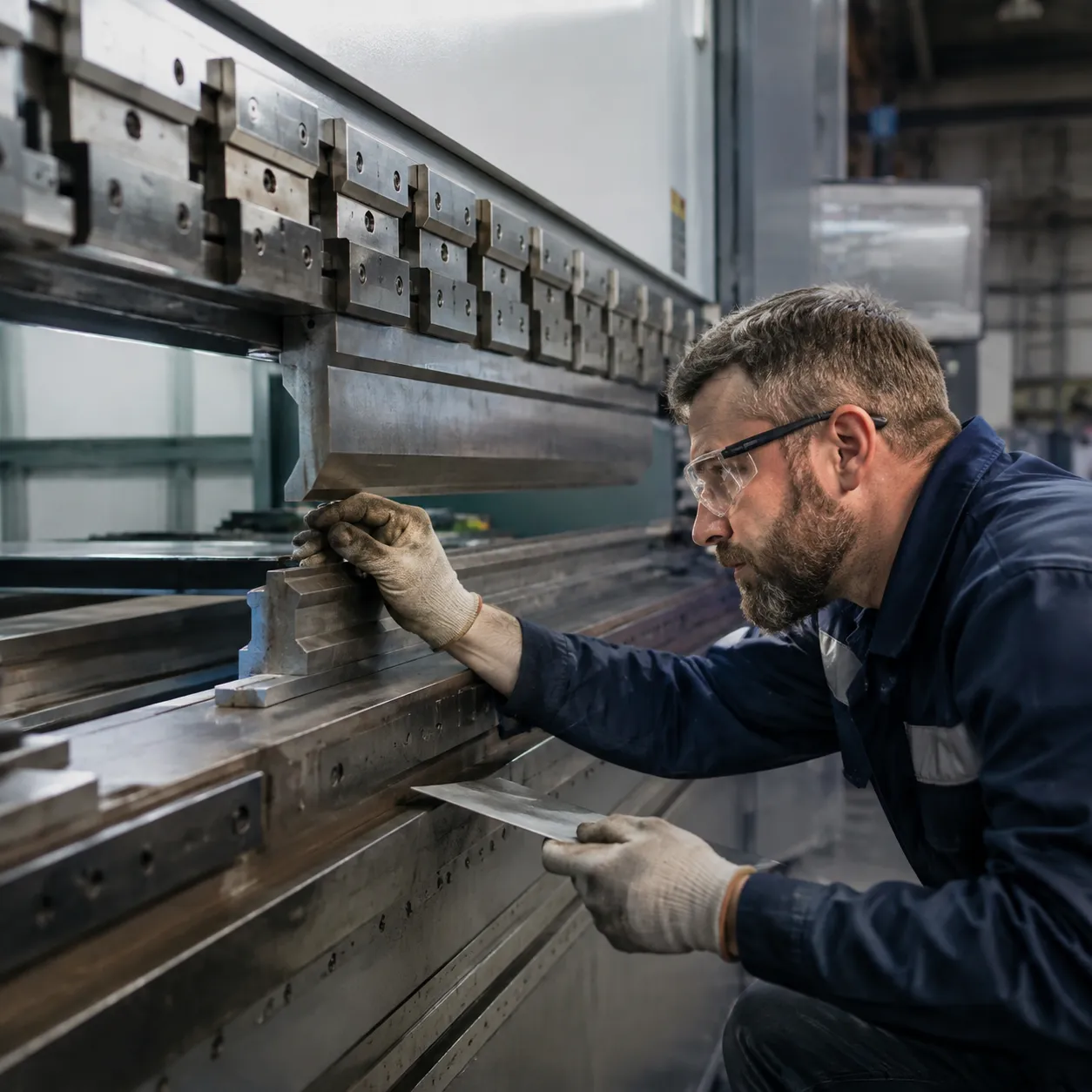
When bends don't hit the target, choosing the wrong press brake die angle or using an improper tooling setup is usually the culprit. I address common shop floor bending mistakes with a few key adjustments.
Fixing Underbending and Overbending Problems
Off-angle bends disrupt production runs. Underbending happens when sheet metal springback overrides your ram depth, while overbending stems from excessive penetration or miscalculated tooling.
- Adjust ram penetration: For air bending underbends, increase ram stroke depth slightly to push the metal deeper into the die.
- Compensate for springback: Switch out a standard 90-degree die for an 88-degree press brake die or an 85-degree V die to account for high sheet metal springback allowance.
- Inspect punch wear: Worn punch tips alter the inside press brake bend radius, causing inconsistent angles across the bend line.
Avoiding Punch Binding and Die Contact Clearance Issues
Forcing a punch deep into a tight die groove causes punch binding, part marking, or tool breakage. Evaluating the punch angle vs die angle keeps your setup safe.
- Match tool angles: Ensure the punch angle is equal to or tighter (more acute) than the press brake die angle.
- Check side clearance: Make sure the V-groove opening angle provides adequate clearance during deep bends. You can explore specialized press brake dies engineered to prevent punch interference.
- Use acute tooling for deep channels: Use an acute angle V die (such as 30 or 45 degrees) when forming narrow channels to eliminate sidewall contact before reaching full bend depth.
Managing Grain Direction and Material Variations
Mill tolerances and grain orientation introduce variables that affect your overall sheet metal bending tolerance.
- Bending transverse (across grain): Yields consistent resistance, higher ductility, and cleaner bend angles.
- Bending longitudinal (with grain): Reduces required force but increases the risk of cracking; requires a larger die radius and careful angle adjustments.
- Batch hardness variations: Test sample pieces from new metal sheets to adjust ram depth settings for yield strength variations before starting full production runs. Select standard V-dies designed to handle changing material properties with minimal recalibration.
Frequently Asked Questions About Press Brake Die Angles
What die angle should I use for a 90-degree air bend?
For standard 90-degree air bends in mild steel, we rely on an 88-degree or 85-degree die angle. If you are running standard precision setups, utilizing versatile American style press brake tooling with an 88-degree V-groove accommodates normal springback efficiently without binding.
| Target Bend Angle | Recommended Air Bending Die Angle | Typical Material |
|---|---|---|
| 90° Bend | 88° or 85° | Mild Steel / Soft Aluminum |
| 90° High Springback | 85° or 60° (Acute) | Stainless Steel / Hard Alloys |
| 90° Bottoming | 90° | Light Gauge Sheet |
Why use an 88-degree die instead of a 90-degree die?
An 88 degree press brake die compensates for sheet metal springback allowance. When air bending mild steel, the material relaxes 1° to 2° after the punch retracts. Bending inside a 90-degree die leaves your final part underbent at 91° or 92°, whereas an 88-degree die lets you overbend slightly so the sheet springs back to a clean 90 degrees.
Can punch angle and die angle be different?
Yes. In air bending, punch angle vs die angle matching is not mandatory.
- Punch angle sharper than or equal to die angle: Prevents punch binding in the V-opening.
- Sharper punch in wider die: Common when using a 30° acute punch inside an 85° or 88° V-die for job versatility.
For dedicated bottoming operations, matching geometries with a 4-way 90-degree press brake die provides high repeatability across standard right angles.
How does sheet metal springback affect press brake die angles?
Higher tensile strength requires a sharper press brake die angle to allow deeper overbending before the material settles into its final shape.
- Mild Steel: 1°–2° springback (uses 88° die)
- Stainless Steel: 3°–5° springback (uses 85° or 80° die)
- High-Strength Alloys: 5°–15°+ springback (requires acute 30° or 45° dies)