

Formula details
Product Details
Overview
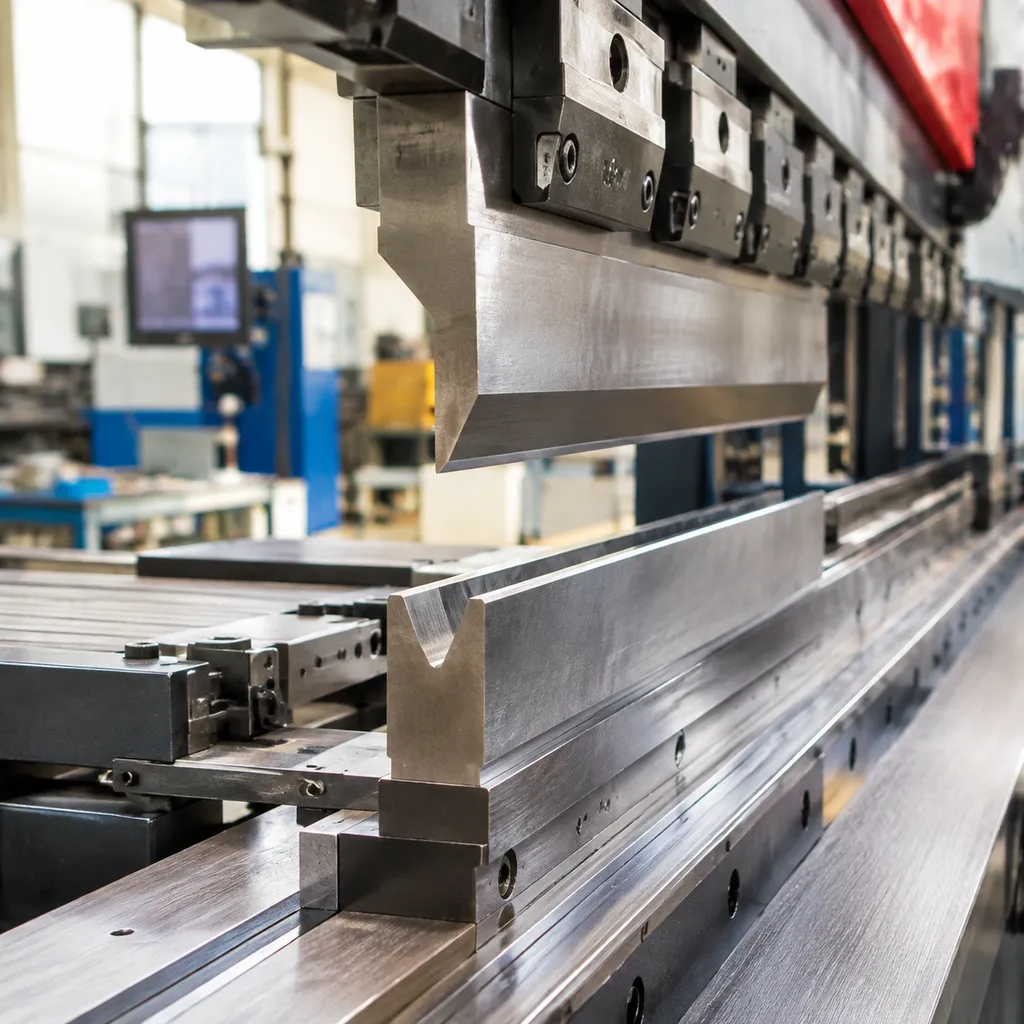
Precision CNC Press Brake Die Solutions
Key Technical Parameters
Every press brake bottom die we produce undergoes strict metallurgy verification, specialized heat treatment on high-load working zones, and full dimensional inspection.
| Technical Parameter | Specification Standard |
|---|---|
| Tooling Materials | 42CrMo, Cr12MoV (SKD11), T8/T10, 9CrSi |
| Working Surface Hardness | HRC 47–55 (Induction hardened / Vacuum quenched) |
| Machining Tolerance | Precision ground within ±0.01 mm to ±0.02 mm |
| Bending Angles | Acute (30°, 35°, 45°, 60°), 85°, 88°, 90° |
| V-Opening Range | 4 mm to 100 mm+ (Micro-V to Heavy-Duty Structural) |
| Segment Lengths | Full solid lengths (415 mm, 500 mm, 835 mm) & Sectionalized kits |
Primary Industrial Applications
Our hardened press brake lower dies are optimized to handle diverse material yield strengths without galling or shoulder deformation:
- Mild Steel & Structural Carbon Steel: Heavy-duty performance with minimal shoulder wear during continuous production cycles.
- Stainless Steel: Clean V-groove radii reduce surface friction and prevent material pickup during high-tonnage acute bending.
- Aluminum & Non-Ferrous Alloys: Smooth ground entry radii maintain precise bend centerlines while minimizing outer-surface marking.
- High-Strength Wear Plates: Deep-hardened tool steels absorb massive localized tonnage without cracking or structural deflection.
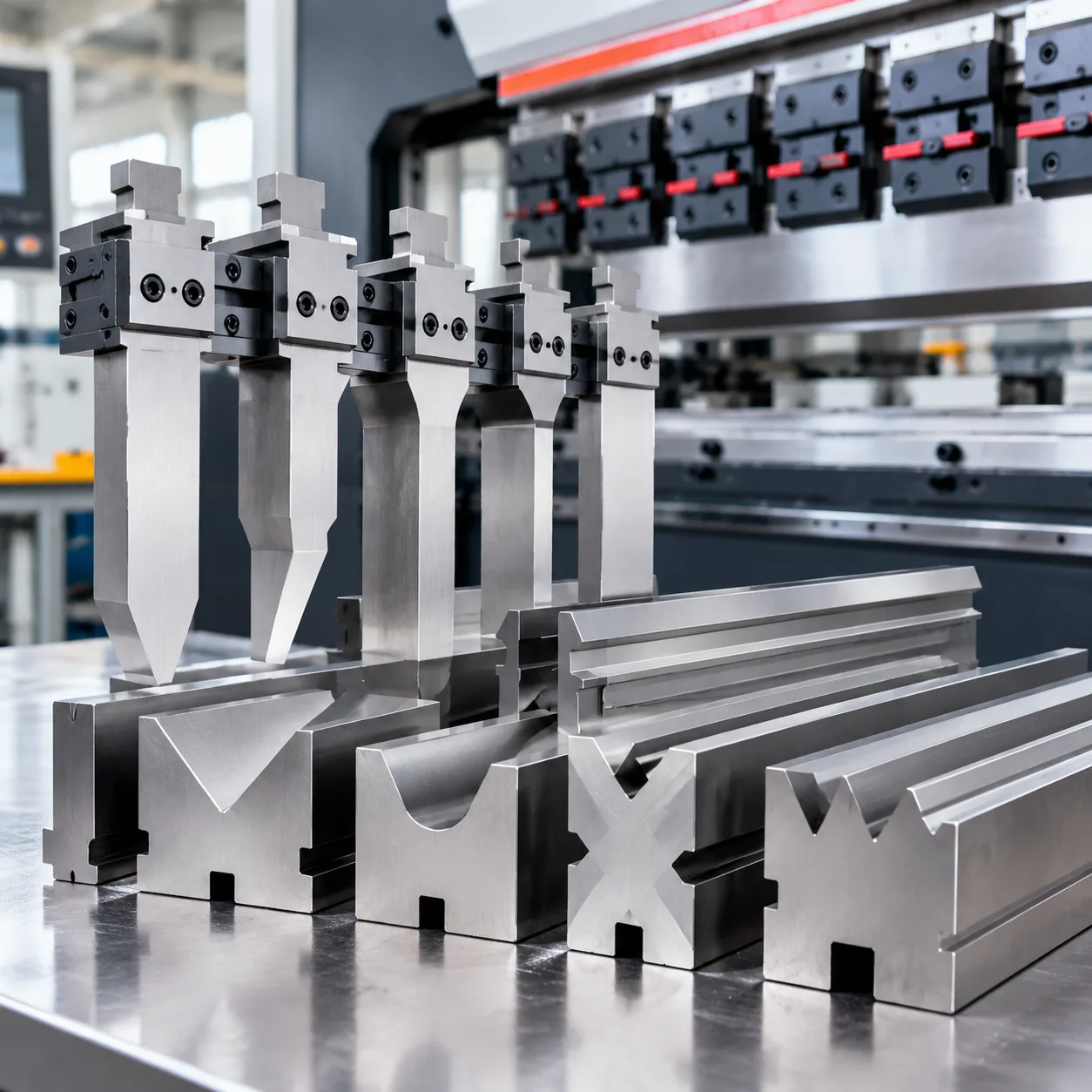
Types and Configurations of CNC Press Brake Lower Dies
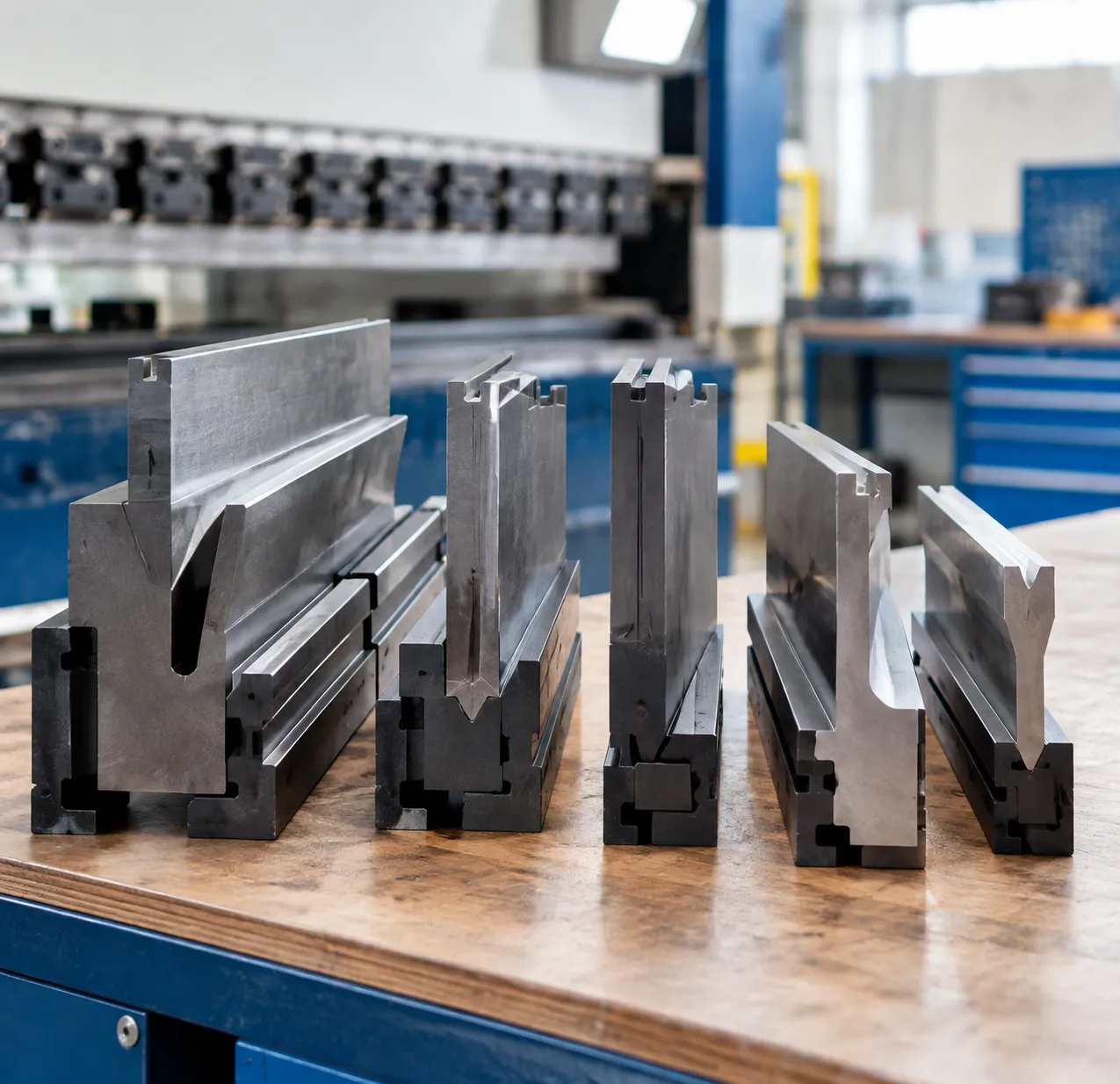
Matching the right die profile to your sheet thickness and bend angle eliminates excessive tool wear, tonnage overload, and side deflection. We manufacture a comprehensive range of hardened lower dies precision-ground to support various fabrication methods, from acute air bending to heavy structural plate forming. Explore our full breakdown of press brake die types explained for better metal bending to optimize your machine setups.
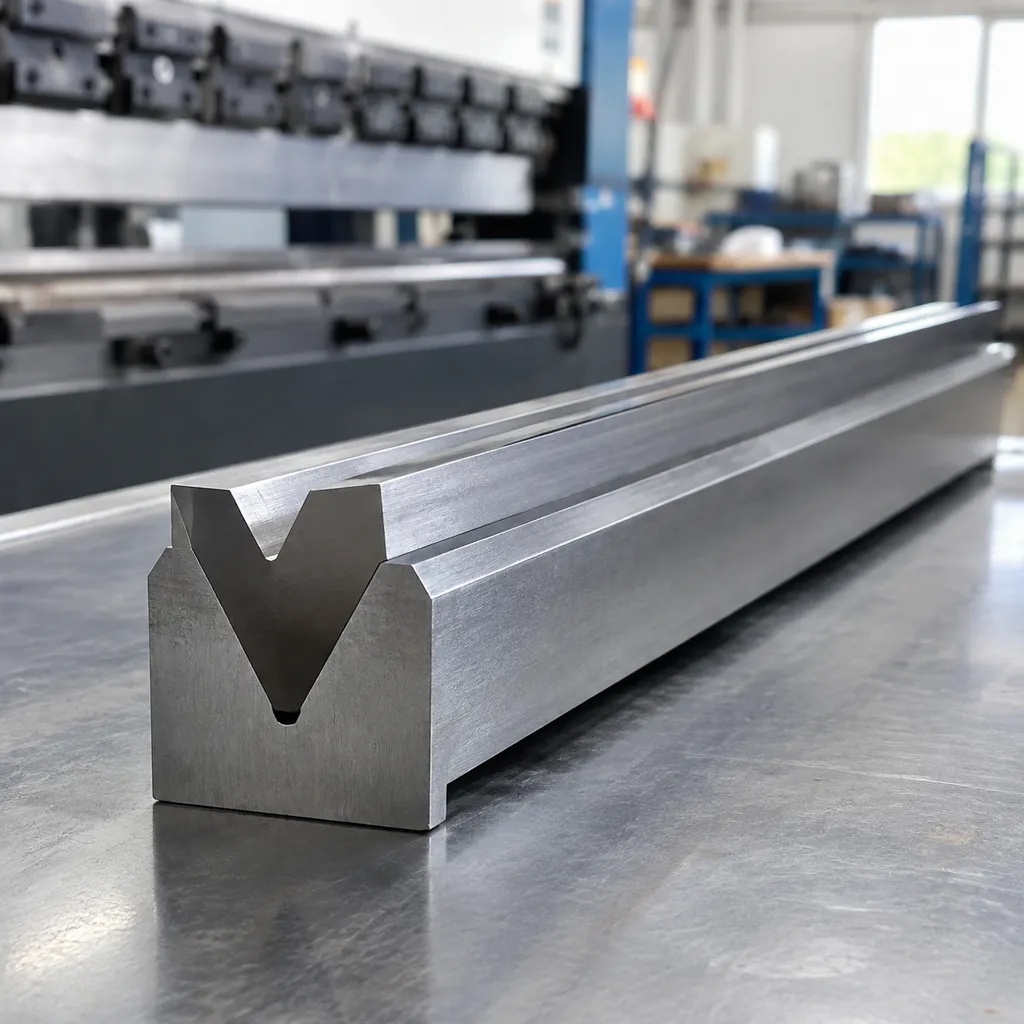
1V Single-V Dies
Single-V tooling provides maximum clearance around the bending zone, making it the standard choice for narrow profiles, deep channels, and complex return flanges.
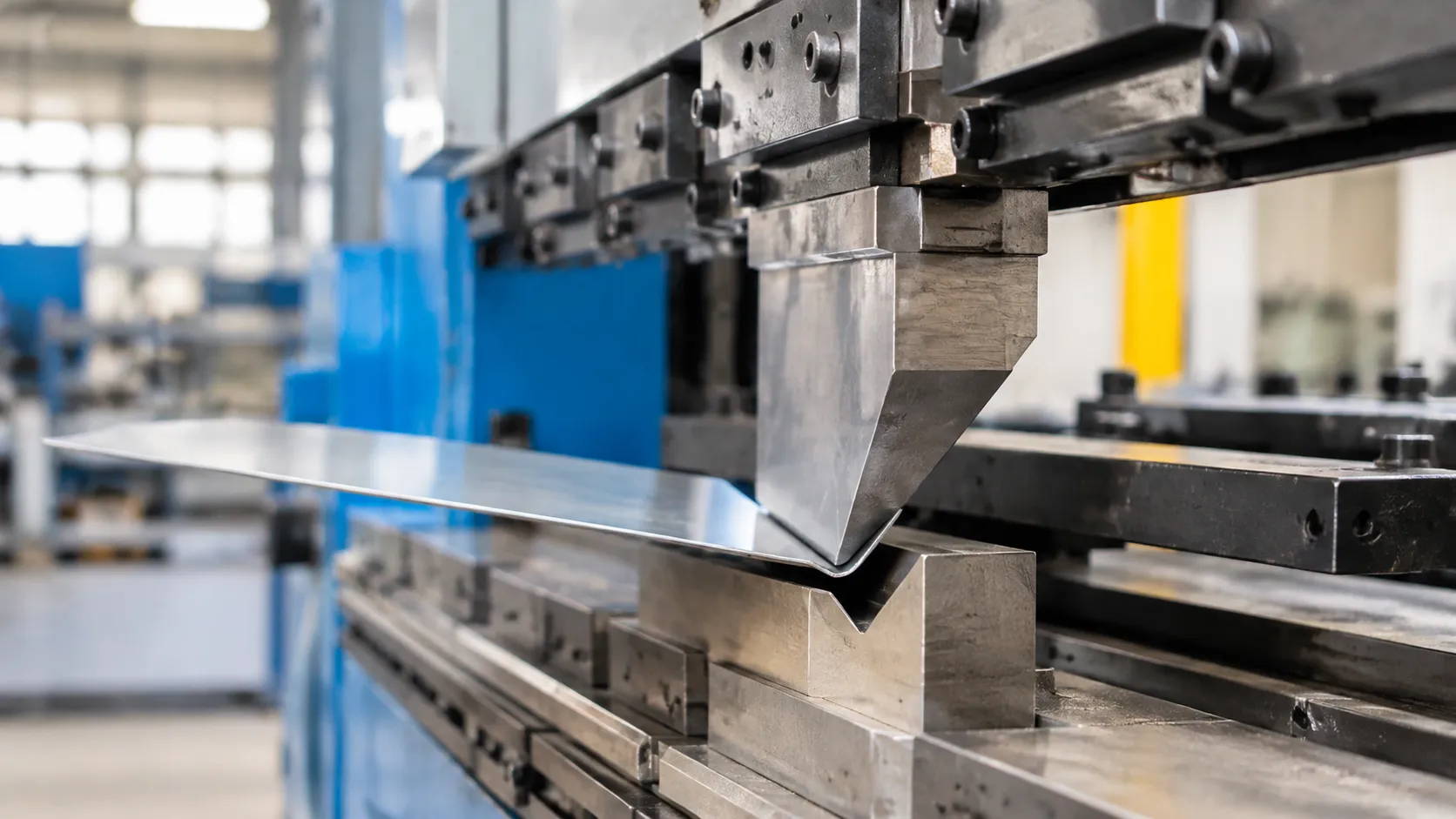
Acute Angle Profiles (30°–60°): Designed for extreme air bending and overbending materials with high springback. Our acute press brake dies for precision metal bending allow tight-radius pre-bending before hemming.
Standard Profiles (85°–90°): General-purpose bottom dies engineered for standard 90-degree bends in mild steel, aluminum, and light stainless stock.
V-Width Range: Available from narrow 4 mm openings up to 100 mm+ configurations for heavy plate.
2V Double-V & Self-Centering Groove Dies
Double-V dies feature two distinct V-grooves on opposite edges of a single block.
Fast Gauge Changeover: Simply flip the block 180 degrees to switch between thin and medium sheet thicknesses without resetting your lower tool holders.
Self-Centering Alignment: Symmetrical base geometry locks directly onto the machine bed rail to ensure identical centerline alignment across both working grooves.
Multi-V (4-Way) Die Blocks
Built for high-tonnage structural bending, 4-way multi-V dies pack four separate V-openings onto a solid rectangular block.
Heavy-Duty Plate Forming: Handles thick plate fabrication where frequent tool switching is impractical.
Maximum Structural Rigidity: Solid cross-section withstands severe point loads without micro-cracking or base deformation.
Hemming & Dutch Bending Die Combinations
Two-stage hemming sets combine an acute pre-bend station with a spring-loaded or mechanical flattening flat die.
Stage 1 (Pre-Bend): Bends the sheet edge to 30° using an acute punch and die interface.
Stage 2 (Flattening): Compresses the pre-bent flange flat or into a teardrop safety hem in a single setup stroke.
Applications: Cabinet doors, electrical enclosure edges, and structural safety rims.
Large Radius & Non-Marking Bending Dies
When bending pre-painted, polished stainless, or architectural aluminum, conventional steel shoulder friction leaves visible contact marks.
Large Radius Dies: Form consistent, sweeping cylindrical bends without faceted edges.
Non-Marking Options: Integrated roller-bearing shoulders and synthetic die inserts eliminate metal-on-metal galling, saving post-bend polishing and refinishing labor.
Machine Mounting & Clamping Compatibility for CNC Press Brake Dies
Tooling alignment and clamping compatibility dictate your setup speed and part repeatability. We engineer every cnc press brake die to seat directly into standard machine beds and hydraulic clamping systems, eliminating centerline drift, uneven load distribution, and the need for manual shimming.
European / Promecam Style Lower Tooling (12.7 mm Tang)
Standard European configurations utilize a precision-ground 12.7 mm x 84 mm tang baseline for universal interchangeability.
Fitment: Direct mounting onto standard grooved beds and clamping bars.
Key Benefit: Fast drop-in replacement across multi-brand setups.
Application: Ideal for standard bending jobs using our precision-ground European style press brake tooling systems.
Trumpf / Wila Style Clamping Systems
Designed for high-speed automated workflows and modern hydraulic clamping beams.
Mechanism: Safety-click buttons and CNC button-groove mounts for vertical tool loading and unloading.
Self-Seating: Automatically aligns and seats to the exact vertical reference plane under initial clamping pressure.
Advantage: Eliminates manual horizontal sliding and dramatically cuts setup times on complex, multi-station setups.
American Conventional & Amada Style Mounts
Engineered for reliable, high-tonnage performance on standard slotted lower beds.
Mounting Type: Flat-bottom bases with precision-machined tangs and set-screw alignment channels.
Stability: Optimized load dispersion prevents bed indentation during high-load air bending and bottoming operations.
Versatility: Fully compatible with standard worktables using American style press brake tooling configurations.
LVD / Bystronic & Heavy-Duty Custom Adapters
For non-standard press brake beds or specialized high-load applications, we manufacture direct-fit tangs and modular adapter blocks:
Direct Bed Interfacing: Custom tang profiles tailored to proprietary Bystronic and LVD lower holders.
Universal Conversion: Heavy-duty lower adapter systems allow you to run standard European or American CNC press brake dies on specialized machine beds without sacrificing tool height or tonnage capacity.
Lengths, Sectionalization & Box-Bending Segment Kits
To accommodate diverse bed sizes and complex sheet metal parts, we manufacture every cnc press brake die in both solid full lengths and multi-piece sectionalized sets. This flexibility lets you quickly reconfigure the bending line for deep 4-sided boxes, panels, and short-run production.
Standard Solid Full Lengths
For continuous long-sheet bending and high-load production, we supply solid one-piece tooling that guarantees a stable, uninterrupted bending plane:
415 mm & 500 mm pieces: Ideal for smaller hydraulic press brakes and targeted localized forming.
835 mm & 1000 mm pieces: Standard full lengths for full-bed setups, high-tonnage bending, and standard profile forming.
Sectionalized Split Sets for Deep Box Bending
Box and pan fabrications require flexible tooling widths to clear return flanges and deep side walls. Our standard sectionalized sets allow operators to build exact tooling lengths in seconds.
Standard Segment Breakdown: Kits include precision-cut pieces (e.g., 100 mm, 50 mm, 40 mm, 20 mm, 15 mm, and 10 mm).
Left & Right Ear/Horn Pieces: Specially relieved end segments designed to prevent flange interference when forming complex four-sided enclosures.
Rapid Reconfigurability: Swap individual precision press brake V-die segments in and out to match part geometries without modifying standard machine setups.
Simultaneous Precision Grinding for 100% Centerline Alignment
Combining split tooling from different batches often leads to height variations and uneven bend angles. We eliminate this issue at the manufacturing stage:
Batch-Ground Uniformity: Tool segments are precision-ground simultaneously in single setups to hold strict height and centerline tolerances within ±0.01 mm.
Zero-Shim Setup: Drop segmented sections directly into your bottom rail or holder without manual shimming or alignment adjustments.
Seamless Interchangeability: Maintain an identical bending line across the entire machine bed, ensuring uniform bend angles from one end of the workpiece to the other.
Engineering Guide: CNC Press Brake Die Selection & Tonnage Calculation
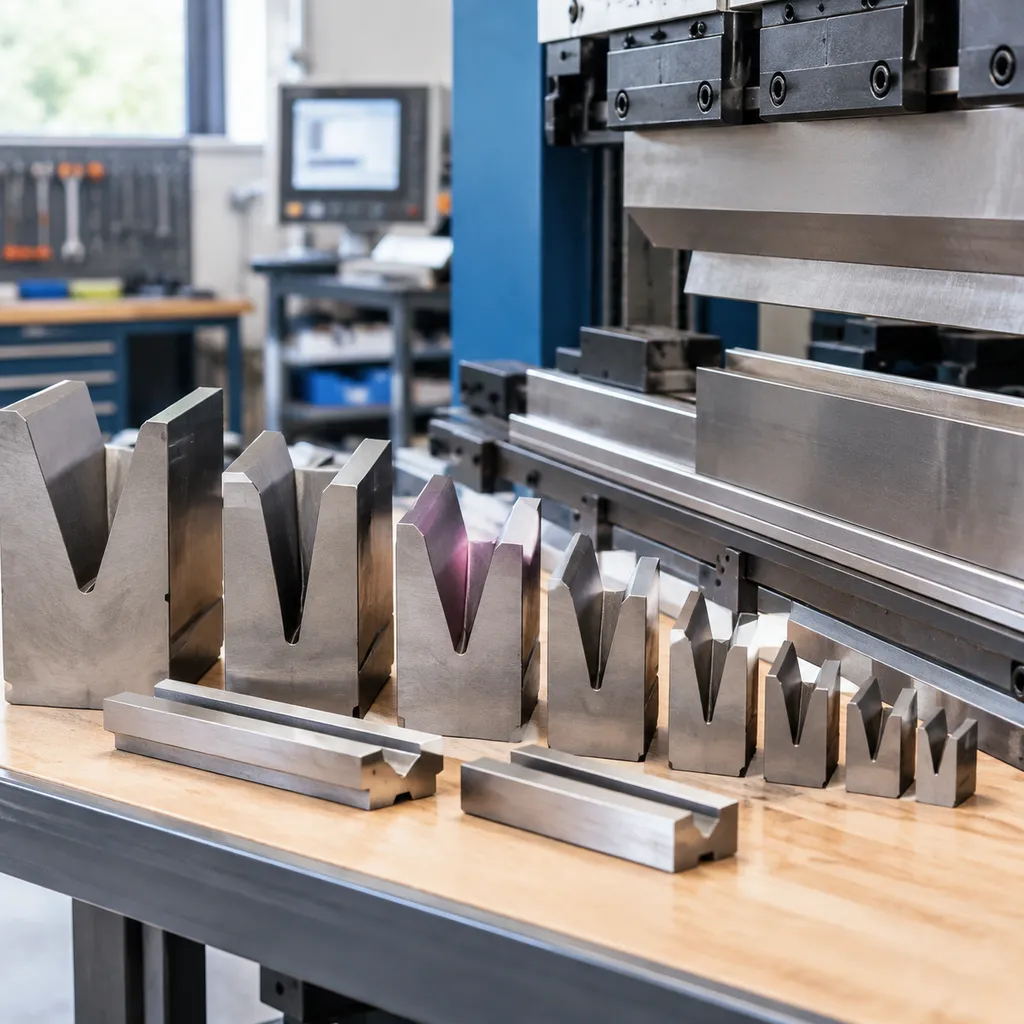
Selecting the correct cnc press brake die geometry directly determines part accuracy, surface finish, and machine safety. Tooling mismatch causes severe angle variations, premature shoulder wear, or catastrophic die breakage under excessive tonnage. We design our bottom dies around strict load-bearing parameters to deliver predictable results across all sheet metal bending operations.
The 8x Rule for V-Die Opening Width
For standard air bending of mild steel, the industry benchmark is sizing the V-groove width (V) to 6 to 8 times the material thickness (T):
- T le 3 mm: Use V = 6 × T to 8 × T for sharp, consistent inside bend radii.
- T = 3 to 6 mm: Use V = 8 × T to balance tonnage requirements and flange leg lengths.
- T ge 6 mm: Use V = 8 × T to 10 × T to reduce bending force and prevent tool shoulder micro-fractures.
Reviewing proper opening ratios in our press brake die clearance guide for better bending helps prevent unwanted side-wall marring and premature tool fatigue during tight air-bending setups.
Sheet Thickness vs. Inside Bending Radius Reference
When air bending mild steel (420 MPa tensile strength), the natural inside radius (IR) produced is approximately 15% to 17% of the selected V-die opening width.
| Sheet Thickness (T) | Recommended V-Opening (V) | Minimum Flange Leg (bₘᵢₙ) | Resulting Inside Radius (IR) | Approximate Force per Meter (F/m) |
|---|---|---|---|---|
| 1.0 mm | 6–8 mm | 4.5–5.5 mm | 1.0–1.3 mm | 8–11 Tons/m |
| 1.5 mm | 10–12 mm | 7.0–8.5 mm | 1.6–2.0 mm | 13–17 Tons/m |
| 2.0 mm | 12–16 mm | 8.5–11.5 mm | 2.0–2.6 mm | 18–24 Tons/m |
| 3.0 mm | 20–24 mm | 14.0–17.0 mm | 3.2–4.0 mm | 28–36 Tons/m |
| 4.0 mm | 32 mm | 22.5 mm | 5.0–5.5 mm | 38–45 Tons/m |
| 6.0 mm | 50 mm | 35.0 mm | 8.0–8.5 mm | 58–68 Tons/m |
Maximum Tonnage per Meter Load Capacity Guidelines
Exceeding the maximum yield strength of a hardened press brake bottom die leads to permanent core deformation or shoulder chipping. We manufacture our tooling from forged 42CrMo and Cr12MoV alloy steels, through-hardened and induction-treated to withstand extreme loads:
- Acute & Deep-Relief Dies (30°–60°): Typically rated between 400 kN/m and 800 kN/m due to reduced shoulder mass.
- Standard 85°–90° V-Blocks: Rated from 800 kN/m up to 1,500+ kN/m, depending on the tang profile and overall height.
- Heavy Structural Multi-V Blocks: Engineered for heavy plate fabrication with capacities exceeding 2,000 kN/m.
Always calculate your required bending force prior to setup and verify it against the certified tonnage limits outlined in our European press brake die rating guide for tonnage safety. This protects your hydraulic press brake tooling investment and ensures uniform bending along the entire bed length.
CAMT Manufacturing Excellence & Quality Control
Every CNC press brake die we build comes directly from our production floor, where we control the metallurgy, heat treatment, and finish grinding under one roof. Inconsistent hardness and sloppy grinding lead to rapid wear, shoulder deformation, and angle drift across long bends. We eliminate these failure points through rigorous, shop-tested in-house quality control processes.
Direct Factory Metallurgy & Deep Induction Hardening
Tool longevity starts with the right core alloy and proper thermal processing. We build our dies using certified high-grade steels—primarily 42CrMo and Cr12MoV (SKD11):
- Deep Working-Zone Hardening: We apply high-frequency induction hardening along the critical contact radii and V-groove working surfaces, achieving a hardened depth of 2–4 mm.
- Controlled Hardness Range: Working zones reach HRC 47–55 (configured by alloy grade and target tonnage), protecting against galling, pitting, and shoulder deformation under repetitive cycling.
- Ductile Shock-Absorbing Core: The die body retains its natural toughness to absorb high mechanical shock loads without brittle fracture.
Multi-Axis CNC Precision Surface Grinding
Seamless alignment across multi-meter press brake beds requires flawless machining standards:
- ±0.01 mm Working Tolerances: Critical load-bearing shoulders, tangs, and V-groove centerlines are ground simultaneously on multi-axis CNC surface grinders to maintain a strict ±0.01 mm to ±0.02 mm tolerance.
- Zero-Gap Assembly: Split and sectionalized tools sit flush with uniform heights and identical centerlines, eliminating steps between tool segments.
- Interchangeability: Replacement segments drop straight into existing setups without requiring manual shimming or bed adjustments.
100% CMM Inspection & Hardness Verification
Before our press brake bottom dies ship out, every piece completes physical validation:
- Coordinate Measuring Machine (CMM) Tracking: Multi-point scans map profile geometry, V-angles, and tang-to-V centerline offsets against native CAD models.
- Digital Hardness Testing: Surface hardness tests verify penetration depth and uniform HRC consistency across the entire tool length.
- Optical Profile Comparison: High-magnification optical comparators verify entry radii down to fractional-millimeter accuracy to stop sheet-metal scoring before it starts.
Custom CNC Press Brake Die Design & Fast OEM/ODM Workflow
Custom Profile Manufacturing from DXF/DWG Drawings
We manufacture specialized profiles designed around your specific sheet metal parameters and tonnage requirements. Whether working from 2D CAD files (DXF, DWG) or 3D step models, we produce dedicated tooling geometries, including:
- Offset (Joggle) Dies: Form two bends in a single stroke to eliminate secondary operations and part handling.
- Channel & U-Bending Dies: Engineered with precise clearances to bend deep channels without side-wall interference.
- Corrugated & Ribbed Forming Dies: Multi-bend forming profiles for architectural panels and stiffening ribs.
- Special Angle & Large Radius Dies: Tailored radius inserts and custom angle profiles machined to eliminate cracking on high-strength metals.
Every custom die is precision ground from premium alloy tool steels like 42CrMo or Cr12MoV, with induction-hardened working zones to deliver repeatable accuracy across high-volume production runs. Learn more about our complete custom press brake tooling capabilities for specialized bending setups.
Engineering Review to Delivery Timeline
We keep lead times short so your production stays on schedule:
- 24-Hour CAD Feasibility Review: Send us your part drawings, material type, sheet thickness, and machine mount style. Our engineers verify tonnage limits, bend clearances, and profile geometries within 24 hours.
- Tooling Optimization & Approval: We return 2D/3D tooling cross-sections and bending simulation models for your sign-off before steel hits the shop floor.
- 10–15 Day Rapid Manufacturing Turnaround: From rough machining and vacuum heat treatment to finish grinding within ±0.01 mm tolerances, we complete most custom tooling builds in 10 to 15 business days.
- Worldwide Express Dispatch: Finished tools undergo 100% CMM dimensional checks before direct factory dispatch with global tracked freight.
Frequently Asked Questions: CNC Press Brake Dies
How do I choose between 42CrMo and Cr12MoV for press brake dies?
Selecting the right steel grade depends on your production volume and workpiece material:
| Material Grade | Hardness | Key Characteristics | Best Application |
|---|---|---|---|
| 42CrMo | HRC 47–53 | High tensile strength, superior impact toughness, crack-resistant | Mild steel, standard sheet metal, general job shop bending |
| Cr12MoV (SKD11) | HRC 52–55 | High carbon/chromium, extreme wear resistance, edge retention | Stainless steel, abrasive alloys, high-volume mass production runs |
Are CAMT CNC press brake dies fully interchangeable with OEM factory tooling?
Yes. We manufacture all standard and custom metal-forming press brake dies for sale to standardized tang dimensions. Whether your machine runs Promecam/European, Trumpf/Wila, or Amada style clamping systems, our tooling matches exact OEM centerlines and mounting profiles with ground tolerances of ±0.01 mm to ±0.02 mm for direct drop-in integration.
How do segmented dies maintain an identical bending plane without shimming?
Our segmented cnc press brake die sections are precision-ground simultaneously in matched production batches. By finishing the working V-groove, base tang, and overall tool height in a single clamping setup:
Centerline deviation is held within ±0.01 mm across all sections.
You can swap, rearrange, or replace individual split segments (from 10 mm ears up to 835 mm lengths) without experiencing step marks or needing manual shimming along the bending bed.
What is the maximum tonnage capacity for deep acute dies?
Tonnage capacity for acute tooling (30°, 45°, and 60° V-profiles) depends directly on the shoulder radius, web thickness, and V-opening width. Because acute profiles concentrate higher side-thrust loads than 88° or 90° dies, we harden the working surfaces to HRC 47–55 to prevent shoulder deformation. For deep-channel or high-tonnage acute bending, ensure your calculated load does not exceed the rated meter capacity stamped on the die body.