
Formula details
Product Details
Overview
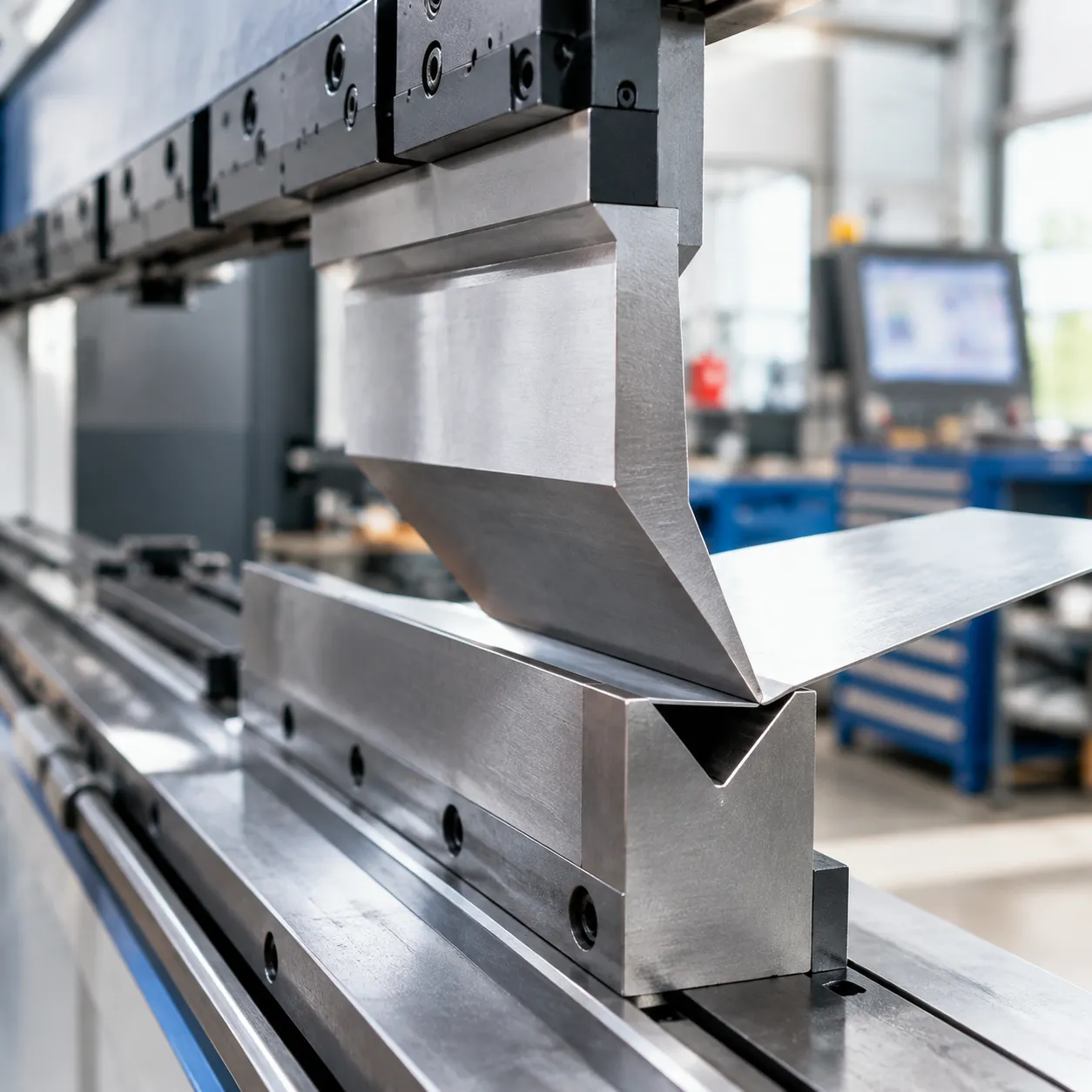
What Are Acute Press Brake Dies?
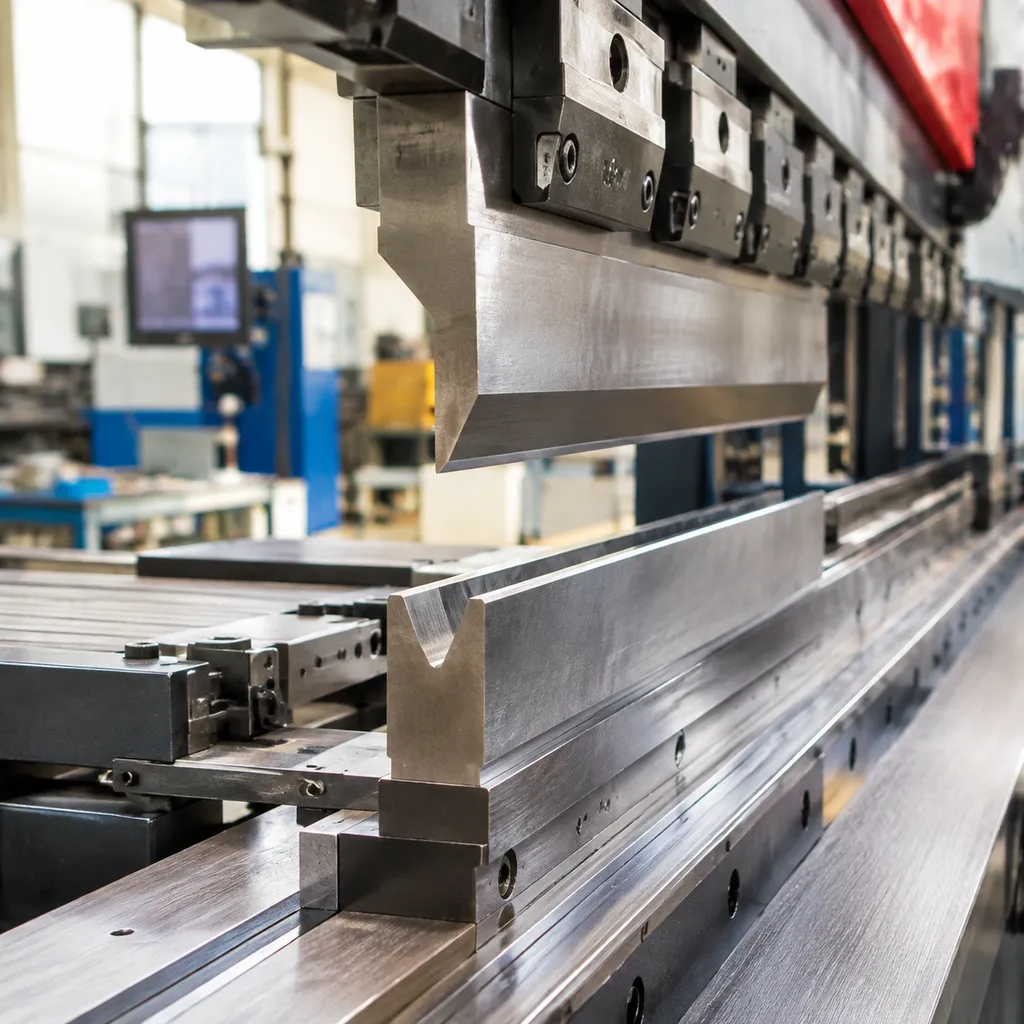
Acute press brake dies are specialized forming tools machined with an included angle of less than 90 degrees. In precision sheet metal fabrication, we use acute tooling—typically ranging between 30° and 60°—to overcome physical clearance limits and manage elastic springback during air bending.
Unlike standard 88° or 90° tooling that restricts punch travel, acute angle press brake tooling allows the punch to push deep into the V-cavity without interference between the tool flanks and the formed sheet metal flanges.
Acute Punch Tip
30° / 45°
↓
Sheet Metal
→ Overbent beyond 90° to compensate for springback
↓
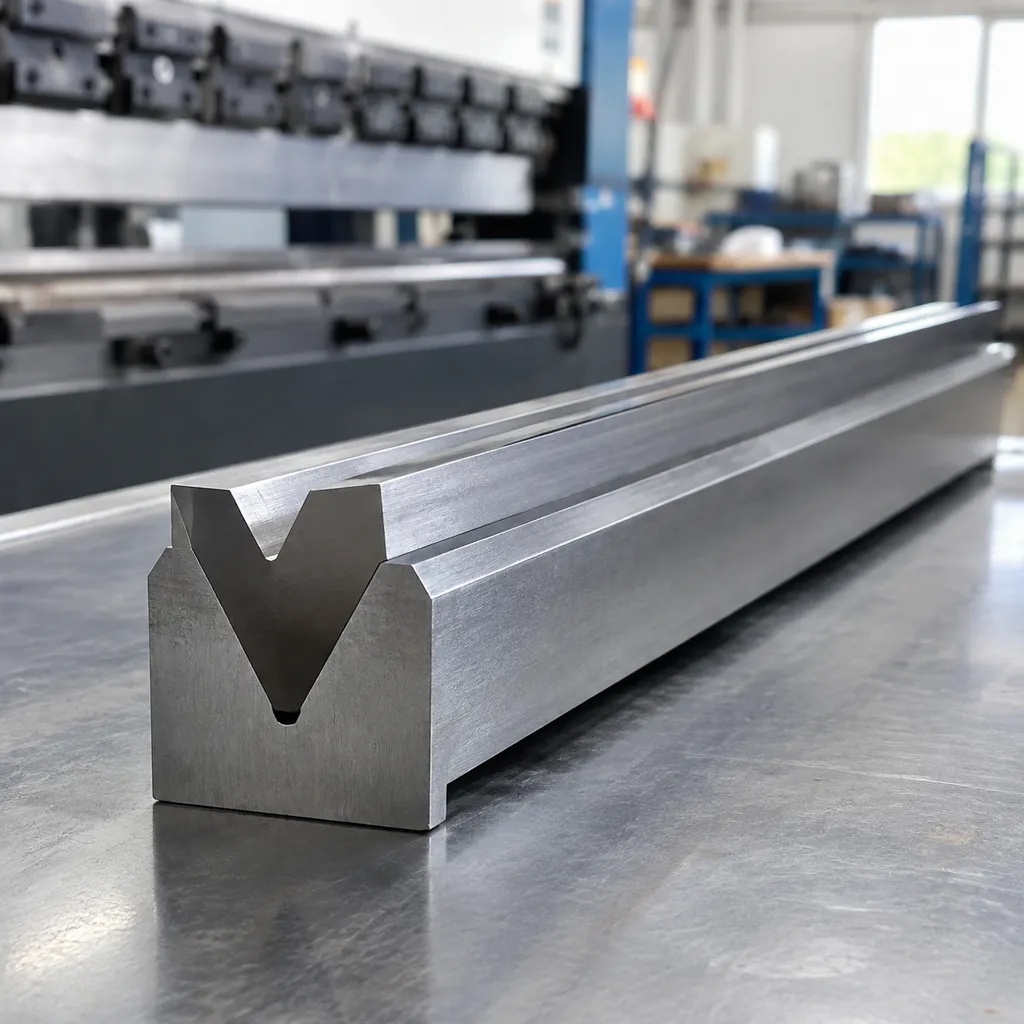
Acute V-Die (< 90°)
→ Supports acute-angle forming and subsequent springback compensation
Core Working Mechanism
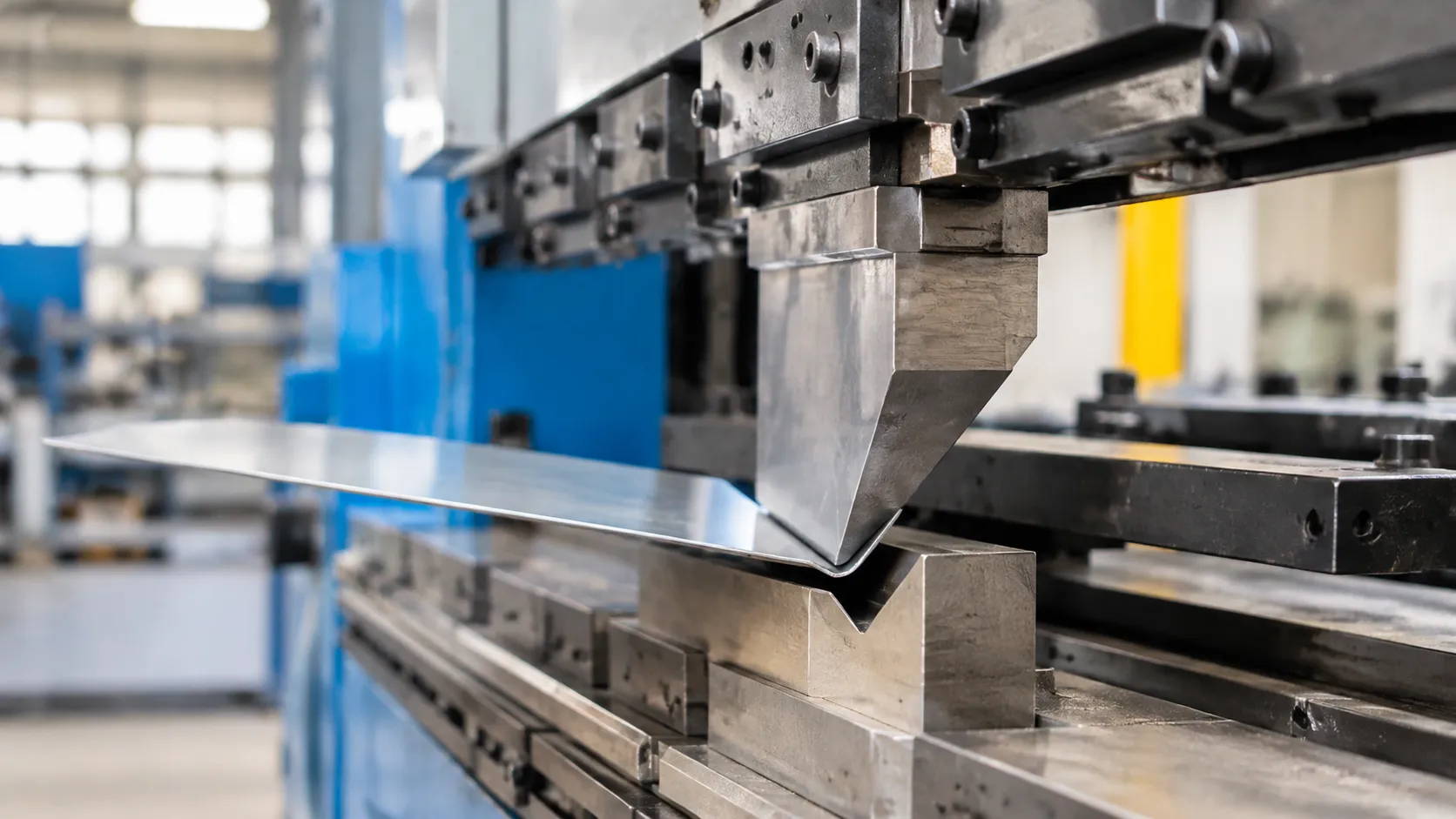
Acute tooling operates primarily on the three-point air bending principle. The punch tip forces the sheet down between two ground die shoulder radii without bottoming out:
- Variable Angle Forming: Because the sheet does not contact the bottom of the die, adjusting the press brake Y-axis stroke depth allows you to produce any bend angle from 179° down to the tool's rated profile angle using a single toolset.
- Side-Wall Clearance: The narrow punch profile and steep die walls provide the clearance required for narrow return bends and tight profile channels.
Standard Acute Angle Profiles
We categorize standard precision ground acute tooling into three core profiles based on specific structural and bending requirements:
| Profile Angle | Primary Application | Material Thickness Range | Key Advantage |
|---|---|---|---|
| 30-Degree | Hemming pre-bends & high springback alloys | 0.5 mm – 3.0 mm (0.020" – 0.120") | Maximum overbend range; essential first-stage tool for flat hems. |
| 45-Degree | Medium-gauge air bending & tight channels | 1.5 mm – 6.0 mm (0.060" – 0.250") | Higher tip load capacity than 30° tools while maintaining deep clearance. |
| 60-Degree | Heavy-duty forming & structural profiles | 3.0 mm – 12.0 mm+ (0.120" – 0.500"+) | Maximum structural punch strength; handles severe tonnage without tip deflection. |
How Acute Punches and V-Dies Enable Deep Air Bending
Deep air bending requires sufficient stroke depth to compensate for the metal's natural tendency to open up after forming. Using acute punch and die combinations provides two critical technical advantages on the shop floor:
- Overbending Capability: High-yield materials like stainless steel and high-tensile structural steel exhibit 5° to 15° of springback. A 30 degree press brake punch and die lets our operators overbend a part to 75° so it settles precisely at a true 90° resting angle.
- Universal Production Flexibility: A single 30° acute V die set eliminates constant tool changeovers. By reprogramming the CNC depth limit, a single setup forms 30° pre-hems, 45° acute corners, 60° structural offsets, and standard 90° brackets.
Primary Applications for Acute Press Brake Tooling
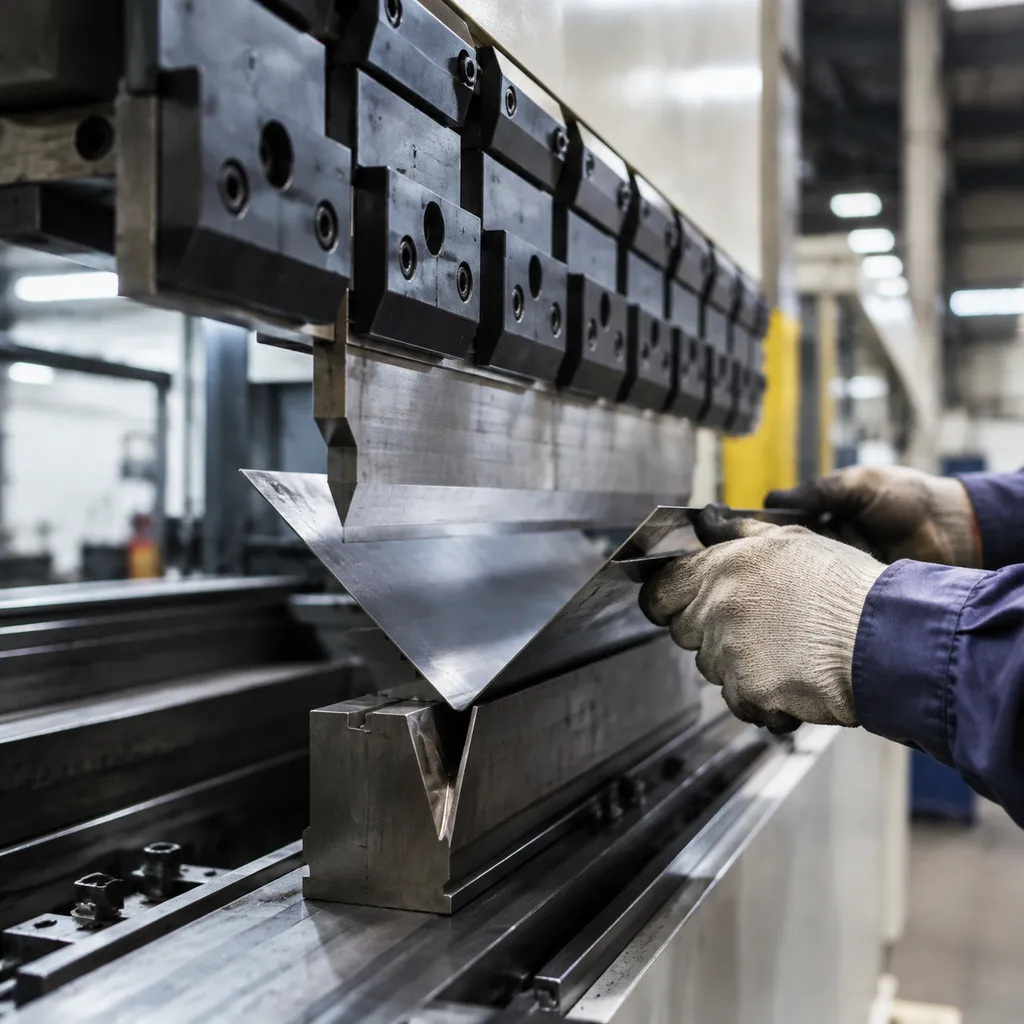
Overcoming Severe Springback in Stainless Steel and High-Tensile Alloys
High-strength sheet metals like 304/316 stainless steel, Strenx, and temper-rolled aluminum exhibit extreme elastic recovery. If you bend these materials in a standard 88° die, the punch bottoms out before you can overbend enough to counter the elastic recovery, leaving you with open, out-of-spec angles.
Acute tooling provides the necessary stroke depth to overbend the sheet down to 75° or tighter so that it springs back cleanly into a true 90°. For a complete breakdown on calculating material recovery against tool geometry, check our press brake die angles guide for springback selection.
Executing Stage-One Pre-Bends for Hemming and Seaming Operations
A clean, flat hem requires a precise two-stage forming process. Attempting to smash a 90° bend directly flat creates irregular bulges, fractured bend lines, and uneven seams.
We use a 30-degree press brake die for air bending and hemming to execute the critical stage-one operation:
Forms an initial, uniform 30° teardrop or acute profile.
Keeps the bend radius tight without cracking the outer sheet grain.
Positions the pre-bent flange for direct transfer to a flattening stage or a Dutch hemming spring-loaded die.
Forming Tight Profile Channels and Deep Box Return Flanges
Standard wide-shoulder V-dies create tool interference when forming return flanges, narrow U-channels, and deep electrical enclosures. Acute punches feature narrow profiles and tapered reliefs that clear pre-bent workpiece legs.
- Narrow U-Channels: Eliminates side-wall gouging against the punch body.
- Deep Box Return Flanges: Permits forming narrow inward returns without striking the punch shoulder.
- Complex Profiles: Gives maximum clearance when sequencing multi-bend architectural trims.
Universal Air Bending for Variable Angles with a Single Toolset
Constantly changing out punches and dies for different part geometries destroys operator productivity. Because air bending relies on the depth of punch penetration rather than bottoming into the die, a single 30° or 45° acute die set functions as a universal tool.
| Target Bend Angle | Die Profile Used | Forming Method | Setup Benefit |
|---|---|---|---|
| 30° to 60° | 30° Acute Die | Deep Air Bending | Form tight acute profiles in one hit |
| 90° Nominal | 30° or 45° Acute Die | Controlled Air Bending | Complete springback compensation |
| 120° to 160° | 30° or 45° Acute Die | Shallow Air Bending | Eliminates tool changes on open angles |
By controlling the CNC axis depth, we run parts requiring 135°, 90°, and 45° bends on the same station without swapping tooling.
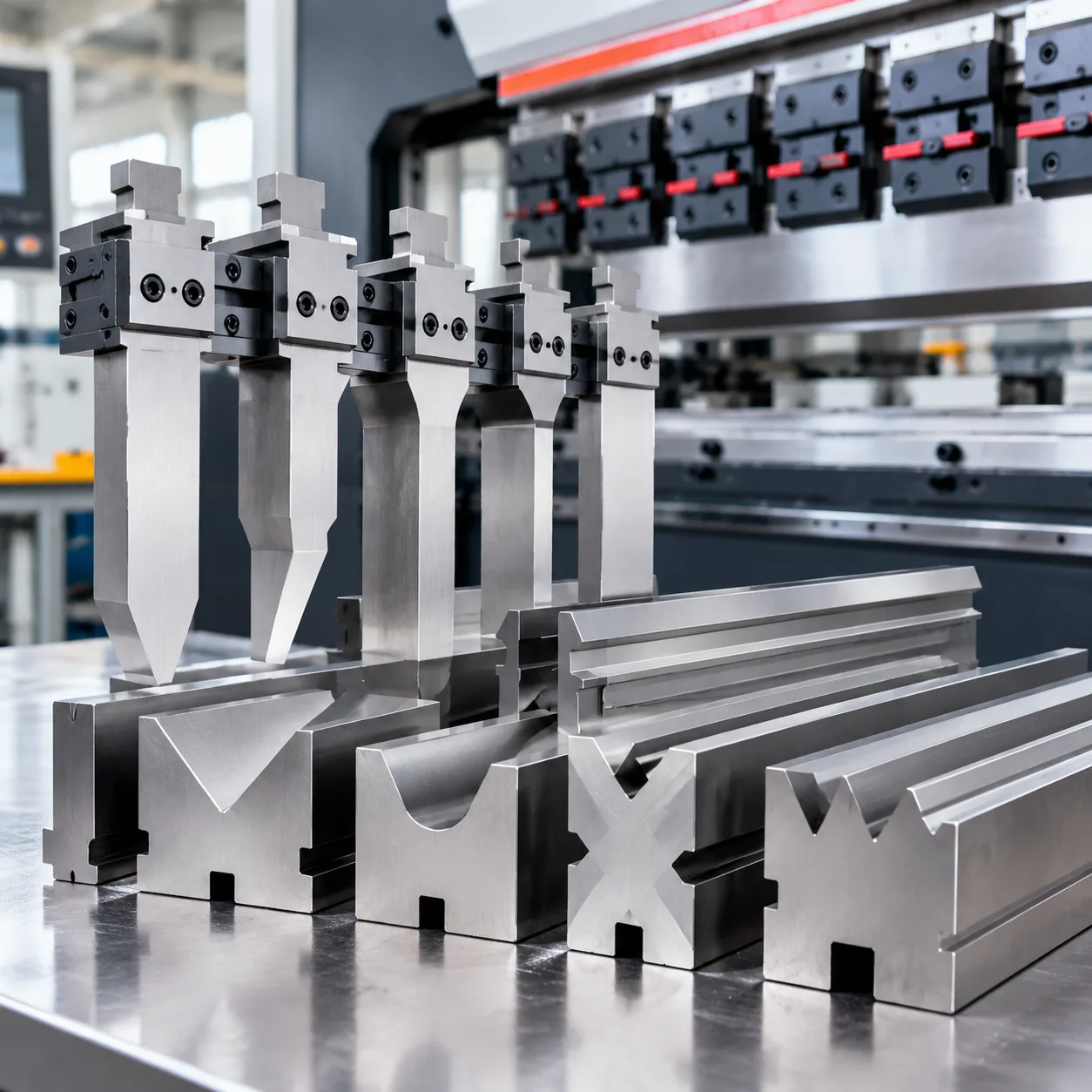
Types of Acute Press Brake Punches and Dies
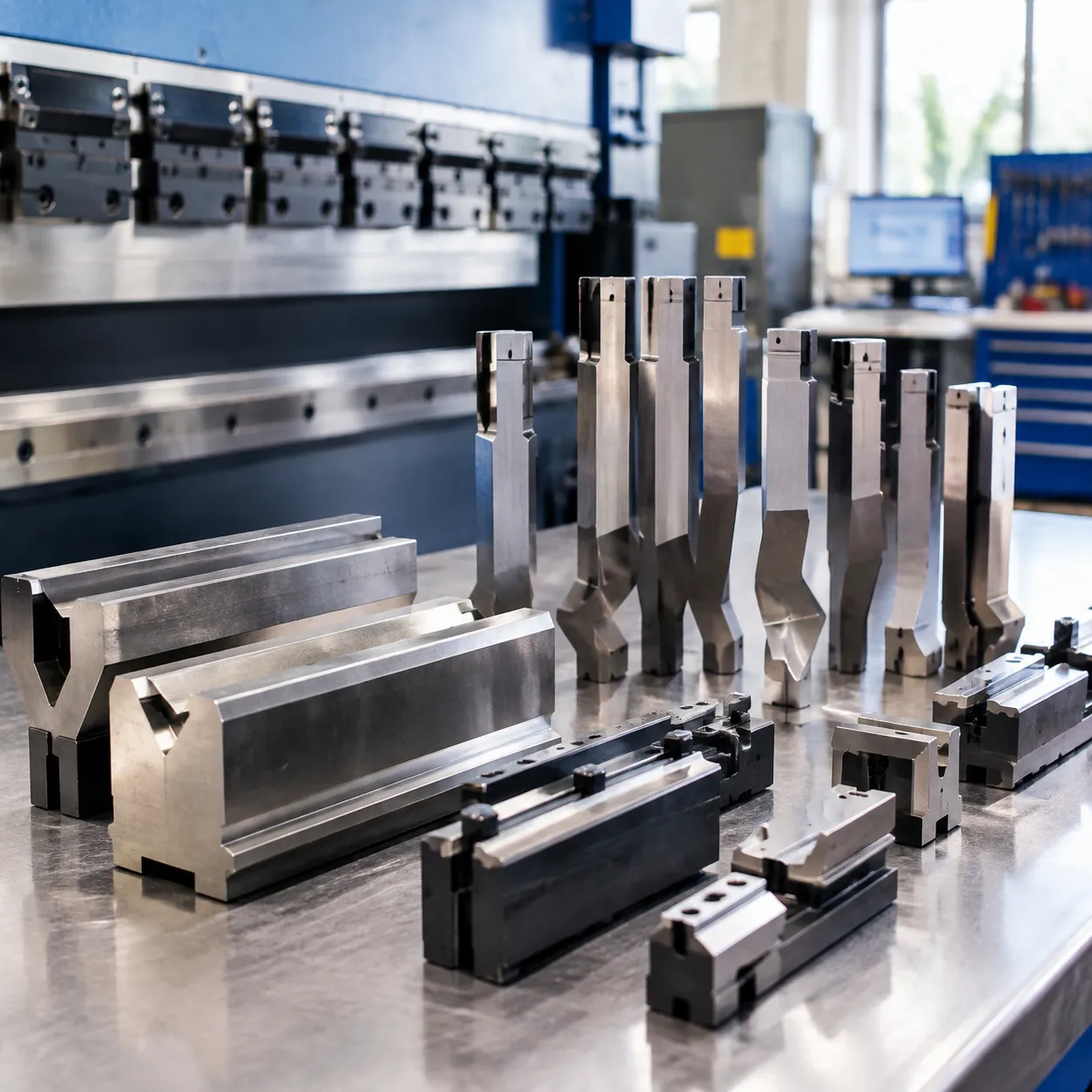
Selecting the right acute tooling profile depends on your machine clamping system, flange geometry, and production volume. We machine acute tooling across all major mounting standards to match specific shop floor setups.
European Precision and Promecam Style Acute Tooling
European style tooling features a standardized hook tang with a safety click pin or groove. We manufacture these tools with tight tolerances so you can swap sections quickly across Promecam-compatible mechanical and hydraulic clamping bars.
Profile angles: Typically 30° to 35° punch tips matched with 30° single-V or multi-V bottom dies.
Best applications: Fast tool changes and precision air bending on modern European and Asian press brakes.
Our precision-ground European style press brake tooling ensures consistent centerline accuracy across multi-station setups.
American Standard Tang Acute Punches and V-Blocks
American style tooling uses a straight tang clamped with manual set screws in a traditional holder.
Design: Robust, solid full-tang construction built for rigid, high-load operations.
Best applications: Reliable for heavy plate air bending and high-tonnage acute pre-bending on conventional North American machines.
Shop consideration: Setup times take longer compared to modular systems because manual alignment along the machine bed centerline is required.
Wila / Trumpf Style Precision Ground Acute Tools
For CNC auto-clamping setups, Wila and Trumpf style acute punches and dies use push-button safety pins for vertical loading and unloading.
Precision: CNC deep-hardened and precision ground to within ±0.01 mm on working surfaces.
Efficiency: Instant self-seating and automatic alignment cut changeover times on high-mix, short-run jobs.
Durability: Hardened shoulder and tip radii hold up against high-abrasion materials like stainless steel.
Solid Length vs. Sectionalized Acute Dies
- Solid Length Tooling: Best for long, unbroken parts like architectural flashing, structural channels, and long panels. It eliminates witness marks and seam lines along the bend line.
- Sectionalized (Segmented) Tooling: Supplied in pre-cut sets (ranging from 10 mm to 100 mm segments, plus horn/ear pieces). Essential for forming four-sided boxes, deep pans, and parts with pre-bent return flanges.
Acute Gooseneck Punches for Return Flange Clearance
Standard straight acute punches cause sheet collisions when forming deep channels or narrow return flanges.
Recessed Relief Throat: The deep inner clearance allows previously formed flanges to swing past the punch body without interference.
Application: Essential for switchgear cabinets, deep electrical boxes, and multi-bend enclosure channels.
For tight-clearance parts, we configure specialized gooseneck punches with 30° and 45° tips to handle narrow returns without sacrificing structural punch strength.
Tooling Style Comparison
| Tooling Style | Clamping System | Typical Tip Angles | Key Strength |
|---|---|---|---|
| European / Promecam | Manual / Quick-clamp tang | 30°, 35°, 45°, 60° | Versatile, fast interchangeability |
| American Standard | Traditional set-screw tang | 30°, 45°, 60° | Rugged, high tonnage tolerance |
| Wila / Trumpf Style | Button / Hydraulic auto-clamp | 28°, 30°, 45° | Top-tier accuracy, vertical tool loading |
| Acute Gooseneck | Universal / European / Wila | 30°, 45° | Deep return flange clearance |
Selecting the Right Acute Die: Technical Specifications
Because acute tooling drives deep into the V-groove to achieve narrow angles, improper sizing causes severe tool deflection, tip mushrooming, or cracked die shoulders.
V-Opening Calculation and Material Thickness
When sizing an acute V-die, we apply a standard ratio based on sheet thickness (T):
- Thin Sheet (Under 2.5 mm / 0.100"): Use a 6× T to 8× T V-opening width.
- Heavy Gauge (3.0 mm to 6.0 mm / 0.120" to 0.250"): Step up to an 8× T to 10× T opening to prevent excessive tonnage build-up and reduce shoulder drag.
Selecting the correct air bending bottom die opening ensures the punch penetrates deep enough to overcome springback without bottoming out the sheet against the root of the V.
Standard Acute Rule: V-Width = 8 x Material Thickness (T)
Tonnage Load Limits and Tip Failure Risks
Acute punches feature narrow tip radii (typically R0.6 mm to R1.5 mm) paired with steep profile angles (30 ° or 45 °). This geometry concentrates heavy machine tonnage onto a razor-thin contact area.
- Never Bottom Bend or Coin: Acute tooling is engineered strictly for air bending. Forcing an acute punch into full contact will instantly exceed maximum load ratings and fracture the tool tip.
- Load Rating Limits: Most standard acute punches carry maximum tonnage limits between 50 to 80 tons per meter (15 to 25 tons/ft). Always calculate expected bend force prior to cycling the ram.
Minimum Inside Radius and Minimum Flange Length
Air bending with an acute die means the inside bend radius (Rᵢ) is produced primarily by the width of the V-opening, rather than by the punch tip radius.
- Inside Bend Radius (Rᵢ): Typically forms at approximately 16% of the V-die opening width for mild steel.
- Minimum Flange Length (bₘᵢₙ): The sheet must maintain sufficient support across the die shoulders during bending. A common rule of thumb is:
Minimum Flange (bₘᵢₙ) ≈ 0.7 × V (Opening Width)
30-Degree vs. 45-Degree Acute Tooling Comparison
Selecting between a 30° and a 45° acute die profile depends on your target material gauge, required overbend angle, and mechanical strength:
| Specification | 30° Acute Die Profile | 45° Acute Die Profile |
|---|---|---|
| Max Recommended Gauge | 10 Gauge (3.5 mm mild steel) | 1/4" (6.35 mm mild steel) |
| Springback Compensation | High (30 ° to 85 ° range) | Moderate (45 ° to 88 ° range) |
| Punch Tip Robustness | Lower (High stress concentration) | Higher (Broader shoulder support) |
| Hemming Preparation | Industry standard for stage-1 pre-bends | Limited to soft materials |
| Tonnage Capacity | 40 – 70 kN/m | 70 – 100 kN/m |
For high-yield materials like 304/316 stainless steel or hard aluminum alloys, we run 30-degree press brake punch and die sets to ensure sufficient overbend clearance for high springback recovery. For heavier structural plate requiring simple acute profiles, step up to a 45-degree acute V die to preserve punch tip integrity.
Setup and Operation Best Practices for Acute Bending
Setting up acute press brake dies demands tighter tolerances and stricter process control than standard 90-degree tooling. Because 30-degree and 45-degree punch tips concentrate immense mechanical loads over a narrow profile, minor setup errors can cause tool deflection, poor angular consistency, or premature tip fracture.
Centerline Alignment Protocols
Precision alignment between the narrow punch tip and the bottom V-groove is critical for tool life and flange accuracy:
- Low-Pressure Seating: Always seat acute punches into the V-die under minimal clamping pressure (less than 5 tons/meter).
- Self-Centering Bed-Down: Jog the ram down slowly into the bottom of the V-opening without stock to let the punch find the true physical centerline before torquing hydraulic or mechanical tool clamps. Check our press brake die clearance guide for better bending to ensure proper tool seating and prevent off-center side-thrust loads.
- Even Step Alignment: When running sectionalized precision ground press brake dies, verify alignment across every seam using a dial indicator to eliminate stepped witness lines on finished parts.
Acute Punch Tip Alignment Check
Acute Punch
↓
Symmetrical Side Clearance
→ Verify equal clearance on both sides of the punch
↓
Punch Tip Centerline
↕
V-Die Centerline
↓
True Centerline Coincidence
→ Punch tip and V-die centerlines must align accurately throughout the bending stroke
Collision Avoidance and Backgauge Clearance
Acute bends pull the sheet metal upward through a much larger travel arc than 90-degree forms, creating distinct clearance challenges:
- Backgauge Retraction (X/R Clearance): Program automatic backgauge retraction prior to pinch-point contact. The sweeping motion of an acute bend will strike standard backgauge fingers if they remain stationary.
- Punch Body Clearance: Deep return flanges require acute gooseneck profiles rather than straight acute punches to prevent the reverse leg from colliding with the punch body during final penetration.
- Sheet Follower Integration: For large, thin panels bent to acute angles, use CNC sheet followers to eliminate operator strain and prevent reverse back-bending caused by sheet whipping.
CNC Crowning and Springback Compensation
Deep air bending with acute angle press brake tooling generates substantial springback, especially in stainless steel and high-tensile alloys.
| Material Type | Typical Springback (Acute Air Bend) | Crowning & Compensation Rule |
|---|---|---|
| Mild Steel (A36 / CR) | 2° to 4° | Standard CNC table crowning; overbend 2° past target |
| Stainless Steel (304 / 316) | 5° to 12° | Increase mechanical crowning by 15%; compensate for high strain hardening |
| Aluminum (5052-H32 / 6061-T6) | 3° to 7° | Watch for tip penetration cracking; adjust depth in 0.05 mm increments |
| High-Strength Steel (Hardox/Domex) | 10° to 18° | Use wide V-openings (10–12x material thickness) and heavy dynamic crowning |
Reducing Sheet Marking and Die Wear
As the sheet draws down into a narrow acute V-groove, contact friction across the die shoulder increases significantly.
- Shoulder Radius Condition: Keep die shoulder radii hardened (56–60 HRC) and mirror-polished. Sharp or galled die shoulders drag material into the V-opening, causing severe cosmetic scratches.
- Protective Barriers: Apply heavy-duty protective urethane tape directly across the die shoulders to isolate the material from metal-on-metal contact.
- Dedicated Tooling Solutions: For critical cosmetic components in brushed stainless, mirror aluminum, or pre-painted sheet, implement a plastic press brake die for non-marking bending to completely eliminate friction rub marks and post-bend refinishing costs.
Tooling Durability and Maintenance Standards for Acute Press Brake Dies
Tool Steel Grades and Core Hardness
The base material determines how well an acute punch or die absorbs high tonnage without deforming or snapping. We rely on three primary alloy grades:
- 42CrMo (AISI 4140 equivalent): The industry benchmark for universal acute press brake tooling. We heat-treat the core to 28–32 HRC, giving the tool body high tensile strength and elasticity to absorb deep-air-bending shock loads.
- Cr12MoV (D2 equivalent): High-carbon, high-chromium cold-work steel. Ideal for specialized, high-run acute tooling forming abrasive materials. It offers exceptional compressive strength and wear resistance.
- Premium Tool Steels (1.2312 / Premium Chrome Alloys): Used for precision-ground segmented tools where structural stability and zero dimensional drift under load are mandatory.
| Steel Grade | Core Hardness | Surface Hardness | Best Use Case |
|---|---|---|---|
| 42CrMo / 4140 | 28–32 HRC | 52–58 HRC | Universal acute bending & hemming |
| Cr12MoV / D2 | 58–60 HRC | 58–62 HRC | High-abrasion, long-run production |
| Premium Alloys | 30–35 HRC | 56–60 HRC | CNC precision-ground segmented tooling sets |
Induction Hardening vs. Laser Hardening on Wear Surfaces
Because acute bending concentrates force along tiny contact areas, the working surfaces must be hardened while the core remains ductile.
- Induction Hardening: Delivers a deep case depth of 2.0 mm to 4.0 mm at 52–56 HRC. We use this process on large-radius acute tools and high-tonnage V-dies to handle heavy mechanical loads without surface collapse.
- CNC Laser Hardening: Provides precise case depth control of 1.0 mm to 1.5 mm at 56–60 HRC. Laser treatment causes virtually zero thermal distortion, preserving the critical tip geometry of narrow 30-degree acute punches and ultra-sharp V-shoulders.
Preventing Tip Chipping, Shoulder Galling, and Vertical Cracking
Acute tooling failures are costly and dangerous. We prevent the most common shop-floor failure modes using practical preventive measures:
- Tip Chipping: Avoid applying maximum tonnage when bottoming out. Always verify that your punch tip radius matches the inner radius requirements before running high-tensile materials.
- Shoulder Galling: Mill scale and stainless steel friction will gall V-die shoulders. We polish working radiuses to a mirror finish and recommend light synthetic bending lubricants or protective films during heavy production runs.
- Vertical Cracking: Narrow acute punches split vertically if side-thrust loads are unaligned. Always check centerline alignment and never exceed the maximum tonnage rating per meter stamped on the tool body.
Inspection, Cleaning, Re-Machining, and Storage
Routine upkeep ensures your precision acute tooling consistently hits target angles across thousands of cycles:
- Daily Cleaning and Wiping: Wipe down punch tips and V-grooves at the end of every shift. Remove metal flakes, dust, and scale, then apply a thin coat of rust-preventive oil.
- Dimension and Radius Inspection: Inspect the tip radius regularly for flat spots or micro-pitting. Check your tooling against a standard press brake die size chart and dimensions guide to verify that wear has not altered critical working heights.
- Precision Re-Grinding: When re-machining worn acute tools, match the original CNC precision-ground profile. Grind punches and dies as complete matched sets to maintain uniform height tolerances across all segments.
- Organized Tool Storage: Store segmented acute punches and dies vertically in dedicated, polymer-lined tooling cabinets. Never stack acute punches horizontally on metal racks where the sharp tips can knock against each other and chip.
Acute Press Brake Dies: Frequently Asked Questions
Can you bend a 90-degree angle using an acute press brake die?
Yes. When you use an air bending method, the punch depth determines the final bend angle, not the included angle of the tooling. A 30-degree or 45-degree acute press brake punch and V-die set can form any angle from 179° down to the tool's manufactured profile. This makes acute tooling exceptionally versatile for shops looking to run standard 90-degree bends alongside sharper profiles without stopping to swap tooling.
What is the main advantage of a 30-degree die over an 88-degree die?
The primary advantage is springback compensation in high-yield and stainless steels.
- Deeper Ram Travel: An 88-degree die bottoms out quickly, leaving no room to overbend materials that spring back 5° to 15° after release.
- Universal Angle Range: A 30-degree die lets our press brakes push deep into the V-cavity, providing the stroke clearance required to hit target geometries on springy alloys, heavy gauges, and high-tensile sheet stock.
- Process Flexibility: A single 30-degree toolset handles everything from wide open angles down to tight 35-degree hooks.
How do acute dies work in a two-stage hemming operation?
Acute tooling acts as the stage-one pre-bend tool for sheet metal hems and seams.
- Stage 1 (Pre-Bend): The 30-degree punch and die bend the edge of the sheet into a sharp 30° return hook.
- Stage 2 (Flattening): The hook is placed under a flat punch or shifted into dedicated hemming dies, where downward vertical force compresses the pre-bend flat to form an open, teardrop, or closed hem.
Why do acute punches have lower maximum tonnage ratings?
Acute punches have a narrow tip profile and thin cross-sectional area compared to wide 88° or 90° punch profiles. When forming heavy stock or high-tensile steel, high vertical and lateral stresses concentrate directly along the narrow punch tip. Applying excessive load can mushroom the tip, crack the shoulder, or split the tool body. Always verify your load limits using our European press brake die rating guide for tonnage safety before running heavy production runs.
How do I calculate tonnage when air bending with acute tooling?
Air bending tonnage depends on the material's tensile strength, material thickness (S), bend length (L), and V-die opening width (V). A commonly used air-bending force formula is:
Bending Force = (1.42 × Tensile Strength × L × S²) / V
Where:
- Tensile Strength = material tensile strength
- L = bend length
- S = material thickness
- V = V-die opening width
The resulting force and the 1.42 coefficient depend on the unit convention used, so units should be defined consistently when applying the formula.
| Variable Factor | Impact on Acute Tooling Tonnage |
|---|---|
| Tool Profile Angle | The acute angle itself does not increase the required tonnage during air bending. |
| V-Die Width | Narrowing your V-opening to form short acute flanges spikes the required tonnage rapidly. |
| Material Tensile Strength | High-strength alloys (e.g., Hardox, 304 Stainless) require a direct multiplier increase (1.5x to 2x over mild steel). |