
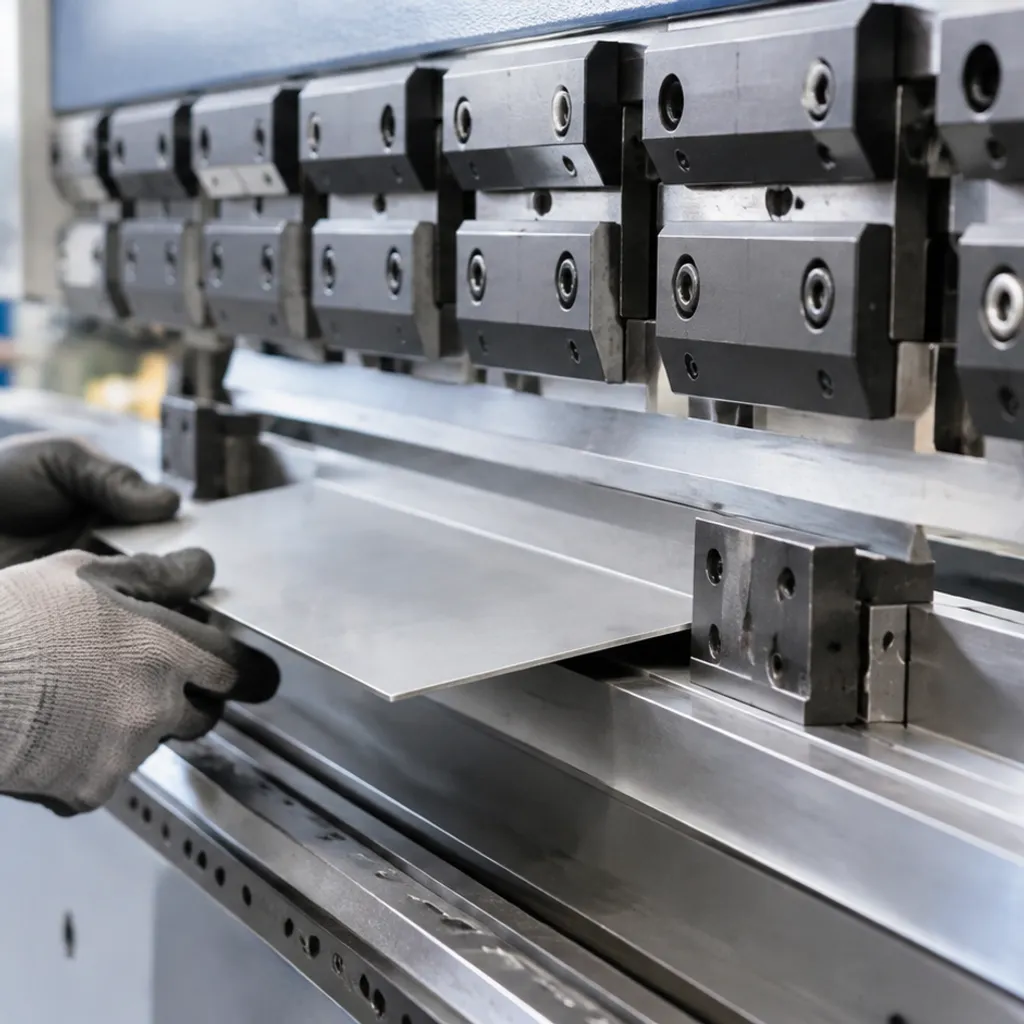
Formula details
Product Details
Overview
Why Choose Adjustable Press Brake Dies for Heavy Fabrication?
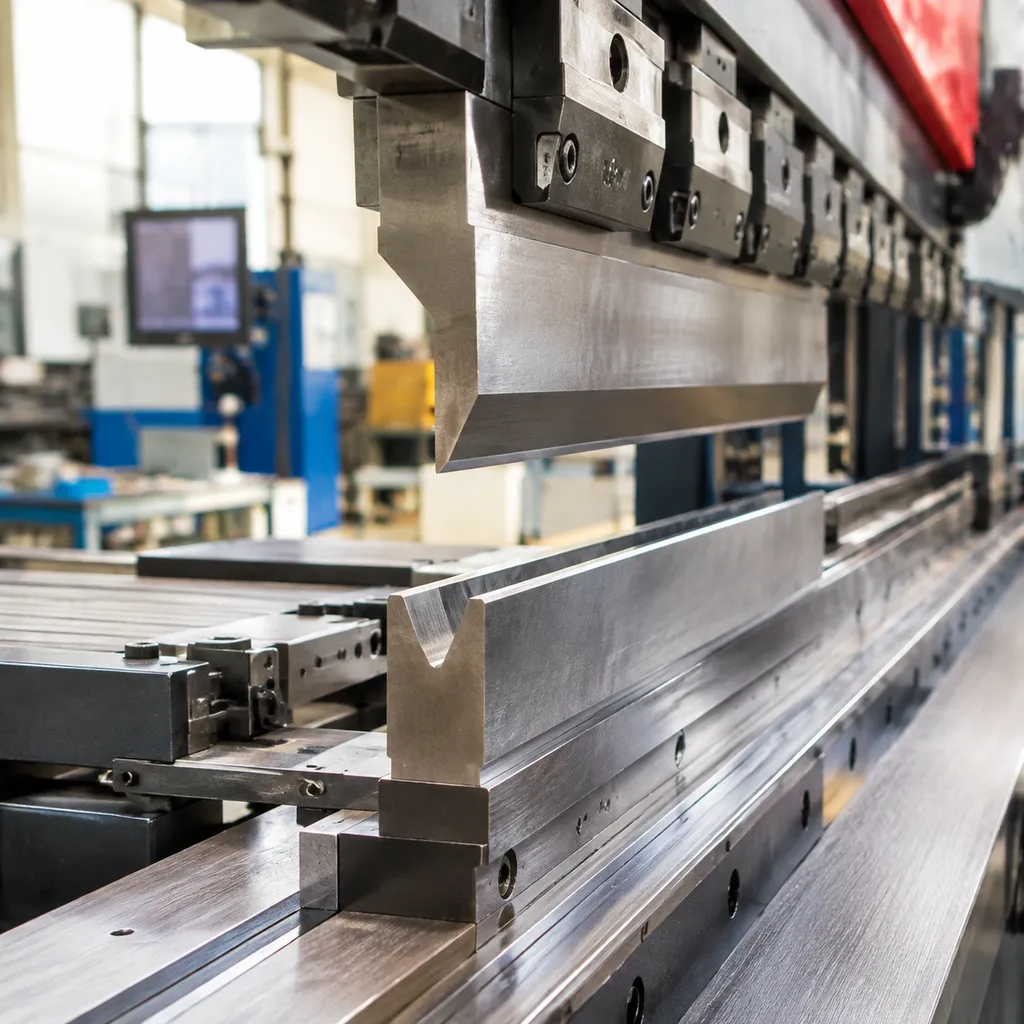
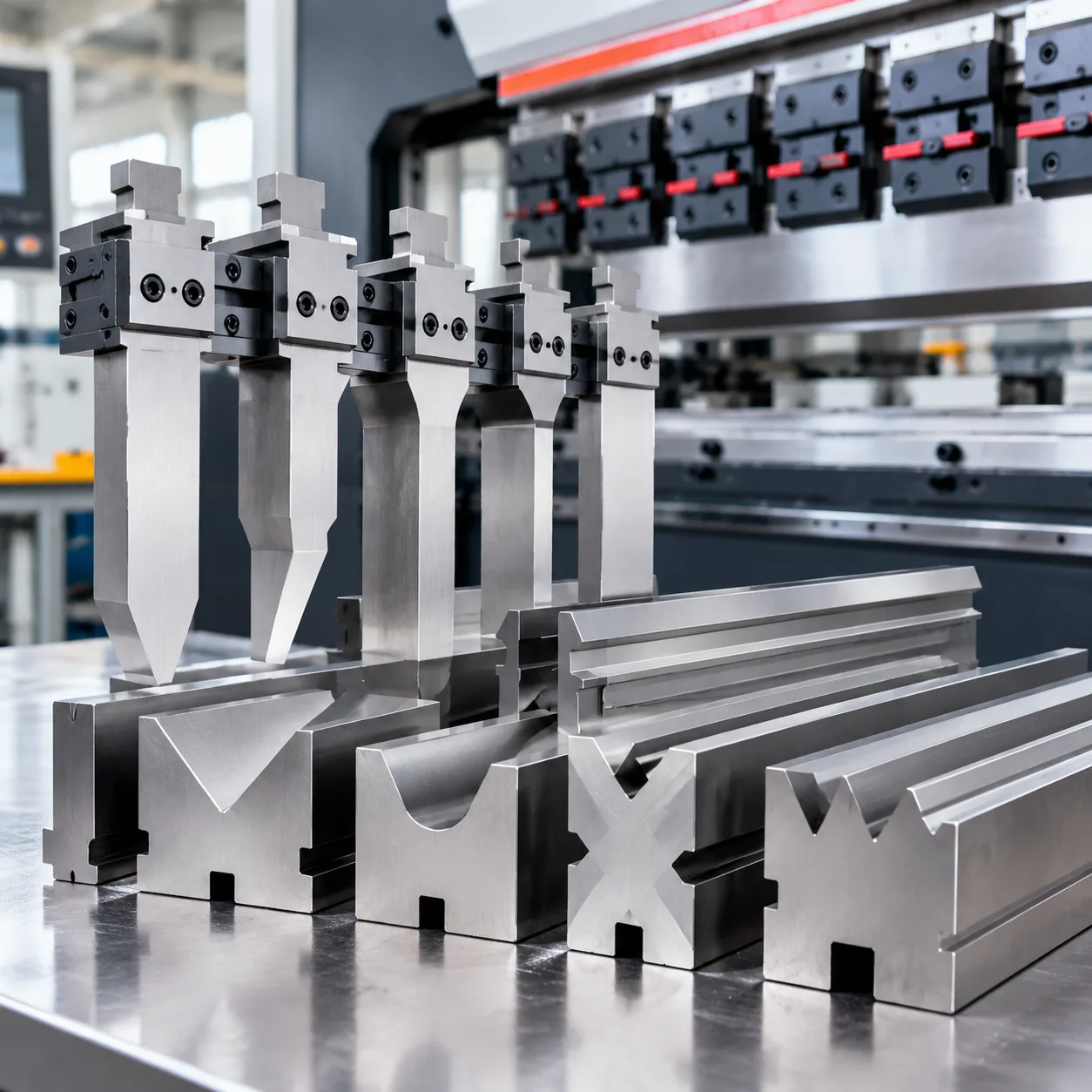
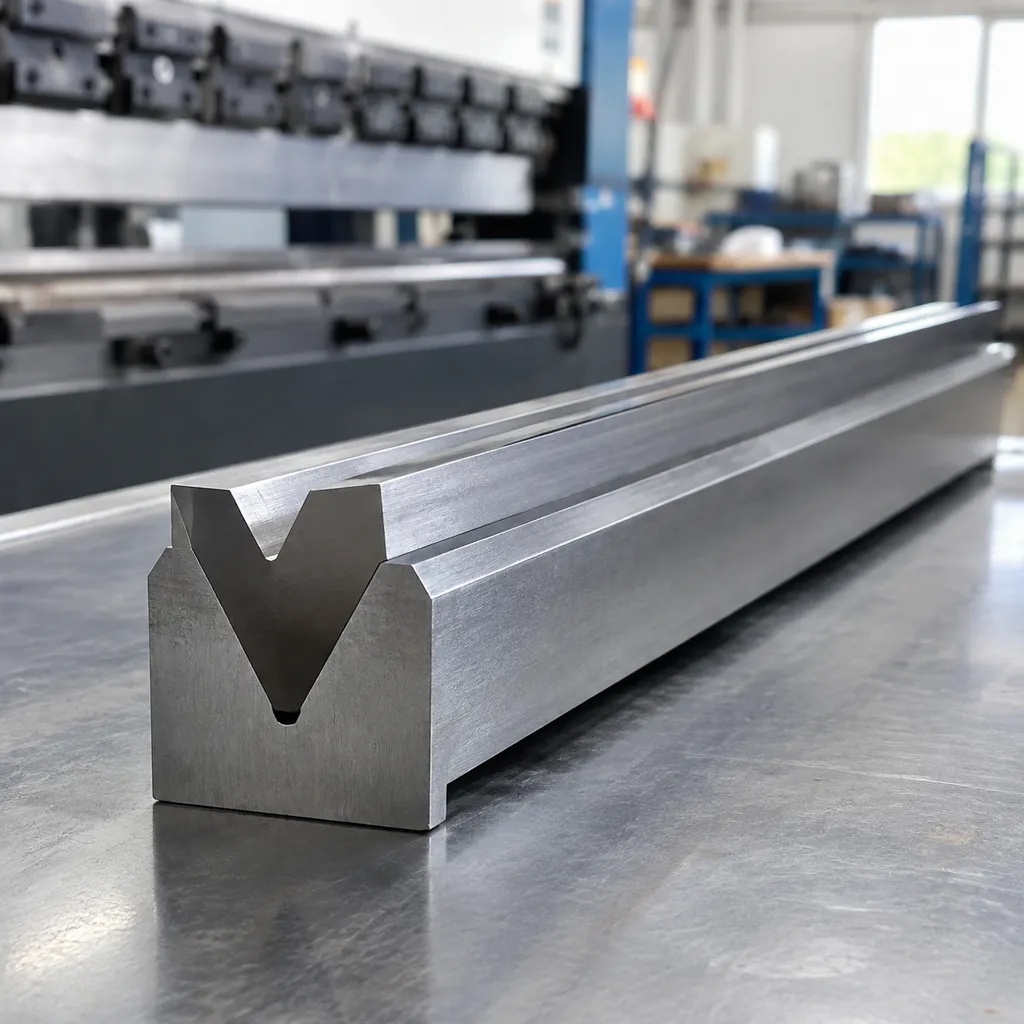
Heavy plate forming puts massive demands on press brake tooling and machine uptime. Standard fixed tooling creates bottlenecks every time a job shifts thickness or radius. We build adjustable press brake dies to solve this bottleneck, replacing entire racks of individual single-V dies with a single, continuously variable lower tool.
| Performance Metric | Conventional Fixed V-Dies | Our Adjustable Press Brake Dies |
|---|---|---|
| Tooling Changeover Time | 45 to 90 minutes (crane dependent) | Under 5 minutes (manual or motorized) |
| Handling Risk | High (overhead crane picks & rigging) | Zero (stays locked on the machine bed) |
| Surface Markings | Heavy friction drag and galling | Minimal (hardened rotating entry rollers) |
| High-Tensile Forming | Die shoulder wear and deformation | Stable, high-load resistance |
Cut Setup and Changeover Times by Up to 85%
Switching between plate thicknesses normally forces operators to unbolt, rig, and remove massive bottom dies. A variable bottom die eliminates this cycle entirely:
- Instant V-Opening Adjustments: Set your required opening in minutes instead of hauling steel blocks.
- Maximized Machine Uptime: Keep your press brake running active production runs instead of idling during tool setups.
- Single-Station Versatility: Run multi-thickness sequences on a single workstation without removing the primary lower tool.
Eliminate Crane Picks and Heavy Single-V Block Swaps
Handling heavy-duty bending dies weighing hundreds of pounds creates major shop-floor bottlenecks and operator safety risks.
- No Overhead Crane Dependence: Eliminate the need to wait for available bay cranes to flip or swap large multi-V blocks.
- Improved Operator Safety: Keep operators focused on running parts rather than rigging straps, lifting chains, and handling heavy steel tooling.
- Floor Space Recovery: Free up valuable floor space around your press brakes by eliminating deep racks of rarely used fixed-opening dies.
Form High-Tensile Plates Without Die Deformation
Forming high-yield materials like Hardox, Domex, and Weldox generates extreme localized side loads that crush or crack standard bottom dies.
- High-Strength Tool Bodies: Forged from high-grade alloy steel to prevent housing spread under maximum rated tonnage.
- Extreme Load Resistance: Built to handle high bend forces required for structural steels up to 30mm+ without structural deflection.
- Repeatable Bend Angles: Rigid working tracks hold precise tolerances across the entire machine bed length under full tonnage.
Lower Bending Tonnage and Sheet Scarring with Hardened Entry Rollers
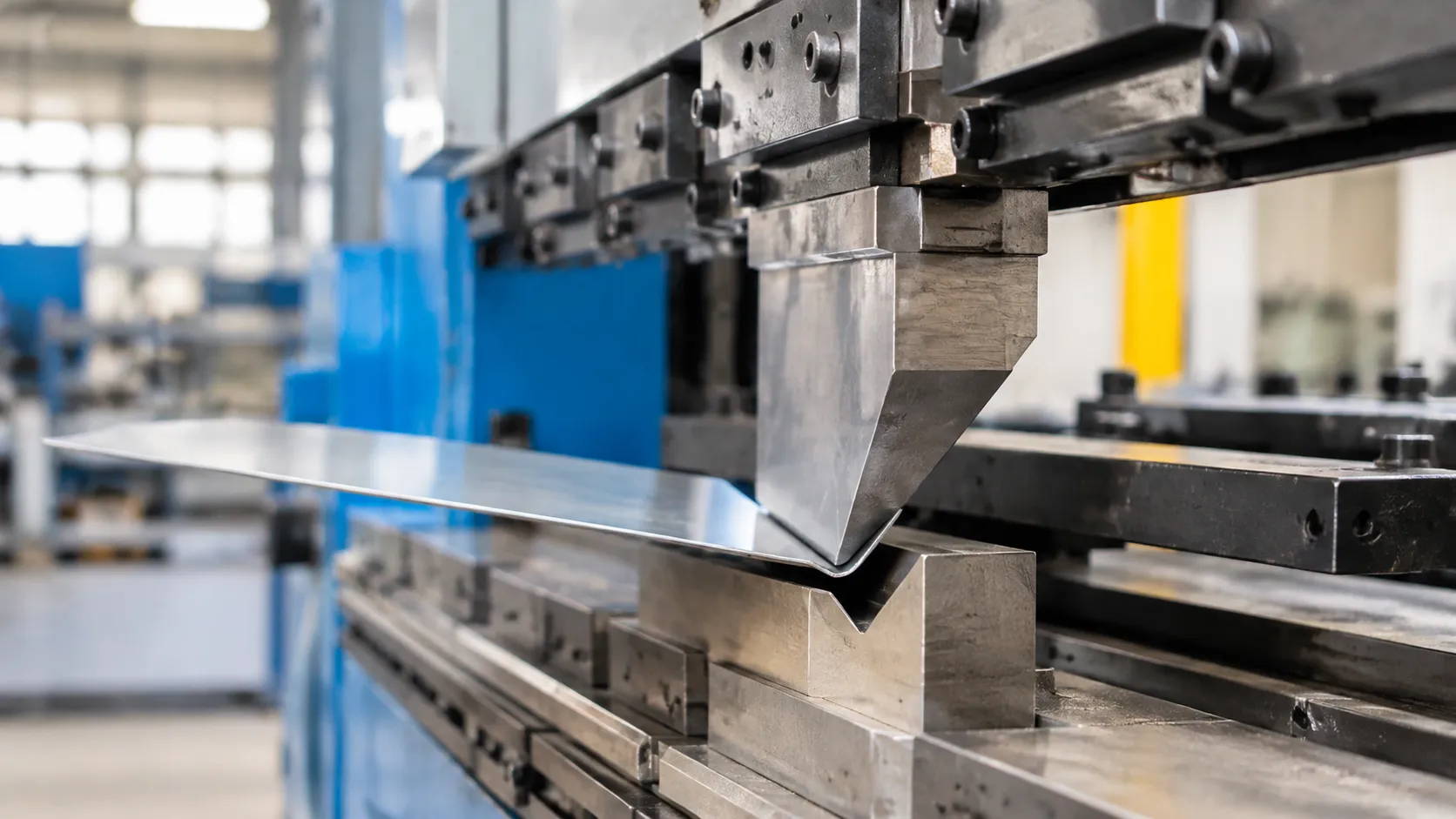
Standard fixed-edge dies generate severe friction as heavy plate draws across the static shoulders. Our adjustable V-die designs use heavy-duty, hardened alloy entry rollers to transform sliding friction into rolling motion:
- Tonnage Reduction: Lowers friction during the draw phase, reducing required bending force by up to 10–20%.
- Scuff and Scratch Prevention: Rolling contact protects expensive pre-painted, structural, and polished plate from severe galling and surface scoring.
- Extended Die Longevity: Rotating rollers distribute wear evenly across the contact surface, eliminating the gouging common on standard fixed shoulders.
Technical Specifications and Build Quality of Adjustable Press Brake Dies
42CrMo Forging and Deep-Quenched Core Toughness
We forge our variable V die bodies from premium 42CrMo alloy steel. Through a comprehensive deep-quenching and tempering process, we establish a ductile, high-strength core matrix. This deep core toughness absorbs high-impact loads without structural cracking, catastrophic shearing, or permanent baseline deformation during heavy plate bending.
Laser and Induction Hardened Working Tracks (56–60 HRC)
Tool longevity depends on surface wear resistance at critical contact points:
Targeted Hardening: Working guide tracks and entry shoulders receive localized laser or induction hardening.
Surface Hardness: Contact surfaces reach 56–60 HRC, yielding superior resistance to pitting, abrasion, and friction galling.
Effective Depth: Hardened case depth of 2.5 mm to 3.5 mm guarantees reliable operation when handling scale-heavy plate and abrasive alloys.
Standard Dimensional Matrix and Load Ratings
Refer to our standard specifications below, or verify your specific setup limits using our press brake v die chart and tonnage guide to select the right load profile for your machine:
| Model Series | Adjustable V-Opening Range (mm) | Base Width x Height (mm) | Max Load Capacity (kN/m) | Standard Section Lengths (mm) |
|---|---|---|---|---|
| CAM-AD-100 | 25 – 100 mm | 140 x 135 mm | 1,000 kN/m | 500, 1000, Modular |
| CAM-AD-200 | 40 – 200 mm | 220 x 190 mm | 1,600 kN/m | 500, 1000, Modular |
| CAM-AD-300 | 60 – 300 mm | 310 x 240 mm | 2,500 kN/m | 500, 1000, Modular |
| CAM-AD-400+ | 80 – 400+ mm | 420 x 310 mm | 3,200+ kN/m | Engineered-to-order |
To match specific bed profiles and machine clearances, review our press brake die size chart and dimensions guide for complete mechanical details.
Precision Ground Tolerances and Micro-Deflection Limits
Tight manufacturing tolerances eliminate angle inconsistencies across long plate runs:
Centerline Parallelism: Ground to within ±0.01 mm per meter, maintaining true punch-to-die alignment.
Deflection Control: The reinforced block base restricts micro-deflection under full tonnage to under 0.05 mm/m.
Repeatable Positioning: CNC precision-ground slides ensure bottom V die opening settings remain fully repeatable, eliminating variation between different operating shifts.
Drive Systems and Adjustment Mechanisms in Adjustable Press Brake Dies
Manual Lead Screw with Digital Readouts
For standard shop setups, our manual drive utilizes precision-machined heavy-duty lead screws coupled with direct vernier or digital counter scales:
Calibrated Positioning: Operators dial in the exact variable V die opening within fractions of a millimeter without test bends.
Symmetrical Travel: Dual synchronized screws move both die jaws simultaneously, keeping the tool center aligned with the punch tip.
Low Operator Effort: High-pitch threads allow fast manual repositioning across the full adjustment range in seconds.
Positive Mechanical Locking Wedges
High-load bottoming and heavy plate bending create extreme outward horizontal thrust. To prevent gap drift during operation:
Hardened steel locking wedges secure the sliding rails directly to the base frame.
Mechanical clamps lock the jaws firmly once positioned, preventing the lead screws from absorbing lateral bending shock.
Gap integrity remains uniform along the entire bed length, stopping sheet angle variations from end to end.
Automated CNC Motorized Adjustment
For high-mix bending cells, our motorized variable bottom die setups integrate directly into your machine control unit. Linked through servomotors and feedback encoders, the CNC system commands the jaw opening automatically per the part program. This pairs seamlessly with advanced CNC press brake die solutions to trim changeover down to mere seconds between varying plate thicknesses.
Field-Replaceable Hardened Alloy Entry Rollers
Friction at the die shoulder accelerates wear and raises tonnage requirements. We equip our tooling with modular, hardened alloy entry rollers:
Friction Reduction: Rotating shoulders roll the material smoothly into the die space, preventing edge galling on structural plate.
Tool Life Protection: When processing abrasive or scaled steel, wear focuses on the rollers rather than the heavy base casting.
Simple Maintenance: Much like our dedicated press brake dies with rollers, these components can be swapped directly on the press brake bed without dismantling the entire tool block.
Machine Compatibility and Clamping Standards
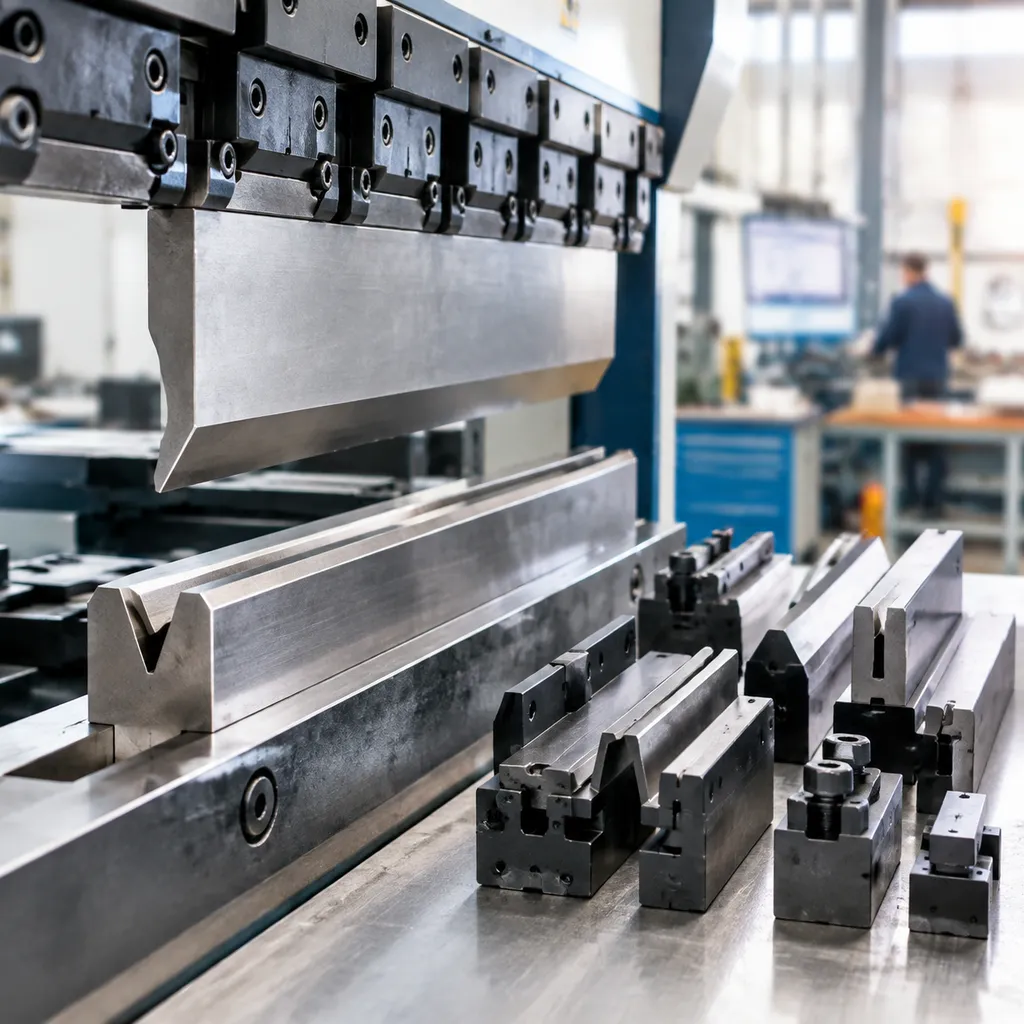
We engineer our adjustable press brake dies to drop directly onto your existing machine bed without requiring expensive bed modifications or custom risers. Whether you operate legacy mechanical press brakes or modern multi-axis hydraulic systems, our variable bottom die assemblies mount cleanly using industry-standard clamping profiles.
European and Promecam Base Tang Configurations
For shops running standard European style down-acting and up-acting brakes, we machine precise locating tangs straight into the lower sub-plate:
13 x 20 mm Tangs: Standard fit for conventional European bed channels.
13 x 30 mm Extended Tangs: Built for deeper receiver grooves providing extra lateral stability during high-tonnage forming.
Centered Alignment: Precision-ground surfaces hold center alignment within ±0.01 mm of the top punch line.
Wila and Trumpf Style Clamping Systems
Modern quick-change hydraulic and pneumatic beds require strict clamping geometries and built-in safety mechanisms. We supply our adjustable dies with dedicated mechanical profiles fully compatible with Wila tooling standards and Trumpf tooling systems.
New Standard Clamping (NSCR): Self-seating bases engineered for hydraulic clamping bars.
Safety Pins & Click Mechanisms: Built-in safety pins prevent lateral shifting and keep heavy tooling securely seated during tool setup and pressure drops.
Hardened Load-Bearing Shoulders: Shoulders absorb the vertical bending force directly into the machine bed, keeping the adjustment mechanism free from crushing loads.
American Standard Tangs and Universal Flat-Bed Mounts
For heavy-duty American style machines and custom press brake beds, we provide versatile mounting bases built to manage extreme point loads:
0.500" x 0.750" Plain Bed Tangs: Matched to conventional American commercial brake slots.
Universal Flat-Bed Mounting: Wide base blocks drilled with counterbored bolt hole patterns for direct fastening to lower beam tables.
Removable Lower Tangs: Bolt-on tang assemblies that let you transition the same adjustable press brake die between European-slot and flat-bed machinery.
| Mount Type | Standard Tang Dimension | Typical Brake Systems | Clamping Method |
|---|---|---|---|
| European / Promecam | 13 × 20 mm / 13 × 30 mm | Amada, Bystronic, Adira | Manual set screws, wedge clamps |
| Wila / Trumpf Style | NSCR base with safety clicks | Trumpf, Bystronic, SafanDarley | Hydraulic or pneumatic clamping pins |
| American Standard | 0.500" × 0.750" (12.7 × 19.05 mm) | Cincinnati, Pacific, Accurpress | Set screw bar clamp |
| Universal Flat-Bed | Customized bolt patterns | Custom heavy plate brakes | Direct table bolting with dowel alignment |
Modular Standard Lengths and Sectioned Configurations
Handling a solid 4-meter bottom die weighing hundreds of kilograms creates maintenance bottlenecks. We configure our adjustable press brake tooling in modular sections for fast handling, seamless alignment, and flexible bed layouts:
Standard Modular Lengths: Available in 500 mm and 1000 mm baseline modules that key together seamlessly.
Interlocking Keys: Precision alignment keys lock modular segments together end-to-end, guaranteeing true V-groove straightness across the entire bed length.
Independent or Synchronized Sections: Run sections as independent variable openings for stepped thickness jobs, or link them via common drive shafts for single-point motorized adjustment across the full beam.
Key Industrial Applications and Material Processing
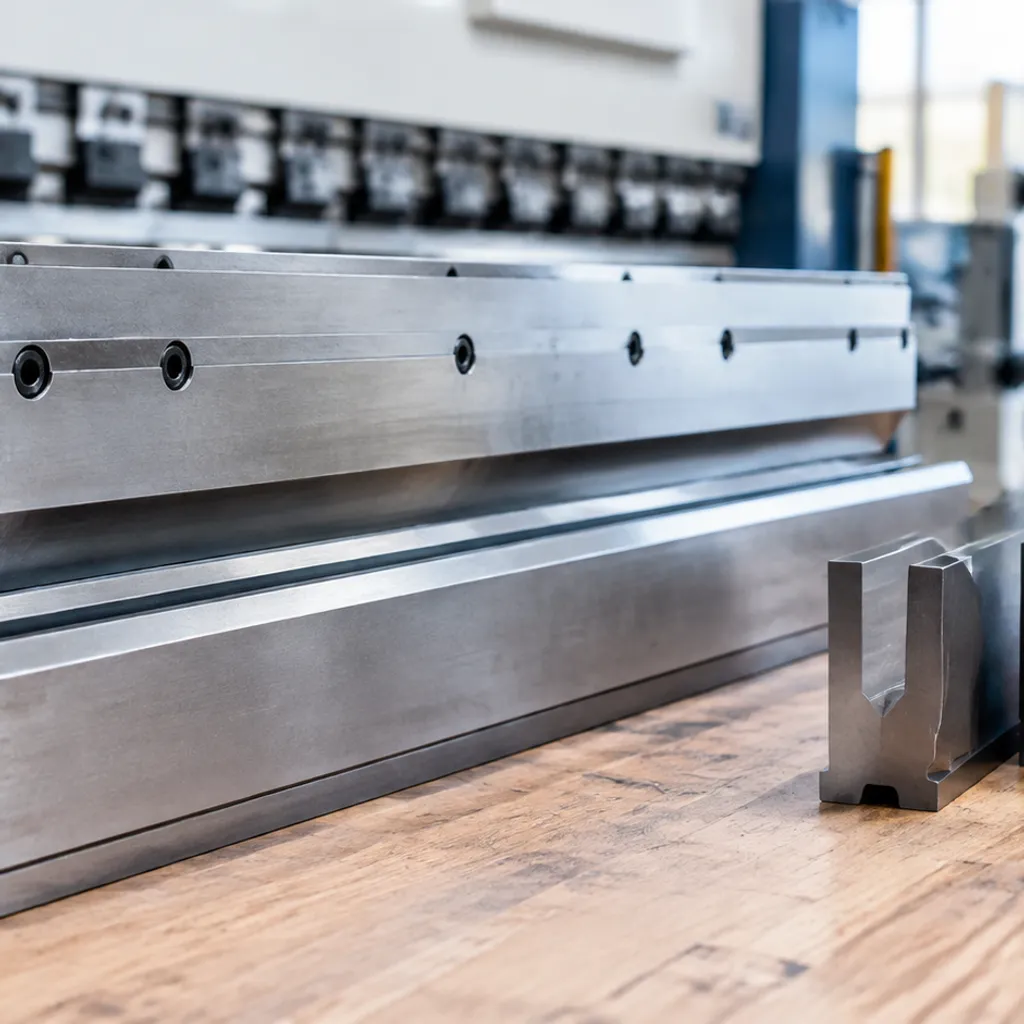
Heavy Plate Processing from 6mm to 30mm+ Structural Steel
Bending medium and thick plates demands high tonnages and massive V-openings. Instead of rigging overhead cranes to swap out hundred-pound solid dies, our adjustable systems let you adjust opening dimensions directly on the bed. Determining the correct air bending bottom die opening for thick materials happens in seconds, delivering accurate bend radiuses while protecting your machine frame from offset tonnage spikes.
| Plate Thickness | Recommended V-Opening Range | Typical Applications |
|---|---|---|
| 6mm – 10mm | 50mm – 80mm | Base plates, brackets, transport beds |
| 12mm – 20mm | 100mm – 160mm | Crane arms, structural channels, frames |
| 22mm – 30mm+ | 180mm – 300mm+ | Excavator buckets, heavy chassis, ship sections |
Yellow Goods, Chassis, and Crane Boom Manufacturing
Fabricating mobile cranes, earthmoving equipment, and long vehicle chassis demands strict straightness and precise angle consistency across extended bed lengths.
Seamless Multi-Stage Bending: Form complex U-channels and multi-bend profiles without removing the workpiece from the press.
Consistent Part Accuracy: Rigid mechanical supports stop mid-bed deflection across 4-meter to 8-meter tandem setups.
Reduced Surface Scarring: Hardened entry rollers roll with the plate during penetration, preventing deep gouging on structural components.
High-Mix, Low-Volume Job Shops
For contract fabricators processing variable batch sizes daily, setup time destroys profitability.
Zero Crane Dependency: Operators never have to wait for an available overhead crane to change bottom tooling.
Instant Thickness Changeovers: Switch from 8mm mild steel to 20mm plate simply by dialing the lead screws or sending a CNC command.
Shop-Floor Space Savings: One adjustable press brake die replaces rows of bulky single-V and double-V blocks stored along the shop aisles.
Bending High-Yield Materials, Weldox, and Abrasive Alloys
High-yield materials like Hardox, Domex, and Weldox push tooling to its limits due to high springback and extreme contact pressures. Standard carbon steel dies chip, groove, and deform when forming these abrasion-resistant grades. We build our tools using heavy-duty press brake die steel for high strength materials to prevent shoulder collapse under full bending tonnage. The integrated hardened rollers reduce sheet sliding friction, cutting down overall tonnage requirements and protecting the tool from premature abrasive wear.
Installation, Calibration, and Maintenance of Adjustable Press Brake Dies
Zero-Point Calibration and Parallel Alignment
Accurate forming requires exact physical alignment between the punch tip and the center of the adjustable V die opening.
- Mechanical Centering: Seat the tool base into the bed tang or hydraulic clamping bar. Before applying full clamping force, jog the upper punch into a partially opened V-groove to align the tool along the primary Y-axis centerline.
- Dial Indicator Sweep: Run a magnetic base dial indicator across the working length to confirm parallel alignment within ±0.02 mm across the bed.
- Zero-Point Readout Sync: For manual digital readouts or CNC-motorized drives, zero the position encoder when the die jaws touch the mechanical home stops. For proper punch and die combinations before zeroing, consult our press brake die selection guide for precise bending.
Centralized Lubrication for Slide Tracks and Bearings
Friction on sliding surfaces directly impacts your motorized drive accuracy and manual lead screw effort under heavy loads.
- Guide Tracks: Apply high-pressure lithium grease (EP2 rated) through the centralized manifold grease ports once weekly under normal single-shift operation.
- Drive Screws: Clean and coat manual adjustment screws or motorized ball screws with clean machine oil to prevent binding.
- Support Rollers: Grease the needle and cylindrical roller bearings supporting the replaceable entry shoulders to ensure smooth sheet rotation without flat spotting.
Scrap, Scale, and Debris Management
Forming structural steel, hot-rolled plate, and high-tensile materials generates abrasive mill scale that can contaminate sliding mechanisms.
- Integrated Shielding: Our multi-V tooling uses heavy-duty steel covers and brush wipers to block falling scale from entering the screw drive channels.
- Daily Clean-Down: Blow dry compressed air along the jaw guides at the end of every shift. Avoid spraying degreasers into sealed drive housings.
- Track Wear Inspection: Check jaw sliding surfaces monthly for micro-galling. If years of high-tonnage cycling eventually compromise your tool seating accuracy, our precision press brake die resurfacing services will re-machine and re-true the working datum planes back to factory limits.
Custom Engineering and RFQ Checklist for Adjustable Press Brake Dies
Standard tooling does not always fit every heavy bending application. When standard variable V-die geometry falls short of your throat depth, clearance limits, or tonnage requirements, we deliver tailored solutions through our custom tooling development department.
Engineered-to-Order (ETO) Custom V-Ranges and Reinforced Bases
We engineer specialized custom press brake tooling designed around your specific production envelope. Whether you need an extended bottom V die opening range from 40 mm up to 500 mm, or an ultra-narrow die body profile to clear tight return flanges, our ETO capabilities cover every requirement:
- Custom V-Opening Spans: Tailored increments engineered to handle non-standard plate gauges without intermediate tool swaps.
- Reinforced Tonnage Bases: Heavy-duty base blocks machined from forged 42CrMo to distribute load evenly across your lower beam and prevent micro-deflection under extreme point loads.
- Integrated Crown Compensation: Built-in micro-shimming profiles and mechanical supports to maintain tight bend angle tolerances across long bending lengths.
- Drive Upgrades: Choice of manual worm-gear drives, digital readout shafts, or servo-motor integration prepared for your machine controller.
Essential RFQ Specifications
To configure the correct adjustable press brake die and supply an accurate engineering quote, we require specific machine and production parameters. Providing this data upfront eliminates design revisions and accelerates turnaround:
| RFQ Parameter | Required Detail | Why It Matters |
|---|---|---|
| Machine Tonnage & Length | Total rated kN/tonnage and working bed length | Prevents exceeding the load rating (kN/m) of the die base and body |
| Mounting & Tang Style | European/Promecam (13×20 or 13×30 mm), Wila/Trumpf, or Flat-bed | Ensures direct drop-in fitment to your lower beam without extra adapters |
| Material Types & Grades | Tensile and yield strength (e.g., Mild Steel, Hardox 450, Domex) | Determines entry roller hardening depth, radii, and shoulder angles |
| Plate Thickness Range | Minimum to maximum sheet gauge | Defines the necessary minimum and maximum variable V die opening range |
| Adjustment Preference | Manual crank/digital readout or fully motorized CNC drive | Determines the drive chassis footprint, gear ratio, and electrical specs |
Drawing Approvals, Lead Times, and Dispatch Commitments
Every custom adjustable press brake die follows a strictly controlled manufacturing and dispatch workflow:
- 3D CAD & 2D Approval Drawings: Within 2 to 4 business days of RFQ finalization, we provide full CAD models and cross-sectional dimension drawings for fitment verification on your press brake bed.
- Fabrication & Heat Treatment: Following sign-off, forgings enter production, undergoing precision CNC milling, laser hardening of critical working tracks, and multi-axis finish grinding.
- Quality Inspection: We measure dimensional tolerances, roller concentricity, lead screw backlash, and base hardness before sign-off.
- Secure Export Packaging: Finished tools are treated with anti-corrosion grease, vacuum-sealed, and secured into heavy-duty reinforced steel-banded wooden crates to guarantee zero-defect transport to your facility. Lead times typically range from 4 to 8 weeks depending on length and complexity.
Frequently Asked Questions About Adjustable Press Brake Dies
How much setup time do adjustable press brake dies actually save?
Swapping heavy, fixed V-blocks requires crane rigging, safety spotters, and 30 to 45 minutes of idle press time. With an adjustable press brake die, our operators adjust the opening in under two minutes using a manual hand crank or automated CNC positioning. For high-mix fabrication shops running diverse plate thicknesses, this cuts changeover downtime by up to 85%.
Can I mount an adjustable V-die on an older press brake without CNC integration?
Yes. We design manual variable V die assemblies specifically for standalone and legacy machinery. These units utilize precision lead screws paired with mechanical digital readouts or vernier scales for accurate positioning. They fit standard European, Promecam, or American flat-bed mounts and require zero electrical hookups or software integration to function.
How do hardened entry rollers reduce required machine bending tonnage?
Fixed bottom dies create severe sliding friction as the sheet is forced into the V-opening. Our replaceable roller V-die design transforms that drag into rolling motion. This rolling action delivers major operational advantages:
Tonnage Reduction: Lowers required bending tonnage capacity by 10% to 30% depending on plate thickness.
Surface Protection: Eliminates galling, friction marks, and sheet scarring on pre-painted, stainless, or aluminum materials.
Tool Longevity: Protects the die shoulders from early breakdown under heavy loads.
What maintenance is required to keep adjustment lead screws free of scale and dust?
Heavy plate bending throws off significant mill scale and abrasive grit. We build our tooling with protective mechanical wipers and heavy-duty steel covers over the drive screws. Basic daily maintenance involves blowing out the die throat with compressed air and purging the slide tracks with grease via the centralized lubrication blocks to flush out fine scale.
Are adjustable dies strong enough to bend Hardox and high-tensile steel?
Yes. We manufacture these assemblies from forged 42CrMo alloy steel, through-hardened for core toughness, with laser-hardened contact surfaces rated at 56–60 HRC. When forming abrasive, high-yield materials like Hardox, Weldox, or Domex, positive mechanical locking wedges anchor the sliding jaws firmly to eliminate gap deflection and prevent tool deformation under maximum tonnage.