
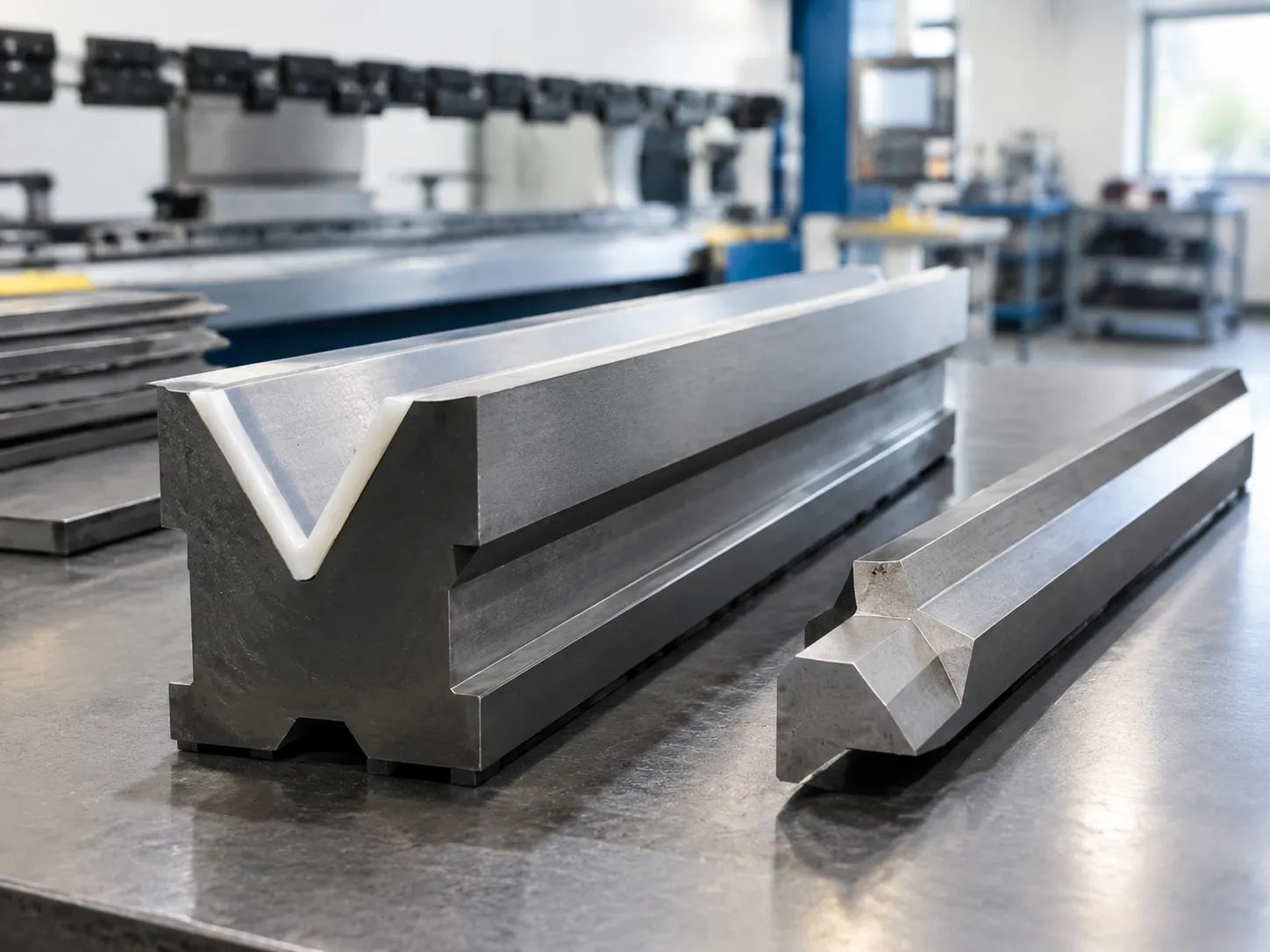
Formula details
Product Details
Overview
Why Choose Urethane V-Dies for Mark-Free Bending?
Cosmetic flaws, draw lines, and die marks drive up fabrication scrap rates and force costly secondary finishing operations.
100% Elimination of Die Scoring and Surface Burnishing
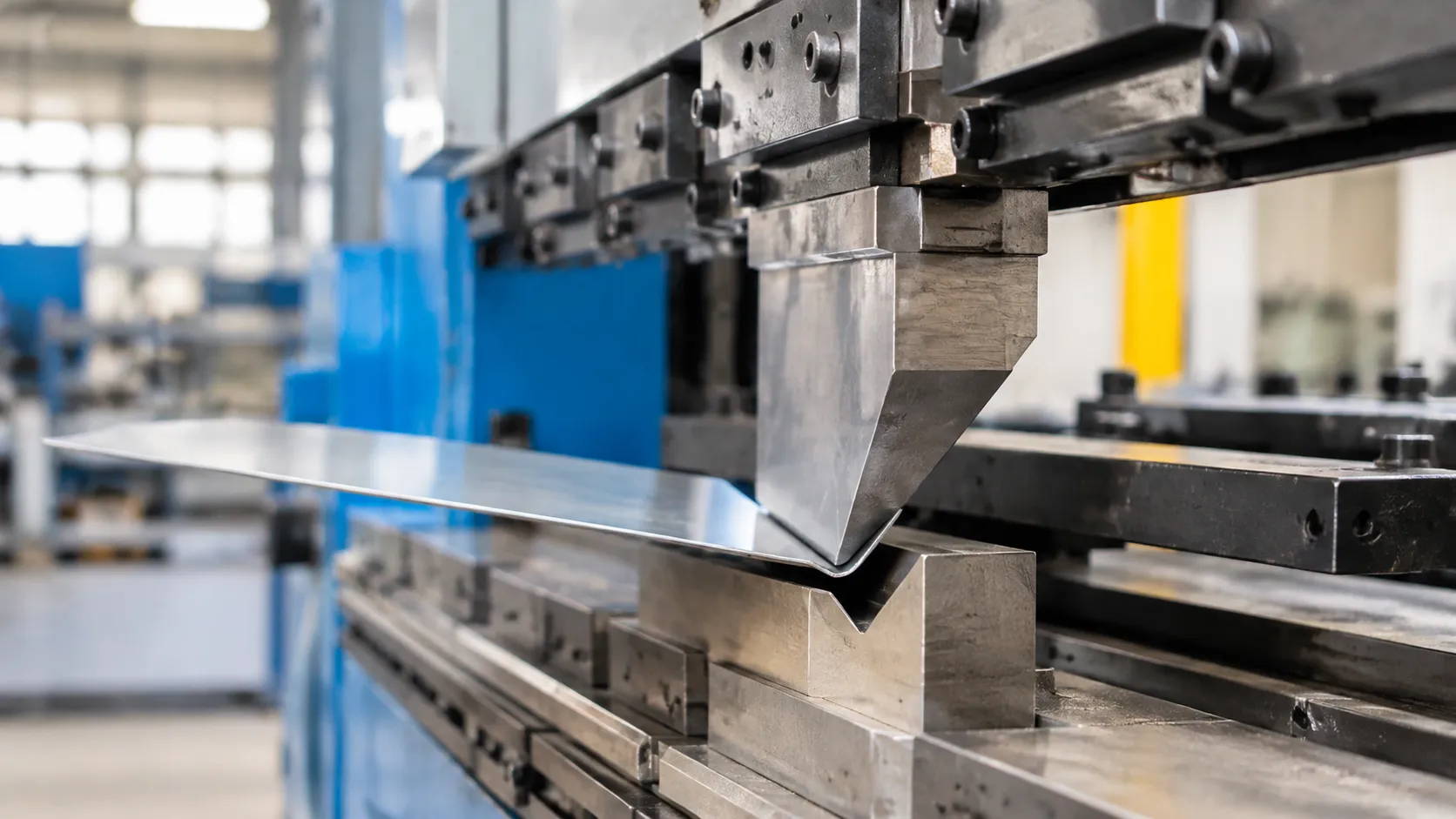
Traditional bottom dies force sheet metal over hardened steel shoulders, leaving burnish tracks, die lines, and scratches. Our polyurethane V-dies deform dynamically under load:
Elastomeric Cushioning: The urethane yields beneath the sheet, wrapping the workpiece tightly around the punch nose.
Frictionless Contact: Eliminates the sliding friction that causes surface galling.
No Secondary Operations: Eliminates downstream buffing, grinding, or re-polishing on pre-finished materials.
Multi-Gauge Bending Capability in a Single Setup
Unlike static steel V-openings limited by strict sheet-thickness-to-V-width ratios, our elastomer bending dies adapt dynamically:
Dynamic Cavity Forming: The urethane displaces to match the required penetration depth of the punch.
Gauge Flexibility: Form varying sheet thicknesses within the same tooling setup without changing bottom dies.
Reduced Downtime: Drastically cuts down tool setup cycles and machine idle time between production runs.
Precise Springback Compensation and Overbending Flexibility
High-strength alloys and springy materials present major angle-retention challenges:
Deep Penetration: The flexible urethane mass allows the punch to penetrate deeper into the die cavity without bottoming out.
Overbending Range: Enables overbending beyond 90° to fully neutralize material springback.
Consistent Part Angles: Maintains uniform angular tolerance across the entire bend length.
Cost-Efficient Maintenance with Quick-Swap Modular Urethane Inserts
We design our tooling systems to minimize long-term operational costs:
Modular Architecture: Heavy-duty CNC-machined steel retainers support replaceable urethane die inserts.
Low-Cost Replacement: Replace only the worn urethane insert pad rather than the entire bottom die assembly.
Rapid Changeover: Slide-in inserts allow line operators to swap worn sections or change durometers in minutes.
| Feature | Standard Steel V-Die | Modular Urethane V-Die |
|---|---|---|
| Surface Finish Quality | Leaves visible die marks and burnishing | 100% mark-free, pristine finish |
| Secondary Finishing | Requires buffing, sanding, or protective films | Zero secondary rework required |
| Material Thickness Range | 1 fixed thickness per V-opening | Multiple gauges in a single die profile |
| Tool Wear Maintenance | Costly regrinding or full tool replacement | Low-cost modular urethane insert swap |
| Springback Control | Limited by fixed die geometry | High overbending flexibility |
Urethane V-Die Types and Product Configurations
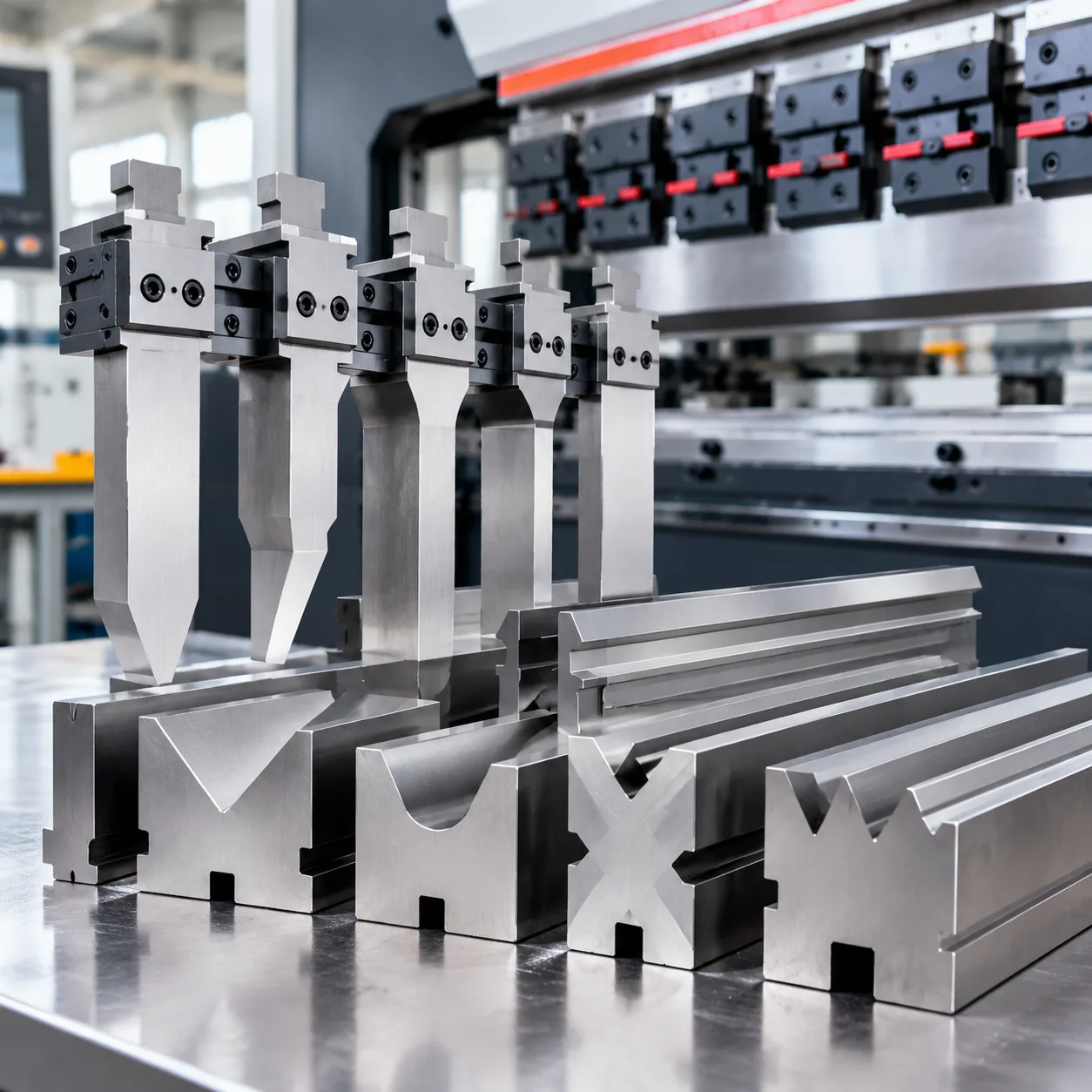
We design and configure urethane tooling systems to match distinct press brake clamping styles, bend depths, and production volumes. Depending on your material gauge and part profile, our product lineup includes three primary mark-free bending setups:
Modular Insert-Style Urethane V-Dies with CNC Steel Holders
Our insert-style systems combine high-strength CNC-machined alloy steel retainers with modular, replaceable polyurethane pads.
- Mounting compatibility: Retainer bases are precision-machined to fit standard American, European/Promecam, and Wila/Trumpf clamping systems.
- Cost savings: When the elastomeric contact surface wears over time, you simply slide in a new pad rather than replacing expensive steel tooling.
- Customization: We supply standardized profiles as well as custom polyurethane radius tooling pads and urethane V-dies engineered to your exact profile geometry.
Solid Monolithic Urethane V-Dies
For deep-channel profiles, wide-radius bends, and heavy cosmetic forming, we manufacture full-body elastomeric blocks.
- Full displacement: The solid urethane body deforms continuously under load, wrapping the workpiece tightly around the punch nose.
- Zero shoulder contact: Completely eliminates metal-to-metal tooling friction across deep channels and complex returns.
- High-tonnage resistance: Built from dense, high-tear elastomer compounds formulated to withstand repeated deflection without splitting or permanent set.
Protective Urethane Film, Roll, and Cushion Strip Overlays
For shops looking to eliminate marks without altering existing setups, our protective urethane films provide a durable protective barrier over traditional press brake bottom dies.
- Instant application: Fastens directly across conventional steel V-openings using tension brackets or adhesive backing.
- Tear resistance: Engineered to endure high friction and tonnage across multiple cycles before requiring indexing.
- Low-volume efficiency: Ideal for short prototype runs and sudden high-finish stainless or pre-painted sheet metal jobs.
Technical Selection Matrix: Durometer, Tonnage, and Tooling Fit
Selecting the correct polyurethane compound and tool geometry ensures accurate bend angles without overloading your press brake.
Durometer Hardness Guide
The hardness of the urethane insert or solid block directly governs deflection resistance, minimum bend radius, and required tonnage:
| Hardness Rating | Material Thickness Range | Typical Workpiece Applications | Performance Characteristics |
|---|---|---|---|
| 80 Shore A | Up to 1.0 mm (0.040") | Thin aluminum, polished brass, architectural copper | Maximum surface cushioning, deep displacement, lowest tonnage |
| 90 Shore A | 1.0 mm – 2.0 mm (0.040" – 0.080") | Pre-painted sheet, #4 finish stainless, electronic enclosures | General-purpose standard, balanced wear life and deflection control |
| 95 Shore A | 2.0 mm – 3.2 mm (0.080" – 0.125") | Heavy-gauge stainless steel, high-strength aluminum alloys | High load capacity, controlled penetration depth, tight radius tracking |
| 75 Shore D | 3.2 mm and thicker (> 0.125") | Heavy industrial sheet, structural panels | Extreme pressure tolerance, minimal compression, maximum cycle life |
Deflection Depth, Load Limits, and Tonnage Multipliers
Because elastomer bending relies on volumetric displacement rather than standard air-bending clearance, the required forming force is higher.
- Tonnage Calculation: Polyurethane forming generally requires 1.5× to 3.0× the tonnage of standard steel V-die air bending. Consult our press brake V die chart and tonnage guide to verify machine load capacity before running thick-gauge jobs.
- Deflection Depth Limits: We design our urethane inserts to compress between 20% to 35% of their total depth during the bottoming stroke. Over-stroking beyond rated deflection limits accelerates elastomer fatigue and causes permanent set.
- Load Capacities: CNC steel retainer holders absorb all lateral expansion forces, containing the urethane pad under full working tonnage and preventing side blowout.
Mounting Compatibility and Dimensional Standards
Our urethane bottom tooling systems integrate seamlessly with major clamping and machine standards:
- Press Brake Mounting Styles:
- American Standard: 0.500" (12.7 mm) tangs precision-machined for standard safety manual and hydraulic clamps.
- European / Promecam Style: Precision tang configurations with standard safety pin slots.
- Wila / Trumpf Style: High-precision tooling tangs designed for push-button quick-clamping and automated load systems.
- Length Profiles & Modularity:
- Sectionalized Lengths: Standard 500 mm and 835 mm segmented lengths for quick handling and partial-bed staging.
- Continuous Tooling: Custom continuous lengths cut to match complete machine bed widths for large architectural panel fabrication.
- For full physical footprints and holder dimensions, review our press brake die size chart and dimensions guide to match your machine setup.
Substrate Compatibility and Industrial Applications for Urethane V-Dies
Compatible Workpiece Materials
- Polished and Brushed Stainless Steel: Completely prevents die burnishing and galling on #4 finish, #8 mirror sheet, and decorative architectural panels. Learn more about our specialized tooling for stainless steel processing applications.
- Anodized and Raw Aluminum: Eliminates black oxide transfer and micro-cracking along the bend line. For tooling setups tailored to light alloys, review our guide on press brake die selection for aluminum.
- Pre-Painted and Coated Metals: Forms painted, PVDF-coated, and vinyl-masked sheets without peeling, cracking, or deforming the outer protective film.
- Copper and Brass: Soft architectural and electrical busbar alloys bend cleanly without surface indentation or localized work-hardening marks.
Primary Industry Applications
| Industry | Typical Components | Core Tooling Requirement |
|---|---|---|
| Architectural & Facades | Metal cladding, curtain walls, decorative trim, elevator interiors | Zero surface score lines; no buffing or post-bend finishing required. |
| Food & Medical Equipment | Commercial kitchen counters, pharmaceutical enclosures, sanitary washdown tanks | Pure mark-free surfaces to avoid carbon steel cross-contamination and bacterial traps. |
| Avionics & Electronics | Precision chassis, avionics brackets, high-end appliance front fascias | Tight radius consistency without marring pre-treated or anodized surfaces. |
Installation, Operation, and Tool Lifespan Guidelines
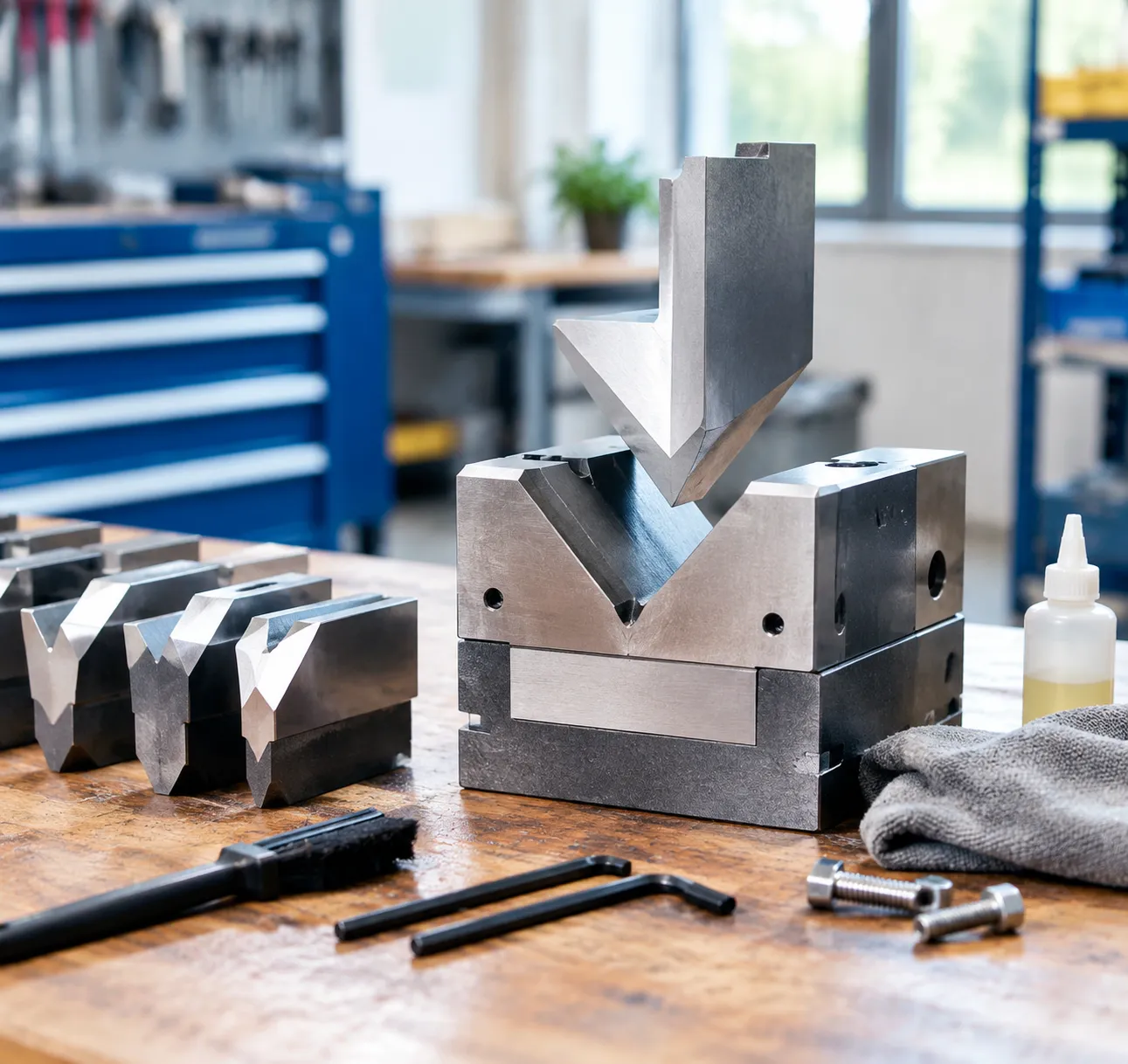
Getting peak performance from your urethane V-dies requires correct punch pairing, tonnage management, and routine wear tracking. Because polyurethane deforms elastically to wrap sheet metal around the upper tool, standard air-bending rules change slightly during setup.
Punch Nose Radius Selection to Prevent Premature Elastomer Wear
Sharp punches concentrate excessive stress onto a small surface area, leading to gouging or slicing of the urethane pad:
- Avoid knife-edge tooling: Never run punch radii below 0.8 mm (0.030 in) on urethane tooling. Sharp tips act like cutting edges under load.
- Target a 1:1 to 1.5:1 ratio: Set your punch radius equal to or slightly larger than the material thickness to evenly distribute force across the urethane surface.
- Use rounded profiles: Pairing your setup with dedicated radius punches spreads the tonnage across the elastomer bed, eliminating localized shear points and dramatically extending pad life.
Tonnage Calibration and Press Stroke Setup
Unlike conventional steel V-dies, an elastomer bending die relies on material displacement:
- Program for volumetric displacement: Stroke the ram downward until the sheet wraps to the desired angle against the punch nose. Do not attempt to bottom out solid against the steel holder bed.
- Respect compression thresholds: Limit maximum urethane deflection to 30% to 35% of the pad's original vertical height. Compressing past this threshold causes permanent deformation and strain fatigue.
- Step down the ram depth incrementally: When setting up a new gauge, begin with a shallow stroke and lower the ram position by 0.2 mm increments until the correct bend angle is achieved.
Insert Wear Inspection Protocols and Rapid Replacement
Routine checks ensure parts maintain clean, mar-free cosmetic finishes from the first cycle to the last. Adhering to proven press brake die maintenance tips protects both your upper tooling and the steel retainer blocks.
| Inspection Factor | Normal Working Condition | Wear / Replacement Indicator | Corrective Action |
|---|---|---|---|
| Surface Profile | Smooth, continuous elastomeric surface | Central grooving, gouging, or lateral tears | Rotate insert 180° or replace pad |
| Pad Height Recovery | Rebounds to 100% original height within seconds | Permanent compression set exceeding 10% | Swap out worn urethane strip |
| Retainer Fit | Firm, seated flush within the CNC steel cavity | Loose lateral play or lifting at ends | Clear debris from pocket; secure end stops |
Step-by-Step Insert Replacement
- Lower the press brake ram to safe parked height and lock out the machine.
- Loosen the end-stop retainers on the steel die holder.
- Slide the worn urethane insert straight out of the retainer pocket.
- Wipe down the precision-machined steel pocket to remove metal flakes, oils, or grit.
- Slide in the fresh replaceable urethane insert system strip and re-tighten the retaining end plates. Setup takes under three minutes.
Custom Urethane Tooling Engineering and RFQ Specifications
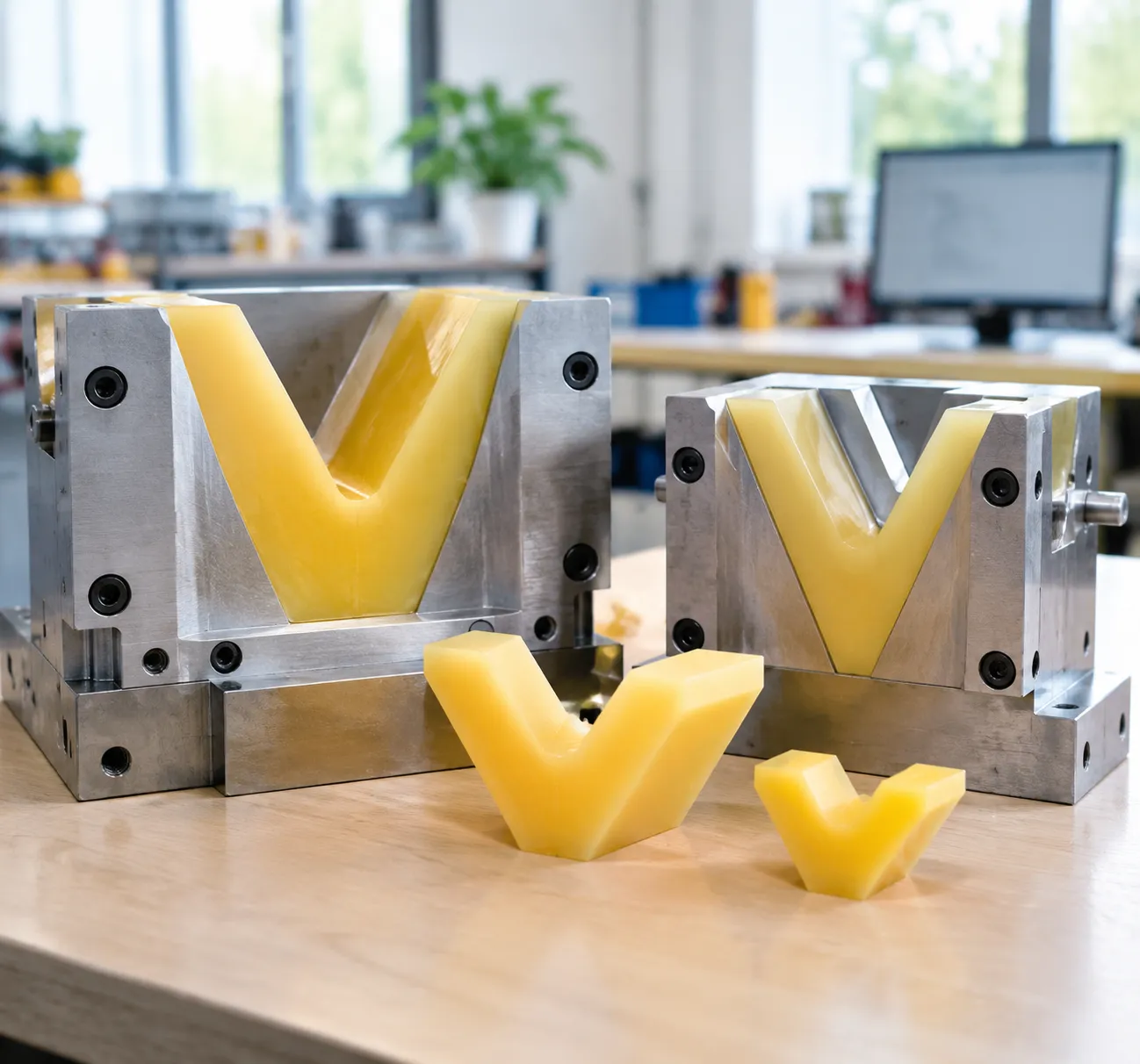
When standard profiles do not match your exact bending profile or flange dimensions, we engineer specialized urethane V-dies tailored to your specific press brake setup and production volume.
Key Technical Parameters for Custom Quotes
To provide an accurate technical evaluation and fast quote, our engineering team requires the core bending parameters listed below:
| Technical Parameter | Specification Needed | Engineering Purpose |
|---|---|---|
| Material Type & Grade | Stainless (304/316), Aluminum (5052/6061), Copper, Pre-painted | Determines required elastomer resistance and tonnage limits |
| Sheet Thickness (Gauge) | Decimal thickness (mm or inches) | Determines V-pad width, deflection depth, and relief clearance |
| Material Tensile Strength | Yield and ultimate tensile strength (MPa / PSI) | Calibrates durometer selection to manage elastic displacement |
| Inside Bend Radius (IR) | Target finished radius | Matches punch nose profile with optimal urethane compression |
| Profile Part Geometry | 2D DXF or 3D STEP files with critical flange dimensions | Prevents tooling interference and holder collision |
| Machine Clamping Style | American Standard, European/Promecam, or Wila/Trumpf | Ensures accurate tang machining on CNC-machined steel holders |
Rapid Prototyping, Custom Compounding, and Testing Support
We do not just supply off-the-shelf tooling; our facility delivers end-to-end support for challenging fabrication tasks:
- Custom Durometer Compounding: We blend specialized polyurethane elastomers ranging from high-elasticity compounds to rigid 75 Shore D formulations tailored for heavy-gauge forming.
- Specialized Retainer Geometries: Through our dedicated custom tooling development team, we build custom CNC-machined steel blocks, relief pockets, and extra-deep channel retainers.
- Application Testing & Prototyping: We test your specific material on prototype polyurethane inserts before full-scale manufacturing, verifying zero marring, consistent angular repeatability, and exact springback compensation across the entire bed length.
- Integrated Solutions: Whether you need short replacement sections or continuous full-length bed profiles, our custom press brake tooling capabilities ensure seamless drop-in integration with your existing brake setup.
Frequently Asked Questions About Urethane V-Dies
How do urethane V-dies completely prevent bend marks and surface scratches?
Traditional steel dies create drag and galling as the metal slides across hard die shoulders. A polyurethane V-die works by elastomeric displacement. Under forming pressure, the resilient urethane cushion flows and wraps the sheet metal tightly around the punch tip without friction sliding. This zero-friction contact delivers a 100% mar-free press brake die solution that eliminates die score marks, tooling burnish, and costly secondary polishing on cosmetic surfaces.
How do I choose the correct urethane durometer for my metal thickness?
Selecting the right hardness rating ensures clean bends without premature elastomer fatigue. We compound our urethane press brake pad systems in multiple durometers matched to specific sheet thicknesses and tonnage profiles:
| Hardness Rating | Recommended Sheet Thickness | Typical Metal Applications |
|---|---|---|
| 80 Shore A | Under 1.0 mm (0.040") | Mirror-polished copper, brass, thin anodized aluminum |
| 90 Shore A | 1.0 mm – 2.0 mm (0.040" – 0.078") | Brushed stainless steel, pre-painted sheet, mild steel |
| 95 Shore A | 2.0 mm – 3.0 mm (0.078" – 0.120") | Heavy architectural panels, high-strength structural alloys |
| 75 Shore D | 3.0 mm+ (0.120"+) | High-tonnage forming, tight-radius severe bends |
Review our comprehensive breakdown of press brake die types explained for better metal bending to balance elastomeric tools with standard rigid tooling.
Are modular urethane die holders compatible with standard press brake clamping?
Yes. Our CNC-machined steel holders feature precision-machined tangs engineered to drop directly into standard press brake tool holders. We supply standard configurations for:
European / Promecam Style
American Standard Tang
Wila / Trumpf Style Clamping
This modular setup allows you to switch between standard bottom tooling and a specialized female press brake V-die or elastomeric system without altering your press brake bed setup.
What is the expected service life of a replaceable urethane insert?
A high-grade replaceable urethane insert system delivers tens of thousands of cycles under normal operational parameters. Insert lifespan depends directly on matching the punch nose radius to the metal thickness and avoiding severe localized pinching. When wear eventually occurs, you simply slide out the worn elastomer cushion and drop in a replacement insert, keeping the precision steel retainer body on the machine for non-stop production.