

Formula details
Product Details
Overview
Product Overview & Principle of Operation
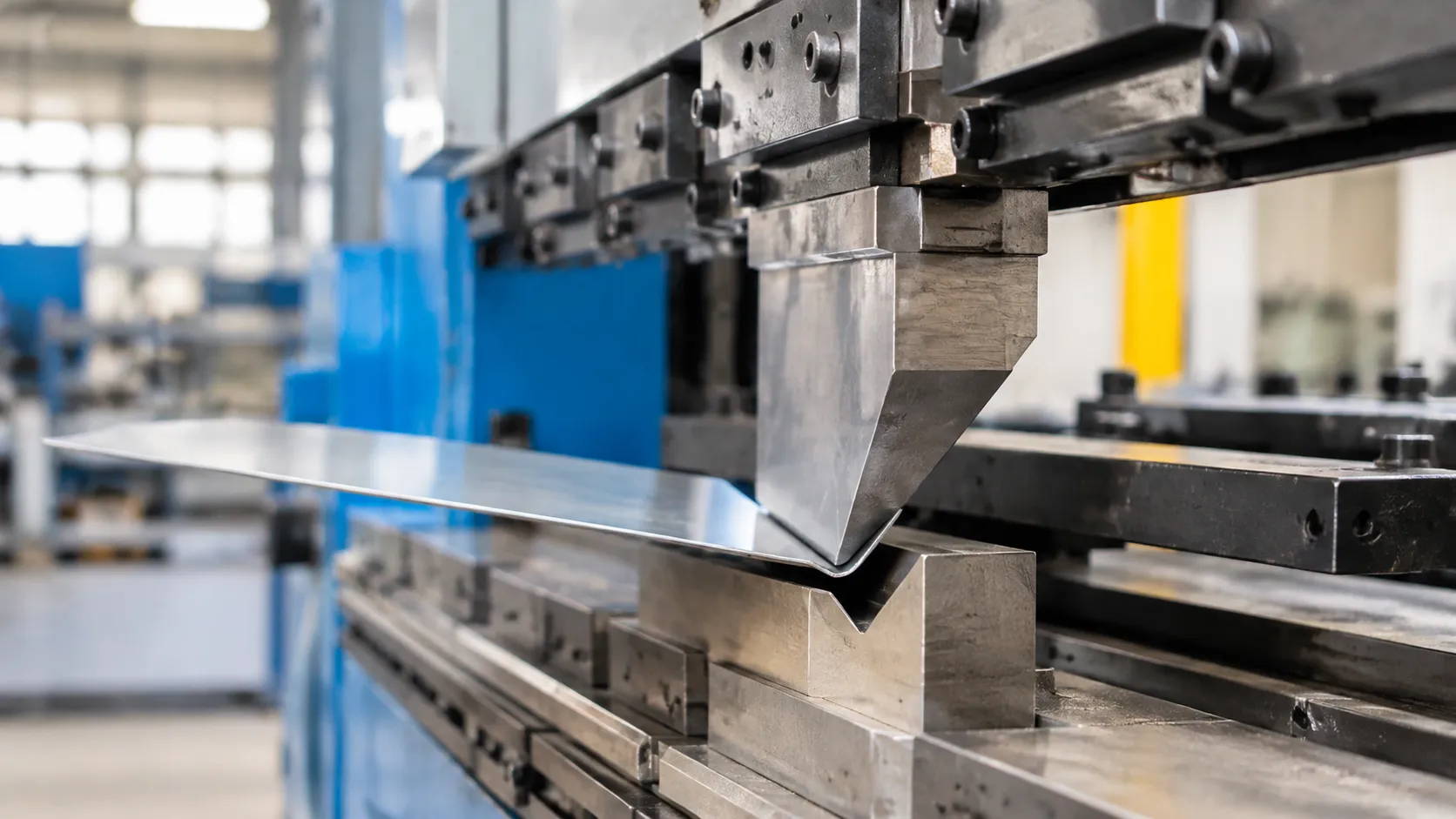
Standard hardened steel V-dies drag metal across rigid die shoulders under extreme tonnage, resulting in galling, micro-scratches, and die burn marks.
Our non-marring press brake tooling replaces hard metal-to-metal contact with specialized forming surfaces. By absorbing and distributing compressive stress across the contact profile, these dies let the workpiece glide smoothly into the V-opening without scoring the sheet.
The Scratch-Free Bending Mechanism
Traditional air bending causes severe sliding friction as the sheet is drawn into the die cavity. Our scratch-free sheet metal bending tools modify this interaction:
- Frictional Displacement: The polymer working contact surface rolls or yields slightly with the sheet, preventing abrasive sliding friction.
- Shoulder Pressure Relief: Broadened contact zones spread the bending force over a larger area, lowering point-contact pressure below the yield point of sensitive surface finishes.
- Zero Particle Transfer: Unlike steel tooling, our polyurethane bending die inserts eliminate carbon steel cross-contamination on non-ferrous metals.
Elimination of Post-Bend Secondary Finishing
Rework on scratched parts increases cycle times and cuts into profit margins. Implementing our mark-free bottom die systems alters downstream processing immediately:
- Eliminates Manual Regrinding: Mirror-polished stainless steel and decorative alloys exit the brake ready for assembly without buffing or blending.
- Protects Thin Coatings: Pre-painted, powder-coated, and vinyl-masked materials bend without film tears or surface micro-cracking.
- Lowers Scrap Rates: Eliminates rejected parts caused by cosmetic line defects near the bend radius.
- Removes Secondary Labor: Cuts out tedious tape application and adhesive cleanup steps on standard steel dies.
High-Density Polymer Compounding Advantages
Standard commercial plastics break down under standard press brake tonnages. We engineer our urethane V-die inserts and solid polymer blocks from proprietary, high-density elastomer formulations that balance tensile strength and flexibility.
- High Tear and Cut Resistance: The composite matrix resists deep gouging from sharp sheared sheet edges.
- Elastic Memory: High rebound resilience ensures the die returns to its original geometry after every stroke, maintaining tight bend angle tolerances.
- Chemical and Oil Stability: Withstands degradation from hydraulic fluids, forming lubricants, and shop contaminants.
- High Durometer Stability: Formulated within precise hardness ranges to support uniform tonnage loads without permanent structural deformation.
Product Configurations & Tooling Styles
Style A: Modular Steel Die Holders with Replaceable Inserts
Our modular tooling combines the structural rigidity of a hardened steel base with replaceable polymer contact wear strips. Instead of replacing an entire bottom tool when wear patterns emerge, your operators simply swap the elastomeric or composite inserts.
- Heavy-Duty Support: Precision-machined steel holders withstand standard forming pressures without lateral flex.
- Low Operating Cost: Fast changeovers of worn liners lower your tooling investment per bend.
- Versatility: Compatible with our custom polyurethane radius tooling pads and urethane V-dies to match variable opening widths and bend radii across aluminum and polished stainless sheets.
Style B: Solid High-Tensile Polyurethane V-Blocks
For parts requiring zero metal-to-metal tooling contact, we supply solid elastomeric blocks. The punch forces the sheet into the solid polyurethane mass, which compresses and distributes hydraulic load evenly around the profile.
- Full Surface Protection: Eliminates the sliding friction edges typical of conventional steel V-dies.
- Variable Gauges: A single solid V-block can form multiple sheet thicknesses without retooling.
- Consistent Radii: The compressive back-pressure yields uniform bends even across short flanges or perforated sheets.
Style C: Non-Marking Wing and Roller Bending Dies
For ultra-sensitive architectural panels, mirror-finish stainless, and tight flange applications, sliding friction must be completely eliminated. We engineer rotating-wing dies that roll the sheet inward rather than dragging it over a stationary radius.
- Rolling Action: Hardened, polished, or polymer-sleeved rollers pivot with the sheet during descent, virtually eliminating draw marks.
- Minimal Flange Deformation: Ideal for forming narrow flanges and bends adjacent to cutouts or holes without distortion.
- Turnkey Setup: Our press brake dies with rollers for mark-free bending drop directly into standard machine tangs for immediate use on cosmetic production runs.
Technical Specifications & Dimension Matrix
Material Formulations and Durometer Hardness Ratings
Choosing the right compound depends on your material gauge, bend radius, and required tool life. We formulate our elastomeric and synthetic inserts in three core hardness grades to balance deflection and durability:
- 80 Shore A (Red Polyurethane): High elasticity for thin, highly polished materials like #8 mirror stainless and decorative brass. Best for preventing roll-in lines under light bending pressures.
- 90–95 Shore A (Yellow Polyurethane): Our shop standard for general sheet metal bending. Balances high load capacity with zero die rub on brushed stainless and prepainted aluminum.
- 75–85 Shore D (Delrin / High-Density Engineering Nylon): Rigid thermoplastic profiles for sharp air bending. Offers tighter bend angle repeatability and higher tonnage handling without surface galling.
Standard V-Groove Profiles and Workable Sheet Thicknesses
Our non marking press dies follow verified tooling ratios to ensure smooth air bending across various metal gauges. You can cross-reference our press brake die size chart and dimensions guide to match your punch radii and part profiles.
| Die Opening (V-Width) | Insert Material | Recommended Sheet Thickness | Max Rated Load per Meter | Standard Included Angle |
|---|---|---|---|---|
| V8 – V12 mm | 90 Shore A Polyurethane | 0.5 mm – 1.2 mm | 25 – 35 Tons/m | 88° / 90° |
| V16 – V24 mm | 95 Shore A Polyurethane | 1.2 mm – 2.5 mm | 40 – 60 Tons/m | 85° / 88° / 90° |
| V32 – V50 mm | Heavy-Duty Elastomer | 2.5 mm – 4.0 mm | 70 – 100 Tons/m | 80° / 85° |
| V16 – V32 mm | Machined Delrin / Nylon | 1.0 mm – 3.0 mm | 45 – 70 Tons/m | 30° / 60° / 88° |
To dial in specific V-width ratios for custom part geometry, review our press brake die opening guide and selection tips before setting your CNC backgauges.
Machine Clamping Standards and Tang Options
We machine our steel die holders with industry-standard tang configurations so our mark-free bottom die setups slide right onto your press brake bed without custom adaptors:
- American Traditional Tang: 0.500" x 0.625" (12.7 mm x 15.875 mm) safety tang to suit standard mechanical and hydraulic American press brake beds.
- European / Promecam Style: 13 mm tang with standard safety grooves, compatible with Amada, Promecam, and standard Euro-style die holders.
- Wila / Trumpf Compatible: Precision-ground tool bases with standard button safety clicks or bolt-down slots for fast hydraulic clamping.
- Flat Bed / Solid Block Mounts: Wide-base solid polyurethane blocks and steel shoe holders with bottom keyways for direct clamping on flat bed setups.
Substrate & Surface Finish Compatibility
Mirror and Satin Finished Stainless Steel
Forming #4 brushed, #8 mirror, or directional hairline finishes on stainless steel usually results in severe shoulder galling and iron contamination. Standard V-dies drag across the sheet face, leaving tracks that ruin cosmetic integrity.
Zero Galling: Our urethane contact surfaces cushion the bend radius without friction marks.
Corrosion Defense: Eliminates carbon steel embedment, protecting passivated layers during demanding stainless steel processing.
Alloy Scope: Safe for 304, 316, and polished 430 stainless parts.
Anodized and Architectural Aluminum Alloys
Anodized coatings (5052, 6061, and architectural series) crack or craze when dragged across steel die shoulders under tonnage.
Preserves Film Layers: Distributes load evenly to keep clear, black, or color-anodized layers intact.
No Pressure Streaks: Stops localized burnishing on soft architectural alloys during complex sheet metal fabrication.
Clean Flanges: Keeps corner profiles clean on high-visibility storefronts, sign cabinets, and interior cladding.
Pre-Coated, Painted, and Clad Sheet Metal
Pre-painted, vinyl-laminated, and powder-coated blanks shear easily on sharp die entries, leading to coating peel and corrosion failure.
Elastomeric Support: The dies flex under load, rolling with the bend rather than scraping across the coating.
No Film Tearing: Prevents coating separation along the bend line on prepainted polyester, PVDF, and plastic-clad panels.
Consistent Yield: Delivers sharp lines without peeling or delamination on exterior construction components.
Polished Copper and Decorative Brass
Soft yellow and red metals pick up impressions from hardened steel tooling almost immediately, requiring costly hand-buffing.
Scratch-Free Forming: Our non-marring press brake tooling preserves the natural luster of C110 copper and C260 brass.
Eliminates Punch Bite: Spreads the contact patch to stop tooling lines and deep die marks.
Display-Ready Results: Keeps decorative panels, lighting fixtures, and architectural hardware flawless right off the machine.
Engineering Advantages of Non-Marking Press Dies
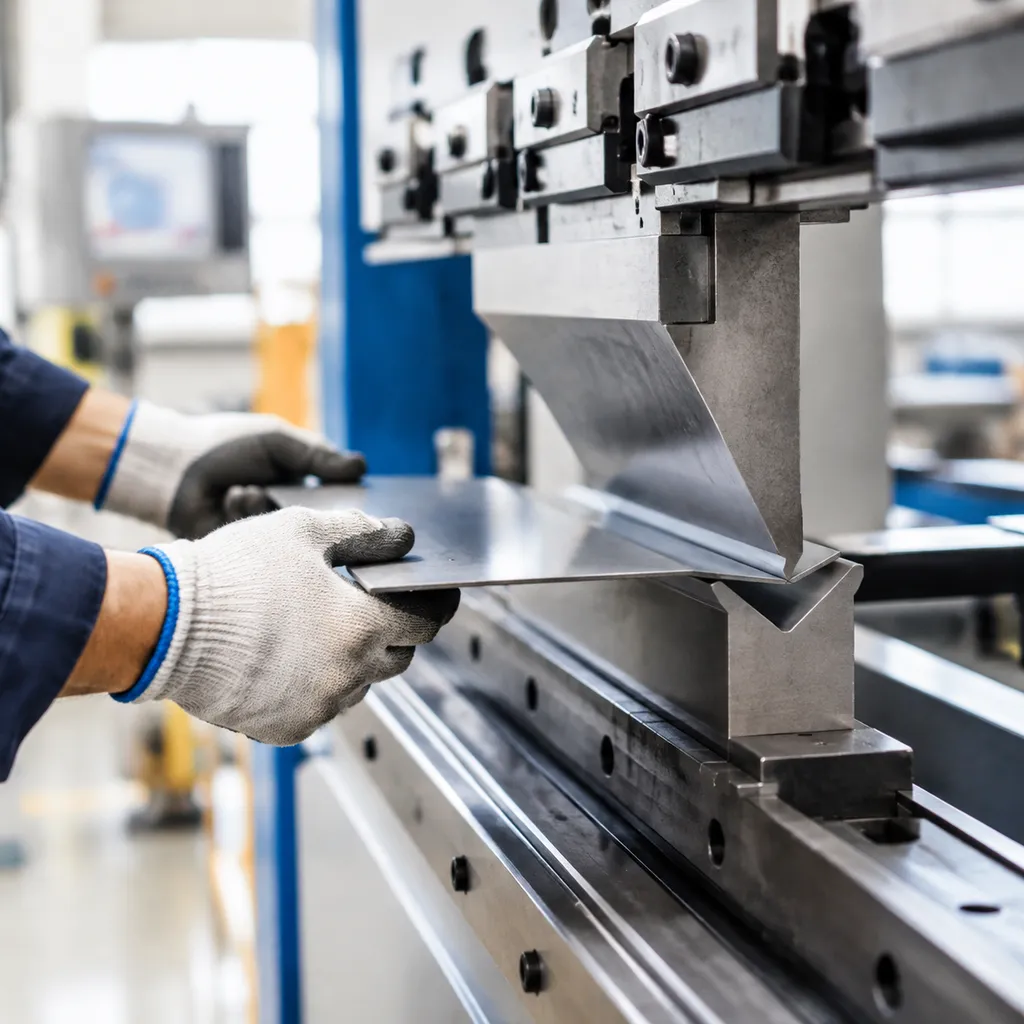
Eliminating Secondary Grinding and Buffing Costs
Standard V-dies create die lines that demand post-bend polishing, buffing, or orbital sanding. In cosmetic fabrication, this secondary finishing often costs more in labor than the actual forming process.
- Zero Surface Touch-Up: Mirror stainless, prepainted panels, and polished aluminum exit the machine ready for assembly or shipping.
- Lower Scrap Rates: Eliminates operator gouging, inconsistent grain matching, and burned-through coatings during manual buffing.
- Streamlined Workflow: Bypassing the finishing department removes a major production bottleneck, shortening your overall lead times.
Performance Comparison: Urethane Inserts vs. Protective Die Tape
Many shops use adhesive die films or tape as a quick fix. While tape works for one-off jobs, production environments require dedicated non-marring press brake tooling. Following our press brake die selection guide for precise bending helps shops pick the right tooling setup before tape failure creates scrap parts.
| Feature / Metric | Replaceable Urethane V-Die Inserts | Protective Die Tape / Film |
|---|---|---|
| Durability | Hundreds to thousands of cycles per insert | 1 to 5 hits before tearing or puncturing |
| Angle Consistency | High; solid backing maintains uniform geometry | Unstable; tape compresses, thins, and stretches |
| Setup Time | Fast drop-in replacement into steel holders | Slow; requires constant peeling, cleaning, and re-taping |
| Debris Embedment | Resilient elastomer rejects loose mill scale | Metal flecks punch through tape and scratch parts |
| Per-Part Cost | Lower total cost on medium-to-high volumes | Higher long-term cost from consumable waste and downtime |
Consistent Bend Accuracy and Angle Repeatability
Our polyurethane bending die solutions are engineered with high-rebound elastomeric compounds. When paired with proper CNC depth control, they deliver repeatable angle tolerances across entire sheet lengths.
- Controlled Material Flow: The elastomer displaces smoothly under tonnage, supporting the sheet uniformly instead of dragging it across sharp steel shoulders.
- Even Pressure Distribution: Eliminates localized pinch points that lead to angle variance across long beds.
- Predictable Springback: Consistent material contact gives our operators predictable springback calculations across batches.
Flange and Cutout Geometry Integrity Near Bend Lines
Air bending close to holes, slots, or narrow cutouts on standard dies often pulls the edge of the cutout into the V-opening, causing ovalization and surface flare.
- Full Face Support: Non marking press dies cushion the entire contact zone, preventing cutouts from dipping into open cavities.
- Shorter Minimum Flanges: The compliant material allows forming of narrow flanges without slipping off the die shoulder.
- Preserved Edge Squareness: Holes, louvers, and laser-cut features adjacent to the bend line retain their designed geometry and centerlines without secondary reaming.
Tool Selection and Tonnage Guidelines for Non Marking Press Dies
Forming cosmetic parts with non marking press dies requires a different approach than standard steel tooling. Because elastomeric inserts and polymer dies compress under load to wrap the sheet, calculating press capacity and punch penetration correctly keeps your tooling intact and your parts within tolerance.
Tonnage Derating Factors for Polymer Dies
Polymer dies absorb energy and spread the load across a larger contact area. As a rule of thumb, our non-marring press brake tooling requires roughly 20% to 40% more tonnage than standard air-bending steel dies for the same material thickness.
To prevent crushing the polyurethane bending die inserts, apply strict working tonnage limits:
- Continuous Operation Limit: Keep forming loads at or below 70% of the die holder's rated max load.
- Material-Specific Sizing: When setting up non-marring setups on softer metals, check our press brake die selection for aluminum guide to balance sheet thickness against V-opening spread.
- Load Rating by Durometer:
- 80-85 Shore A: Light forming, lowest load capacity (derate standard ratings by 40%).
- 90-95 Shore A: Heavy-duty forming, balanced load handling (derate standard ratings by 25%).
| Material Thickness | Standard Air Bend Tonnage (Approx.) | Urethane V-Die Tonnage Requirement | Recommended Insert Durometer |
|---|---|---|---|
| 0.036" (0.9 mm) | 3.5 tons/ft | 4.5 – 5.0 tons/ft | 85 Shore A |
| 0.060" (1.5 mm) | 6.0 tons/ft | 7.5 – 8.5 tons/ft | 90 Shore A |
| 0.090" (2.3 mm) | 9.0 tons/ft | 11.5 – 13.0 tons/ft | 95 Shore A |
| 0.125" (3.2 mm) | 14.0 tons/ft | 17.5 – 19.5 tons/ft | 95 Shore A / Hardened Wing |
Punch Radius Selection and Over-Penetration Prevention
Using a punch with an excessively sharp tip will slice into non-marking dies and shorten their service life drastically.
- Punch Tip Radius: Always maintain a punch radius at least equal to sheet thickness ($R ge 1t$). For polished stainless and prepainted sheets, a punch radius of $1.5t$ to $2t$ prevents localized pressure spikes on the urethane.
- Penetration Depth Limits: Polyurethane must displace sideways, not compress infinitely. Limit vertical penetration depth to no more than 30% to 35% of total pad thickness to prevent permanent compression set and pad tear-out.
Springback Compensation and CNC Offset Adjustments
Because urethane pads act like hydraulic fluid under pressure, sheet metal wraps closely to the punch, creating different springback behavior than open air bending.
- Overbending Allowance: Polymer inserts push back evenly along the bend radius. Counter springback by programming overbends using acute punch profiles (80 ° to 85 ° punches for target 90 ° bends). For exact angle calculations, refer to our press brake die angles guide for springback selection.
- CNC Y-Axis Offset: Increase your bottom dead center (BDC) position gradually in 0.004" (0.1 mm) increments. Avoid driving the ram directly down to traditional steel V-die depths to prevent bottoming out the polymer core.
- Dwell Time Setting: Adding a short 0.2 to 0.5-second dwell at the bottom of the stroke allows the polymer material to distribute pressure uniformly, stabilizing bend angles across long parts.
Custom Tooling and OEM Integration
Standard off-the-shelf dies cannot solve every cosmetic bending challenge. When standard V-profiles interfere with pre-formed return flanges or fail to yield the exact inside radius you need, we build non-marking press dies engineered to match your machine setup and workpiece geometry.
Custom Profiles, Non-Standard Angles, and Special Radii
Complex profiles require dedicated geometries to ensure surface protection without sacrificing angle accuracy:
- Acute & Obtuse Angles: Tailored non-marring press brake tooling configurations from 30° acute forms up to 150° open bends.
- Large-Radius Forming: Urethane bottom dies shaped for wide, smooth sweep bends without facet lines or surface cracking.
- Special Geometries: Recessed holders, offset dies, and relief-pocketed inserts designed to clear standing flanges and deep down-formed returns.
Application Engineering from 3D CAD/DXF Part Prints
We analyze your production runs directly from your native CAD models, STEP files, or DXF prints:
- Bending Simulation: We evaluate part clearances, sheet-metal thinning, and punch penetration to eliminate tool collisions.
- Tonnage & Springback Analysis: Our team calculates required forming loads and elastomeric rebound profiles to select the proper durometer urethane for your specific alloy.
- Mounting Integration: Through dedicated custom tooling development, we machine tangs and holders compatible with Amada, American standard, Wila/Trumpf, and European-style clamping systems.
Rapid Tooling Prototypes and Custom Replacements
Production schedules demand fast turnarounds when tooling wears down or new contracts arrive:
- Functional Prototyping: Rapid design and machining of short-run polymer inserts allow you to validate part cosmetics and bend angles before full production.
- Drop-In Replacements: We machine tailored inserts and holders through our custom press brake tooling program, ensuring new non-marking blocks seat perfectly into your existing machine beds without manual shimming.
- Consumable Batch Programs: Keep critical replacement polyurethane inserts on the shelf to minimize press downtime during high-volume cosmetic fabrication runs.
Tool Care, Maintenance, and Longevity Practices for Non Marking Press Dies
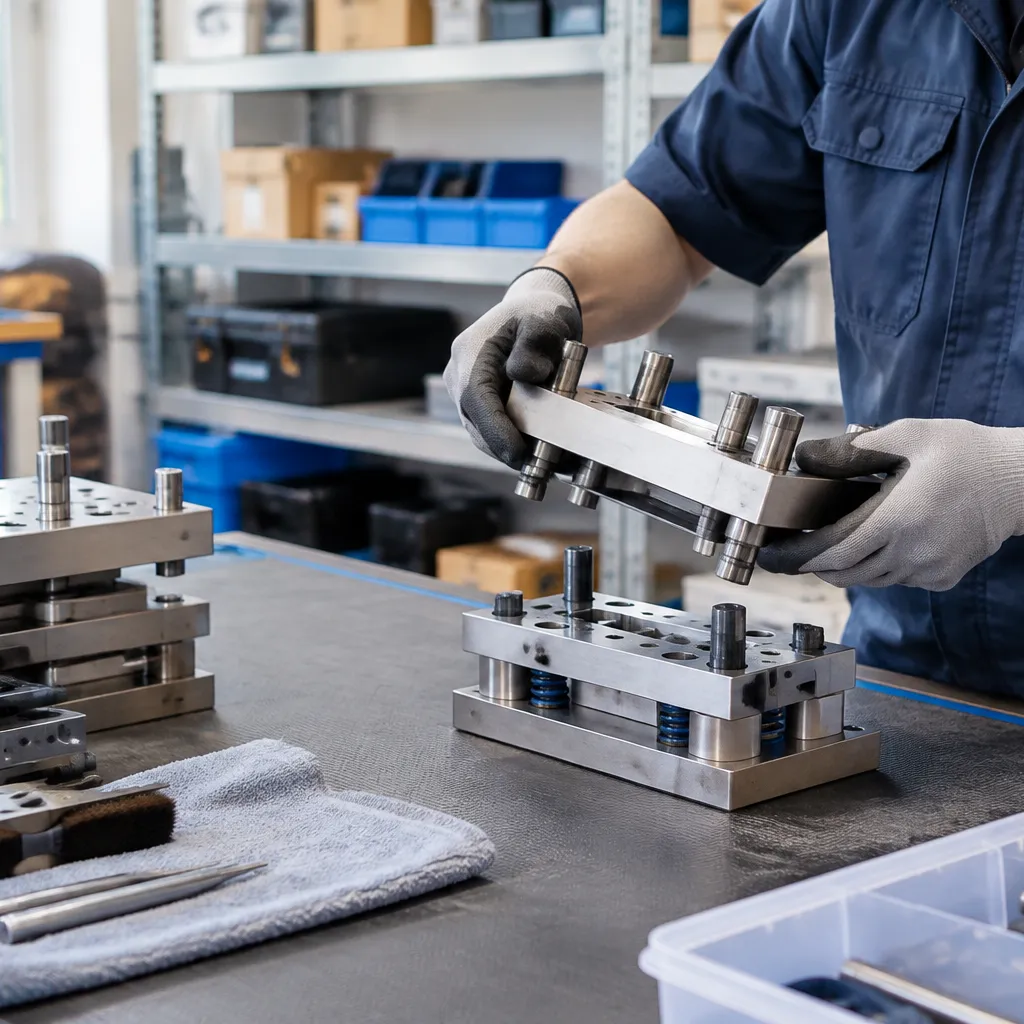
Getting maximum cycle life from non marking press dies comes down to how we treat the contact surfaces. Polymer inserts and elastomeric materials handle repeated compression reliably, but shop floor contaminants and excessive deflection will destroy them fast. Applying routine press brake die maintenance tips for longer tool life keeps non-marring press brake tooling running at tight tolerances across high-volume production runs.
Cleaning Routines to Prevent Debris and Mill Scale Contamination
Hard debris is the primary enemy of scratch-free sheet metal bending dies. When metal slivers or abrasive mill scale settle inside a urethane V-die, stamping force embeds those particles directly into the polymer, turning a non-marring insert into an abrasive surface.
- Wipe Dies Clean Between Setups: Use a clean lint-free rag with isopropyl alcohol or mild industrial citrus degreasers to remove oil and grit. Avoid harsh acetone or chlorinated solvents that degrade synthetic elastomers.
- Air Blast Sheet Stock: Blow off abrasive dust and loose laser spatter from workpieces before setting them over polyurethane bending die inserts.
- Manual Inspection: Check contact zones at the start of every shift. If sharp metal fines become embedded, pick them out with a brass scribe or replace the insert segment before running cosmetic sheet metal.
Deflection Limits to Avoid Permanent Deformation
Urethane V-dies and nylon press brake tooling flex to wrap around the material, but exceeding material deflection limits causes permanent compression set. Once a die insert takes a permanent groove, bend angles lose consistency.
- Respect Deflection Thresholds: Never exceed the rated penetration depth of the polymer insert, typically capped between 15% and 30% of total pad thickness depending on durometer.
- Control Tonnage Spikes: Bottoming out against solid steel holders creates pressure spikes that crush elastomeric tooling. Back off stroke depth when setting up new jobs.
- Rotate Symmetrical Inserts: Turn modular polyurethane strips end-for-end or flip them to opposite working faces regularly to balance wear patterns and extend service life.
Proper Shop Storage to Prevent Thermal and UV Degradation
Polyurethane, nylon, and Delrin press brake tooling can degrade when exposed to heat, UV exposure, and shop chemicals. Controlled storage keeps markless sheet metal forming tools stable and ready to run.
- Shield from Direct UV and Welding Flash: Store non-marking inserts in enclosed metal tool cabinets. Exposure to sunlight or nearby welding bays accelerates polymer oxidation and surface cracking.
- Maintain Stable Temperatures: Avoid storing synthetic dies near heaters or exterior bay doors. Extreme temperature swings alter durometer hardness and impact angle repeatability.
- Store Inserts Flat: Lay long replaceable pad press brake tooling flat in segmented drawers to prevent sagging, bowing, or edge warping during idle periods.
Frequently Asked Questions About Non-Marking Press Dies
Do non-marking press dies require more tonnage than standard steel V-dies?
Yes. Bending on elastomeric or composite surfaces creates continuous contact resistance across the sheet instead of sliding across two distinct steel shoulder radii. In typical shop setups:
Solid urethane pads generally demand 20% to 40% higher tonnage depending on the durometer and penetration depth.
Modular steel holders loaded with a dedicated urethane V-die insert run closer to standard ratings, usually requiring only a 10% to 15% increase in machine load.
Roller and pivoting wing dies maintain virtually the same tonnage profile as conventional press brake V-dies.
What is the expected wear life of replaceable urethane inserts?
Service life depends directly on sheet cleanliness, tonnage, and edge burrs.
Under normal production with deburred aluminum or film-coated stainless steel, high-performance inserts deliver 50,000 to 100,000 hits before dimensional degradation.
Running parts with heavy laser slag or abrasive scale will cut that lifespan by half.
Because our holders use quick-change designs, you swap only the worn elastomer strip in minutes without re-aligning the steel base.
Can I run non-marking bottom dies with standard hardened steel punches?
Yes, standard hardened top tooling runs cleanly with our non-marking lower dies. However, consider the material contact surface:
The mark-free bottom die prevents shoulder drag marks on the cosmetic outside face of the bend.
The standard steel punch tip can still leave an inside witness mark.
To achieve a 100% scratch-free finish on both sides, we recommend fitting a urethane punch tip jacket or matching your top tool with a generous, polished punch radius.
Which configuration is better: solid urethane blocks or steel insert holders?
Each style targets specific fabrication workflows:
| Feature | Solid Urethane Blocks | Modular Steel Insert Holders |
|---|---|---|
| Primary Use | Variable radius work, multiple thicknesses | Fixed-angle high-speed production |
| Tool Rigidity | Moderate; requires high machine stroke | Maximum; solid steel base prevents tool deflection |
| Replacement Cost | Replace entire block | Replace low-cost wear strip only |
| Setup Speed | Simple drop-in | Fast drop-in with standard machine tangs |
Can non-marking dies bend parts with holes close to the bend line?
Yes. Unlike air bending over conventional open steel shoulders where cutouts drop into the V-cavity and distort, non-marking elastomeric tooling continuously supports the material across the entire bend face. The uniform contact pressure prevents holes, slots, and cutouts from pulling out of round, preserving tight tolerances right up to the bend radius.